Centocamere Necropolis: the co-axial chamber tombs
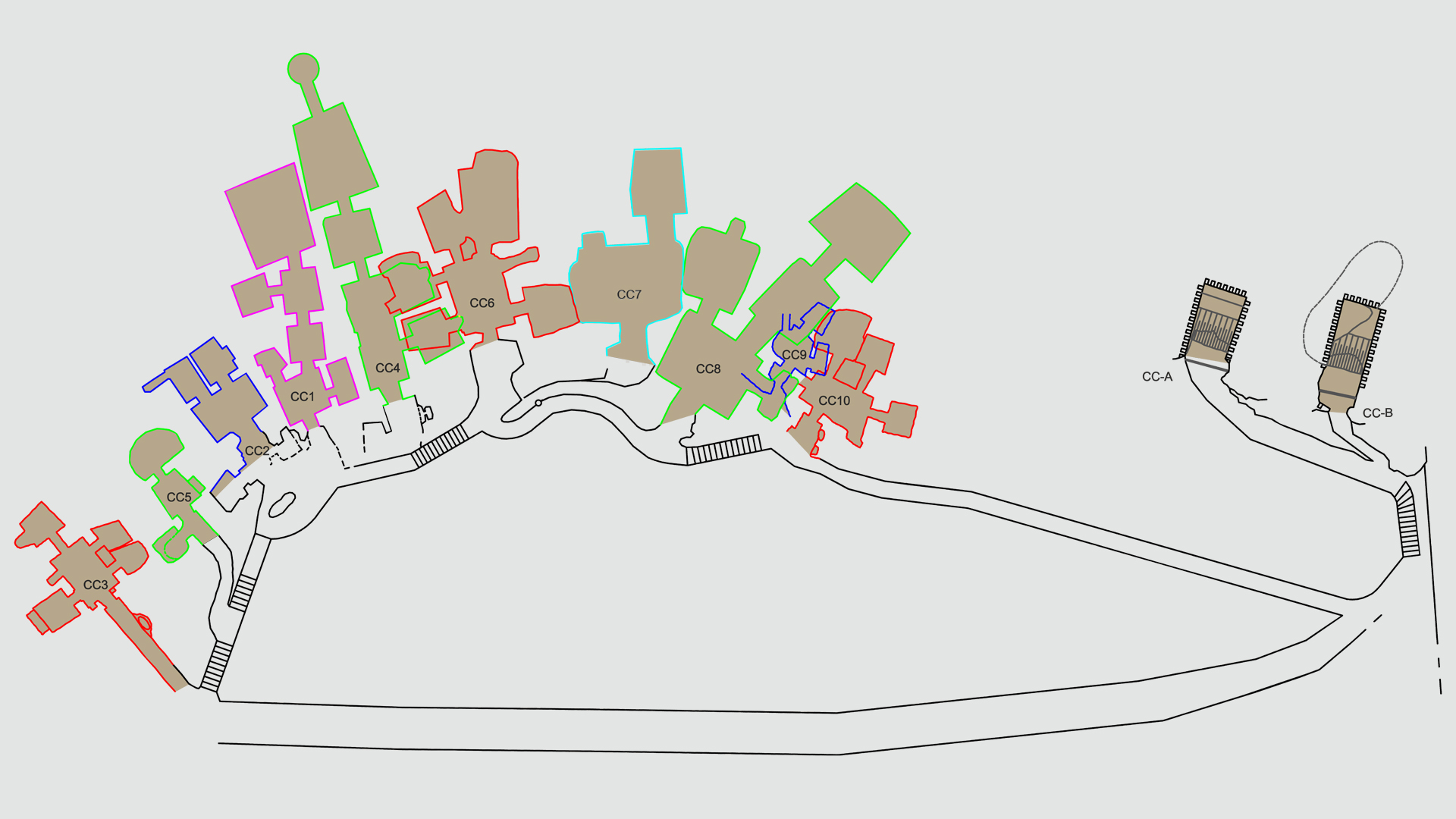
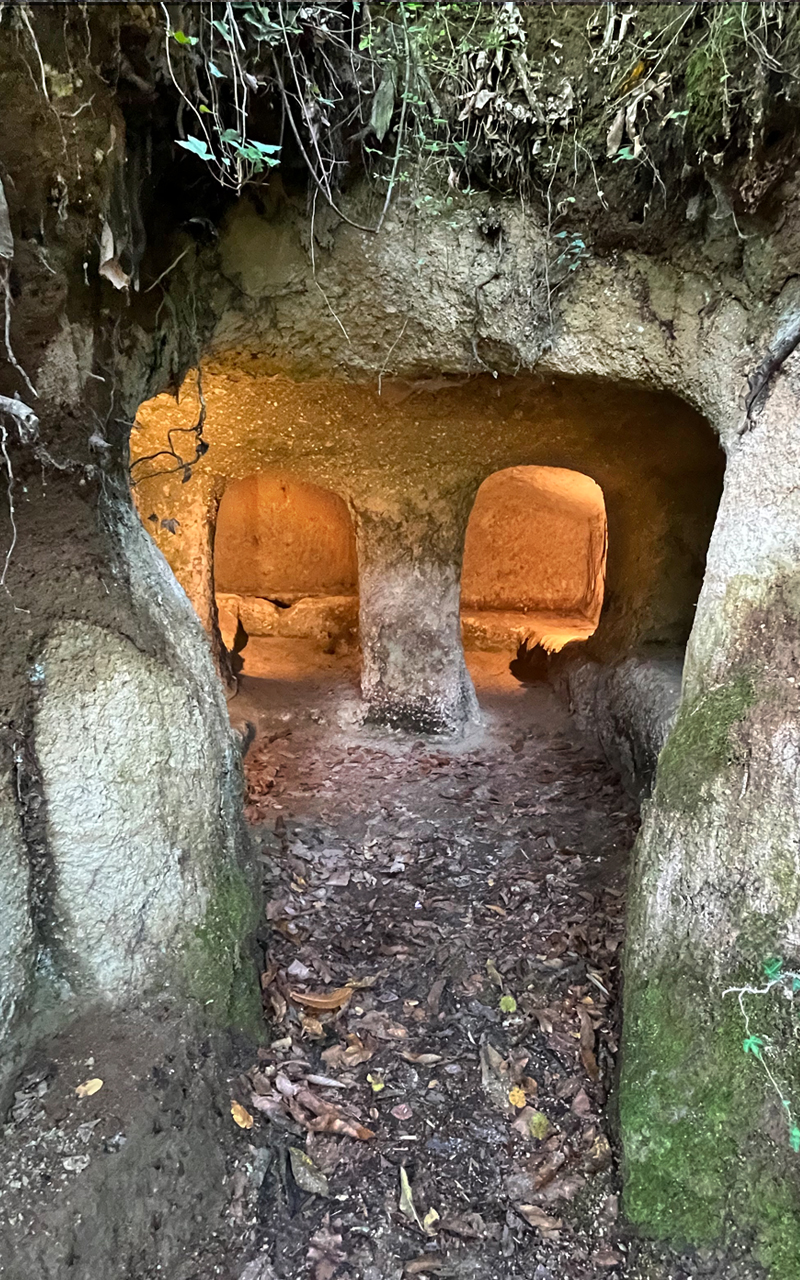
On the wooded hill that runs alongside Provincial Road 48 lies the necropolis of Centocamere, one of the oldest and most complex funerary complexes in the territory of Grotte di Castro. The area, already affected by clandestine digging, was investigated between 2008 and 2009 by the Gruppo Archeologico Castrum Cryptarum, under the direction of the competent Soprintendenza, bringing to light ten chamber tombs and finally providing a documented picture of the funerary organisation.
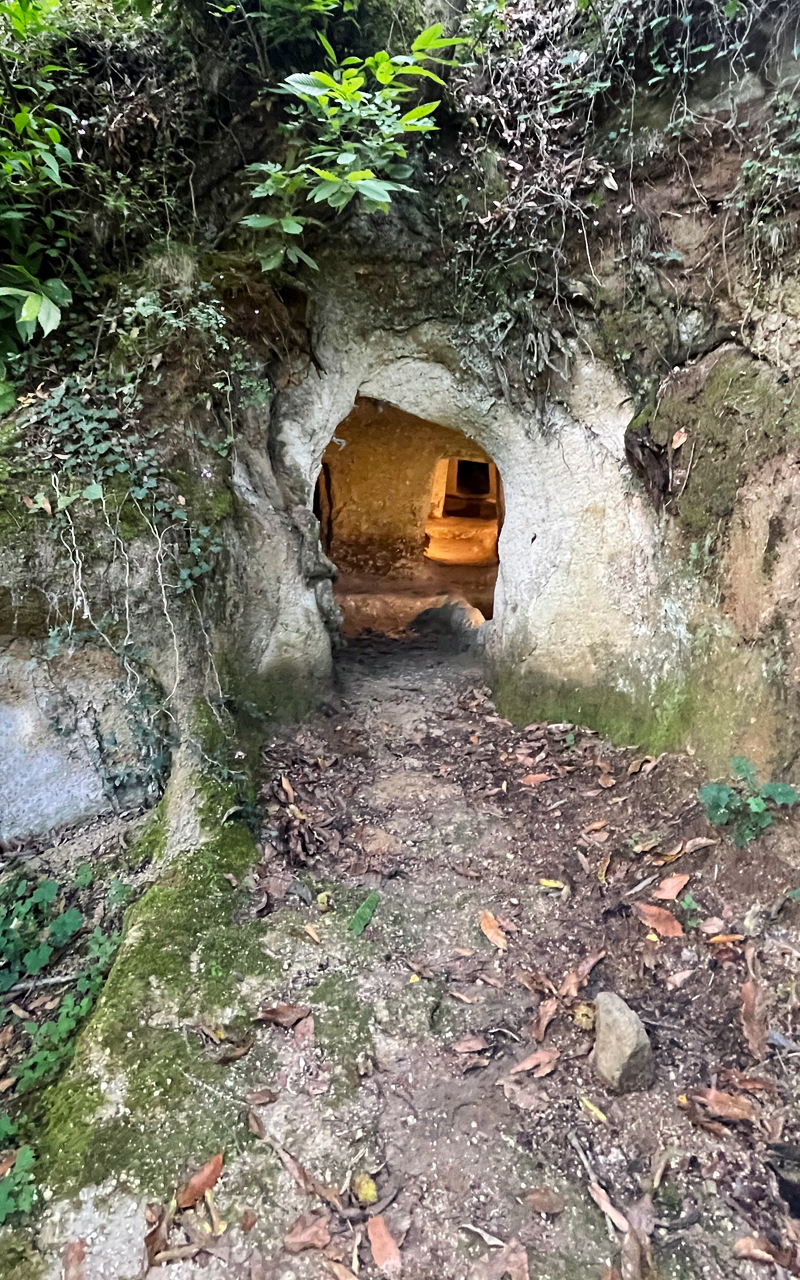
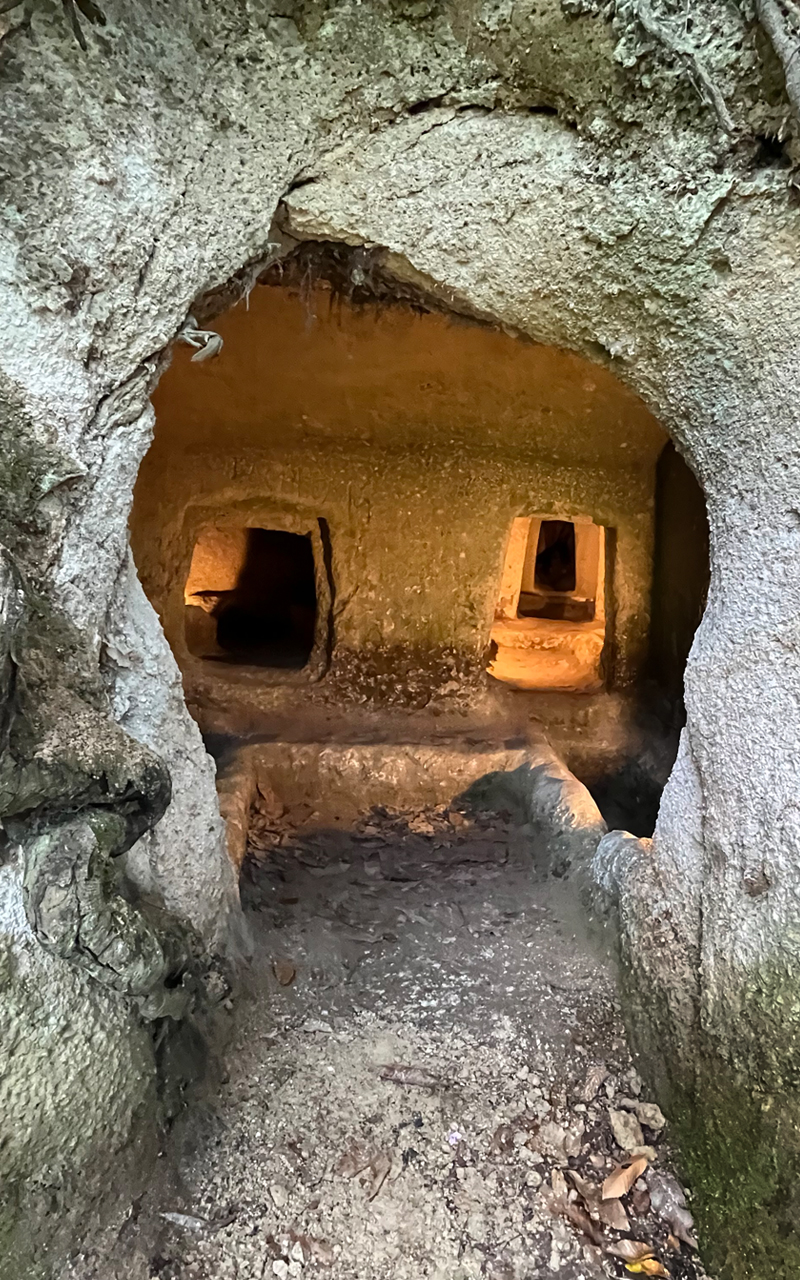
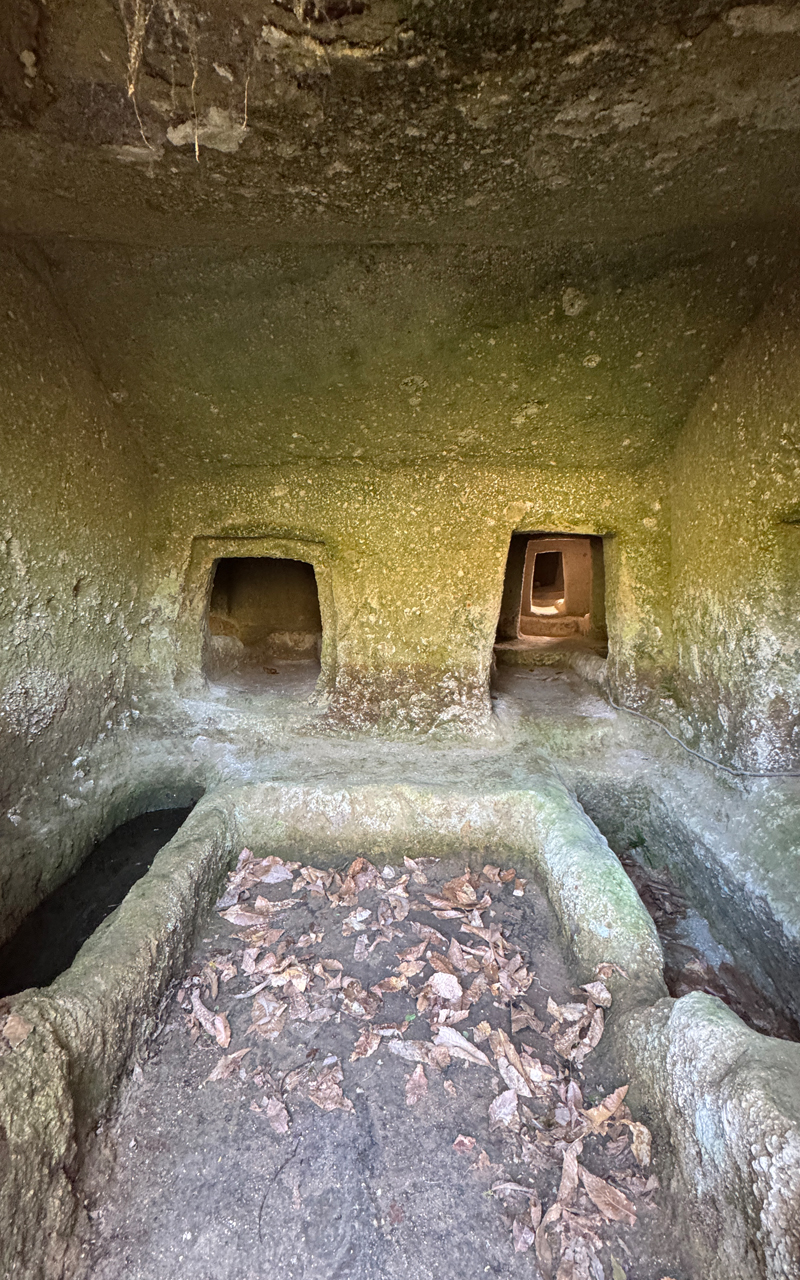
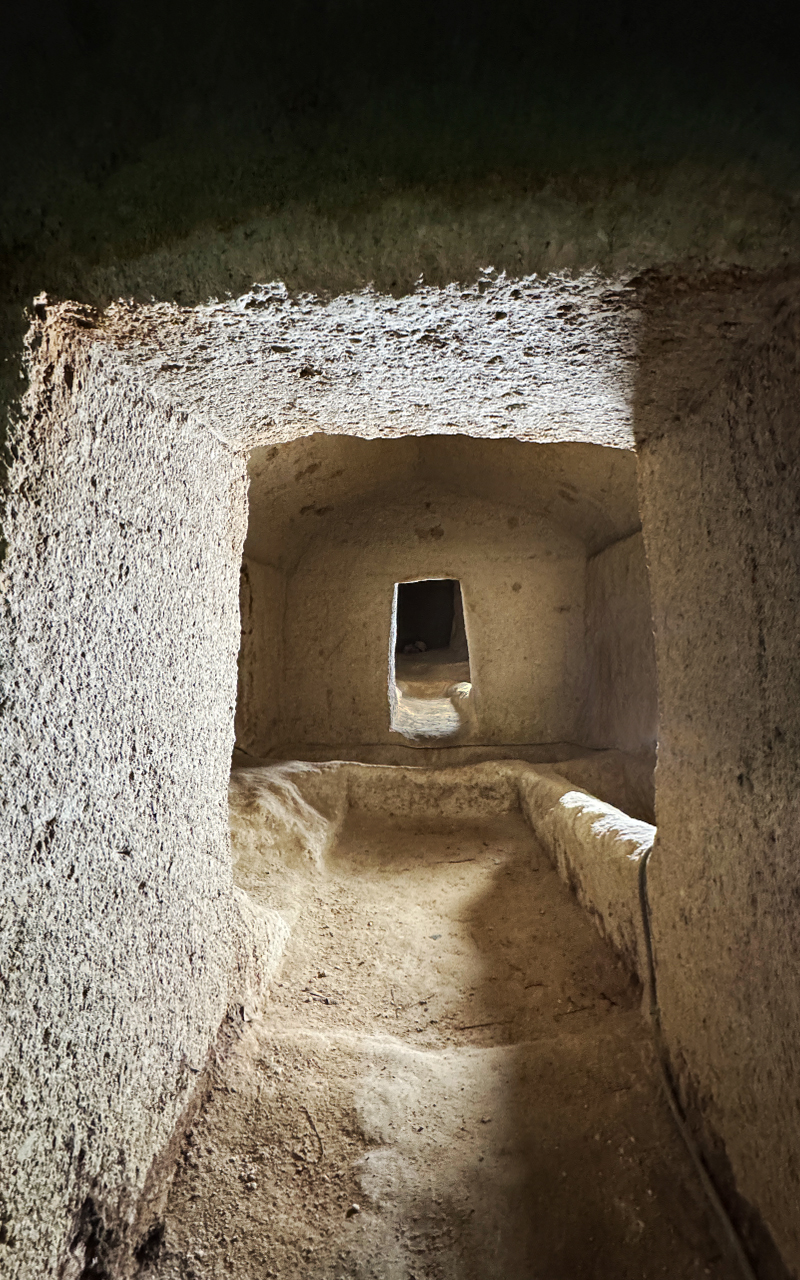
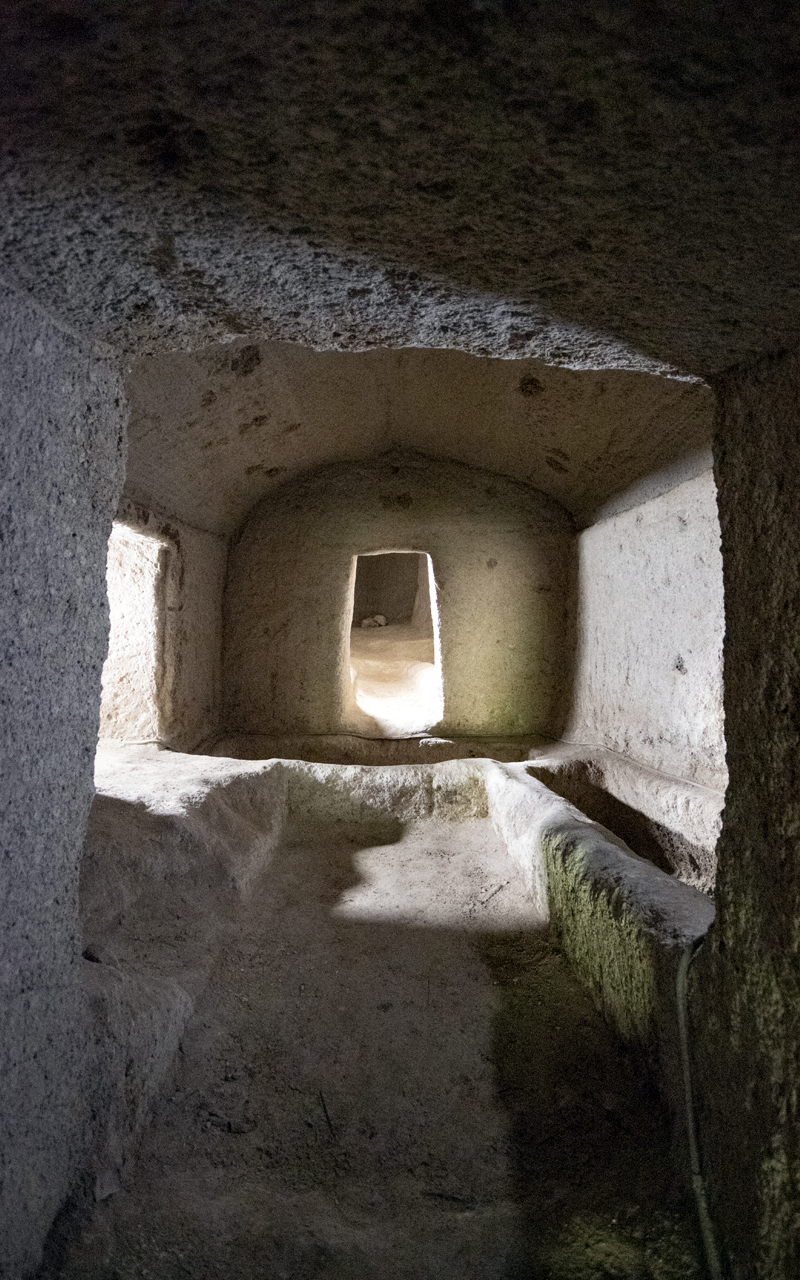
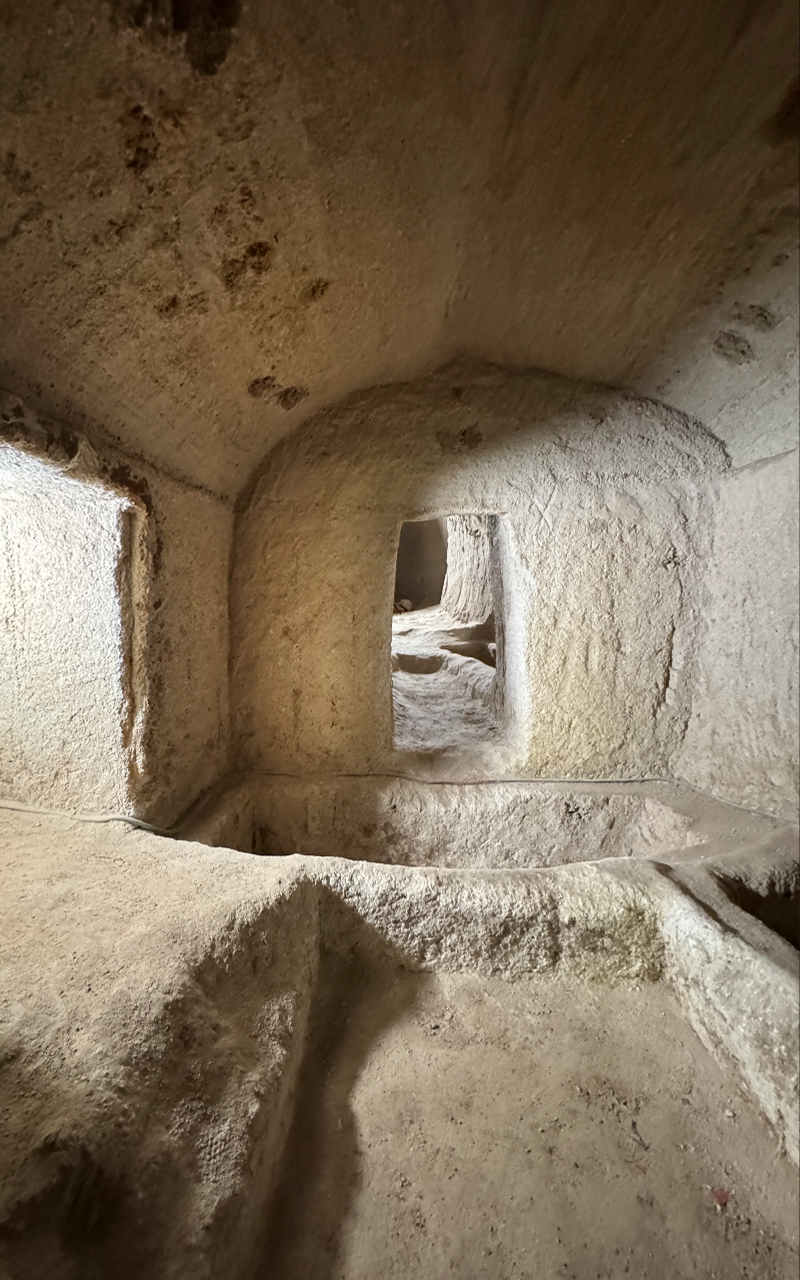
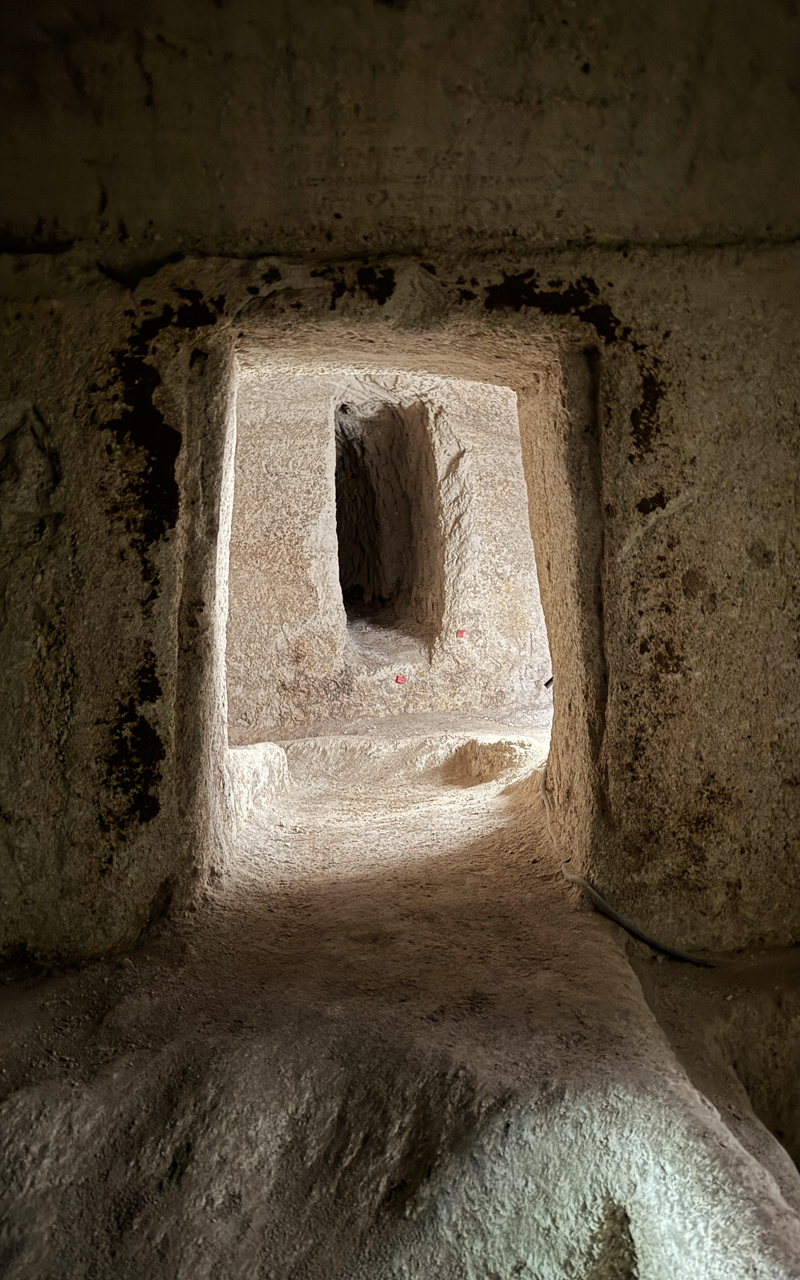
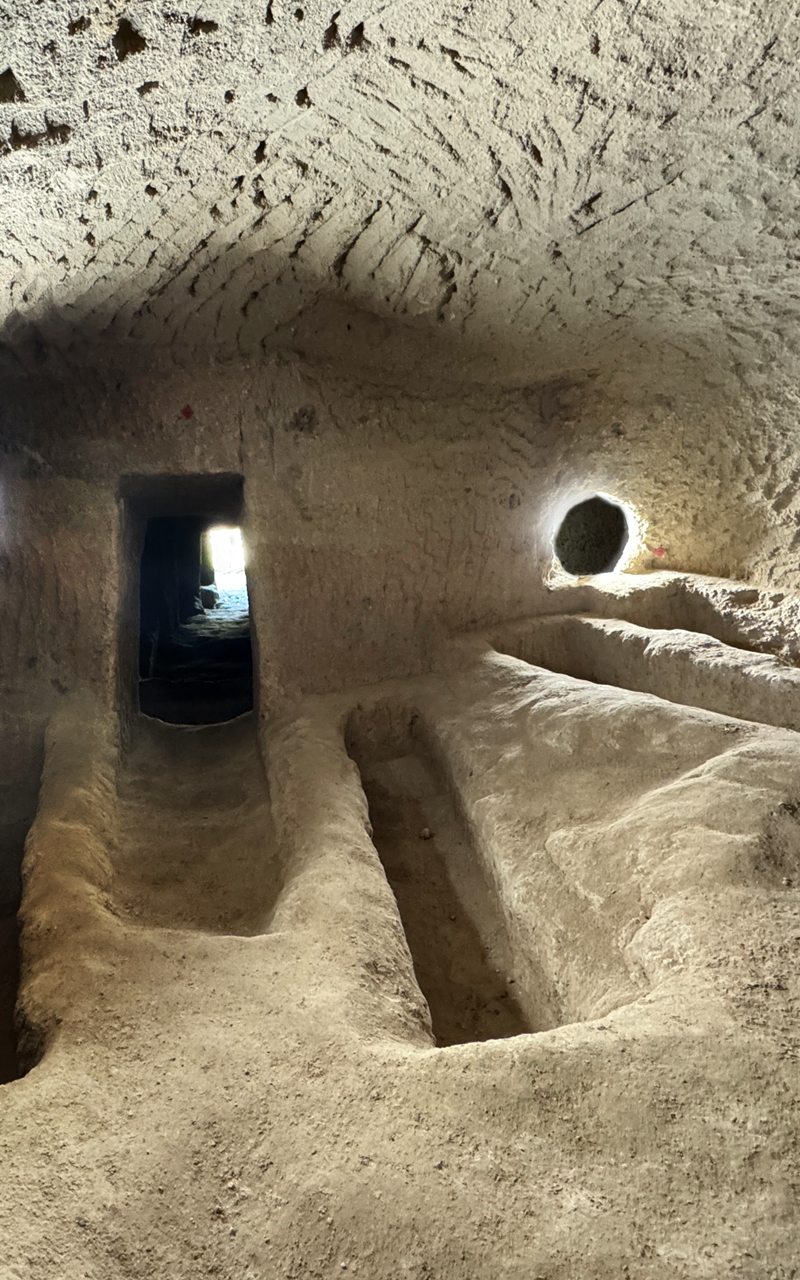
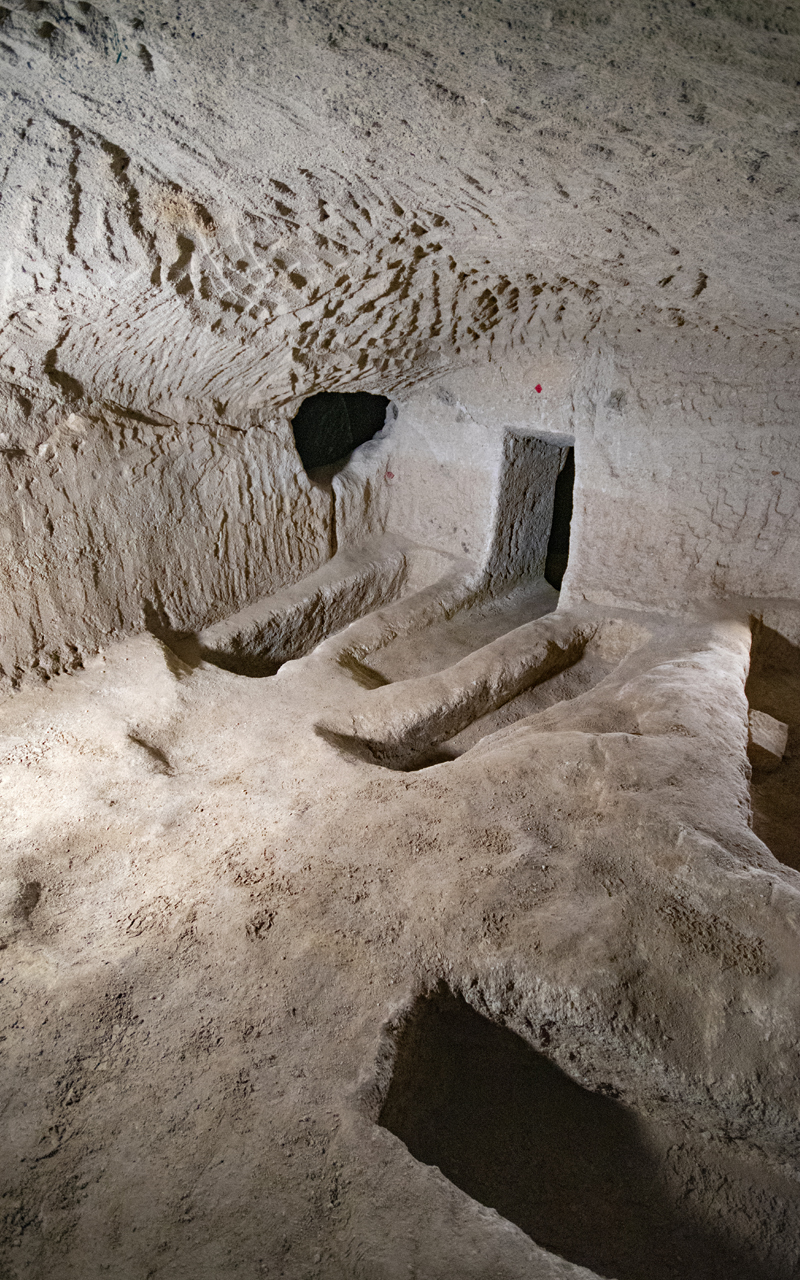
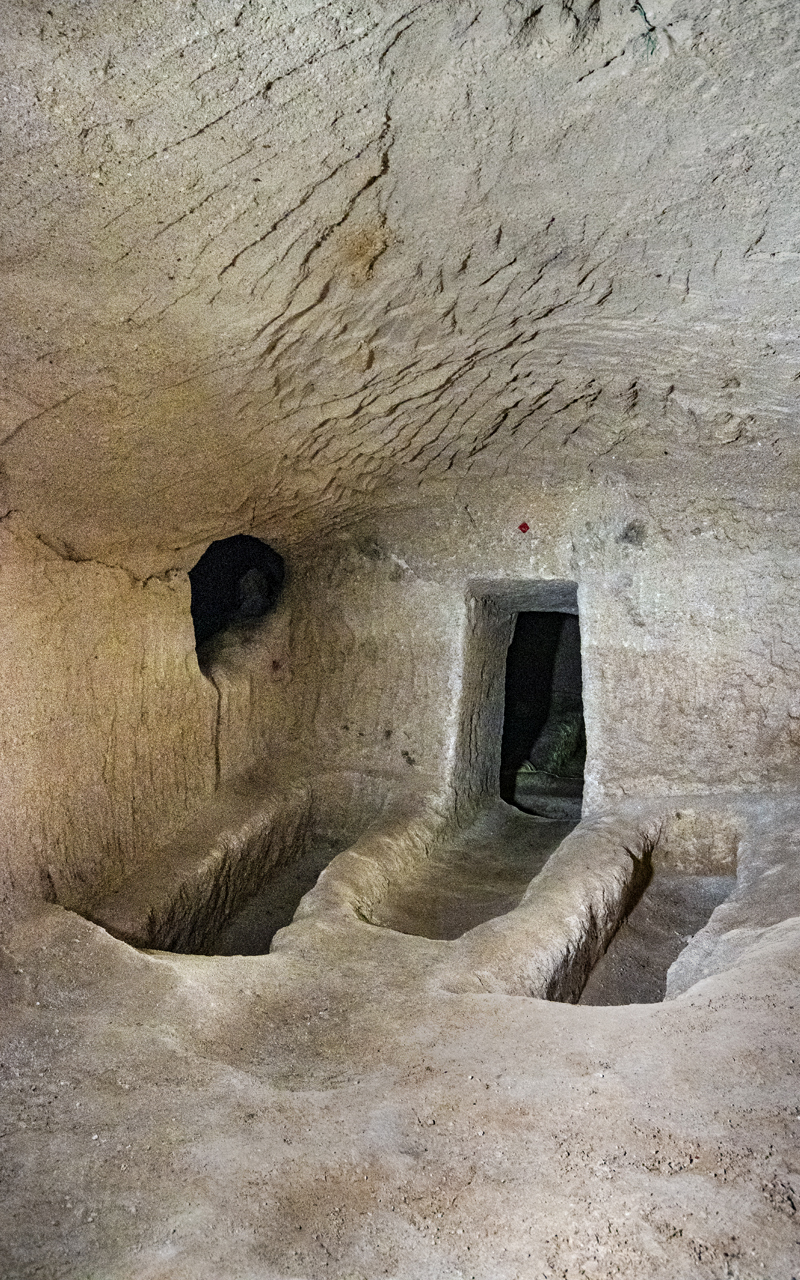
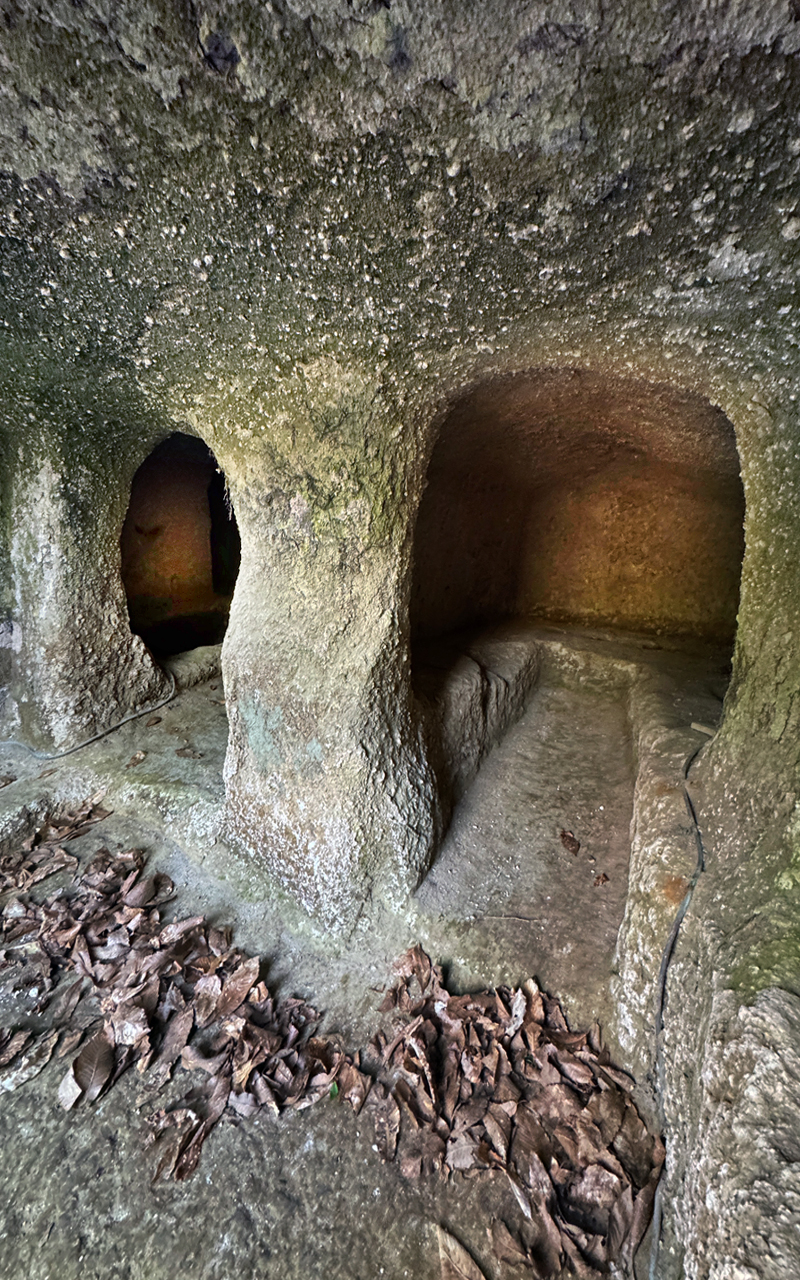
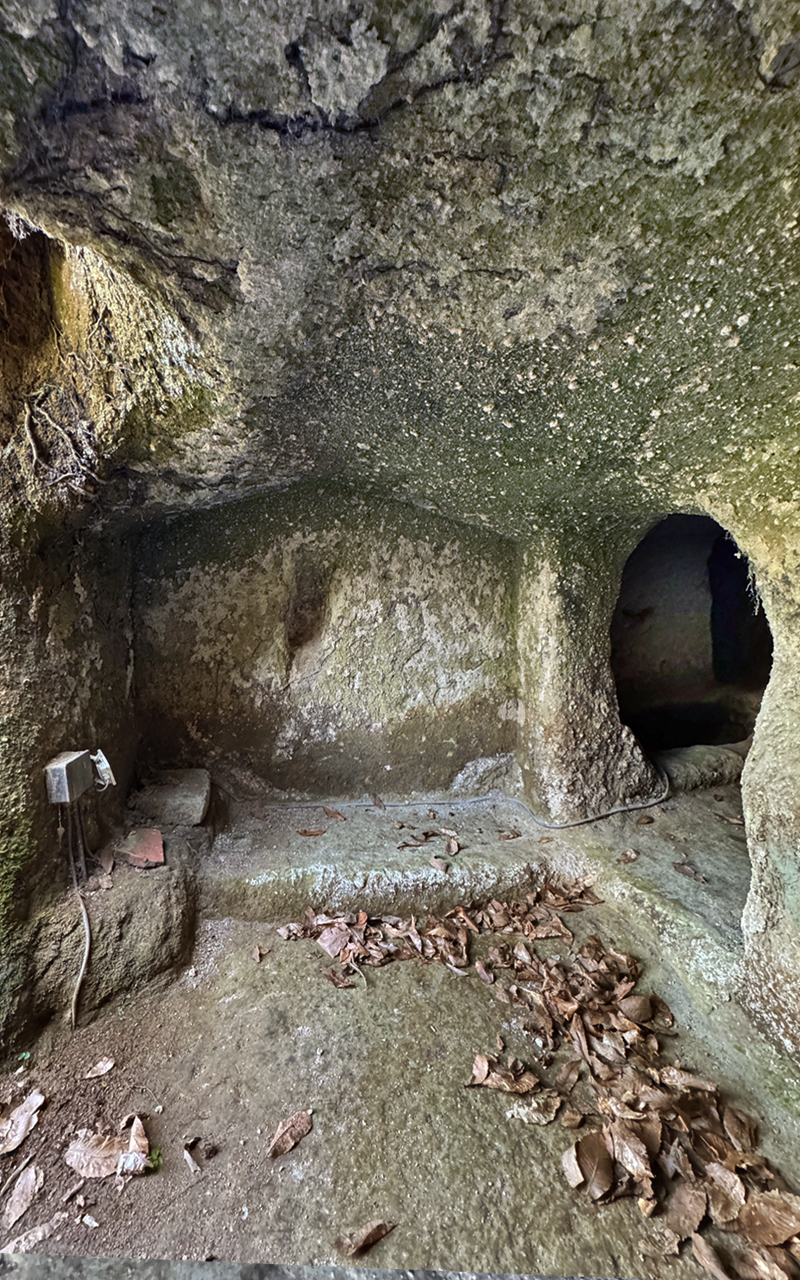
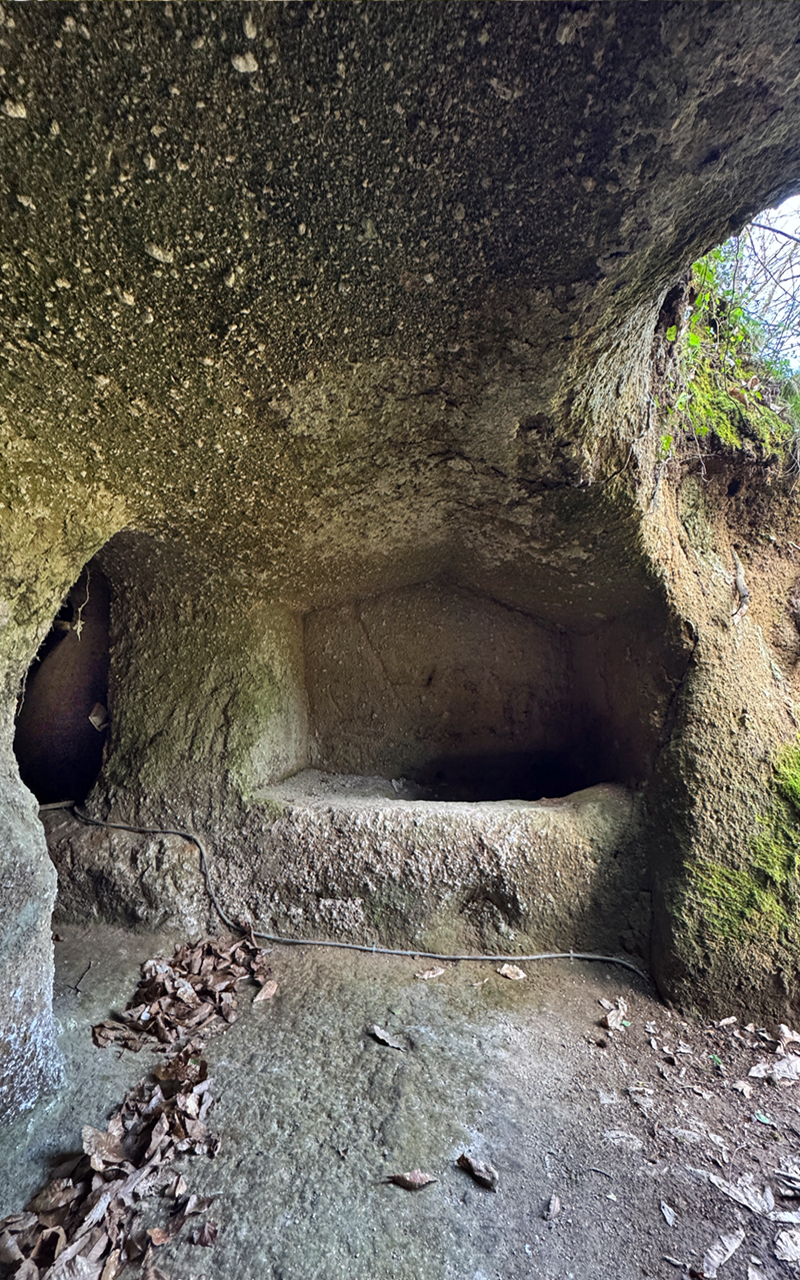
The necropolis owes its name to the dense network of tunnels dug by tomb robbers, which connect many of the chambers to one another. Despite the disturbances, numerous tombs preserve a double-pitched ceiling, modelled in the tuff in imitation of dwellings. The close arrangement of the hypogea forced the ancient builders to develop the extensions in depth, reaching as much as sixteen metres in the largest tomb.
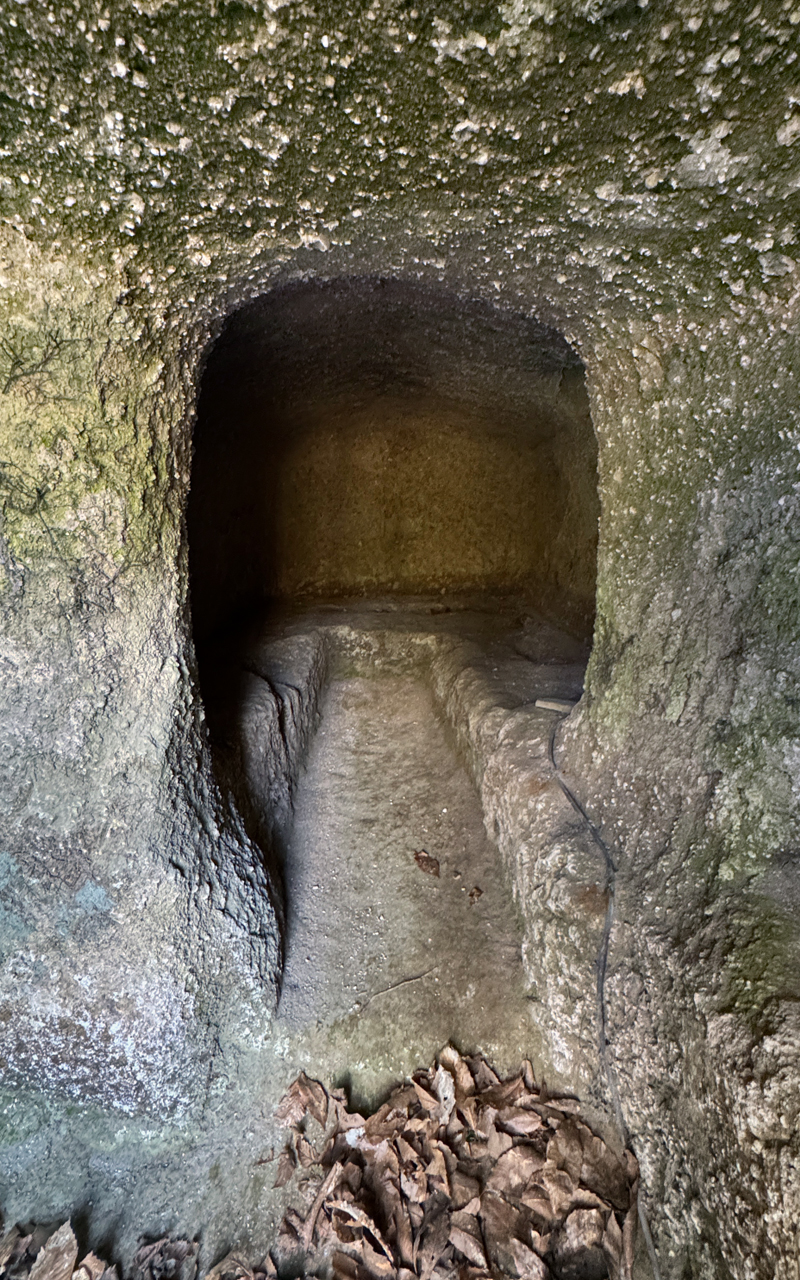
The funerary rite is that of inhumation, in pits dug into the floor or in side loculi, often marked by tuff cippi found in situ.
Among the burials investigated, four female and infant tombs were found intact thanks to the unusual position of the pits. The grave goods, including spindle whorls, loom weights, Attic pottery, bucchero, white-on-red ware and Corinthian aryballoi, bear witness to defined social roles and far-reaching cultural contacts.
The entire hill contains more than fifty tombs arranged on several levels, dating to the 7th century BC, in a phase earlier than that of the Pianezze necropolis. The funerary architecture is distinguished by its development along an axis perpendicular to the entrance, with side chambers added at later stages.
Tomb CC4, the most monumental, comprises five co-axial chambers and three side chambers, with nineteen inhumed individuals.
The investigations also brought to light a stretch of the ancient Etruscan funerary path, still difficult to walk today, where steps carved into the tuff facilitated the ascent towards the tombs.
The co-axial chamber tombs therefore show an architecture designed to endure over time and adapt to the needs of the community. They are not merely burial places, but organised spaces that reveal the way in which the Etruscans built memory, relationships and identity within the funerary landscape.
In the medieval period, some chambers were reused as dovecotes, marking a new phase in the life of the site.
Tomb CC1
Recent investigations in the necropolis of Centocamere, which presents a dense sequence of tombs arranged in at least four tiers and carved into the western side of the hill facing the Civita plateau, have brought to light the earliest chamber tombs found in the area. From around the mid-7th century BC, the funerary rooms already had double-pitched ceilings, and the burials were placed in pits dug directly into the walking surface, closed with large impasto tiles or tuff slabs.
Inside, the tombs often have a highly articulated structure, as in the case of Tomb CC1, with seven rooms and nineteen pits. The grave goods belonging to a young girl, found intact in a small rectangular pit cut into the centre of Chamber D, provide, through the presence of an aryballos with Early Corinthian geometric decoration, a useful terminus ante quem for the construction of the tomb.
Tomb CC2
It is not yet possible to identify the earliest type of chamber tomb, but Tomb CC2 certainly belongs among those built around the mid-7th century BC. The interior is divided into three rooms, all with double-pitched ceilings: the first, larger room is arranged transversely to the entrance, while the other two are arranged longitudinally.
Overall, Tomb CC2 shows a layout that is not yet fully codified, in which high benches, in three cases containing a pit, coexist with pits cut directly into the floor and surrounded by a raised tuff plinth left in place. Outside, along the short dromos giving access to the tomb, two quadrangular rooms open out; each has a single burial bench on the wall opposite the entrance.
The room cut into the left-hand side, found with its ceiling collapsed, as was the room on the opposite side, nevertheless yielded an intact set of grave goods belonging to a female individual. In this case too, the presence of the two small funerary chambers opening onto the dromos does not appear to have been further developed.