Pianezze Necropolis: the Red Tomb
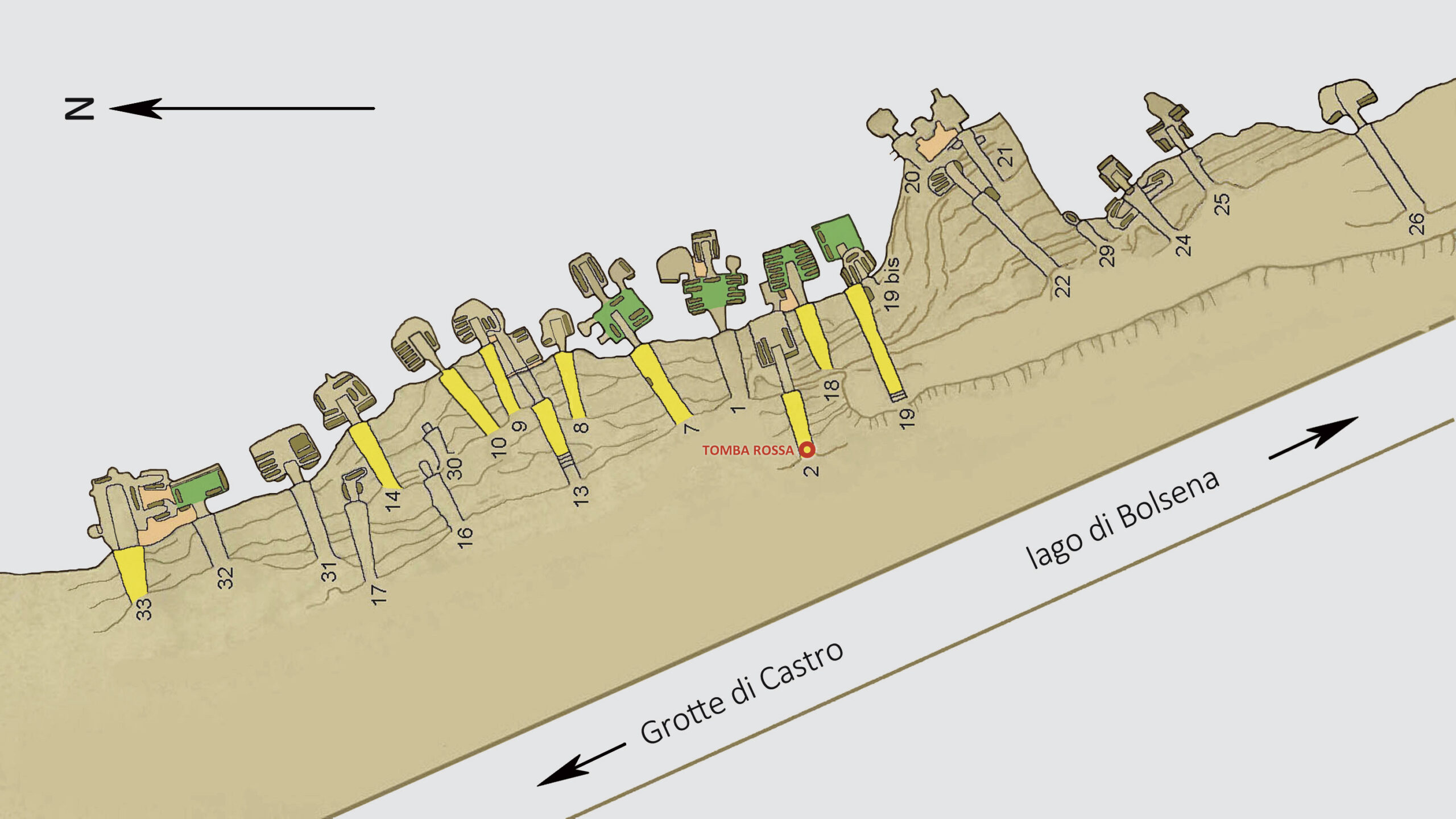
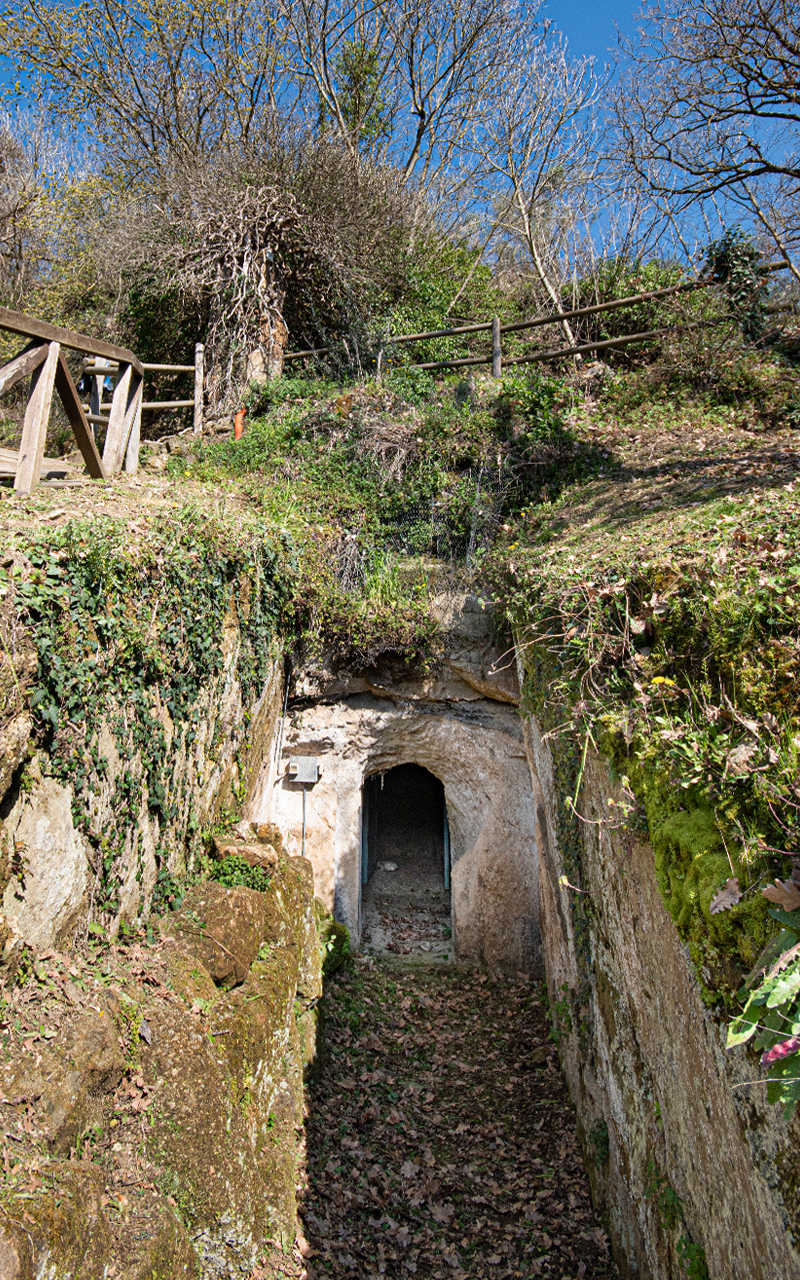
Identified through clandestine excavations before 1973 and cleared by volunteers from the local Gruppo Archeologico in 1976, Tomb P2 of Pianezze, known as the “Red Tomb” because of its painted architectural elements, is the most famous funerary monument in the necropolises of Grotte di Castro.
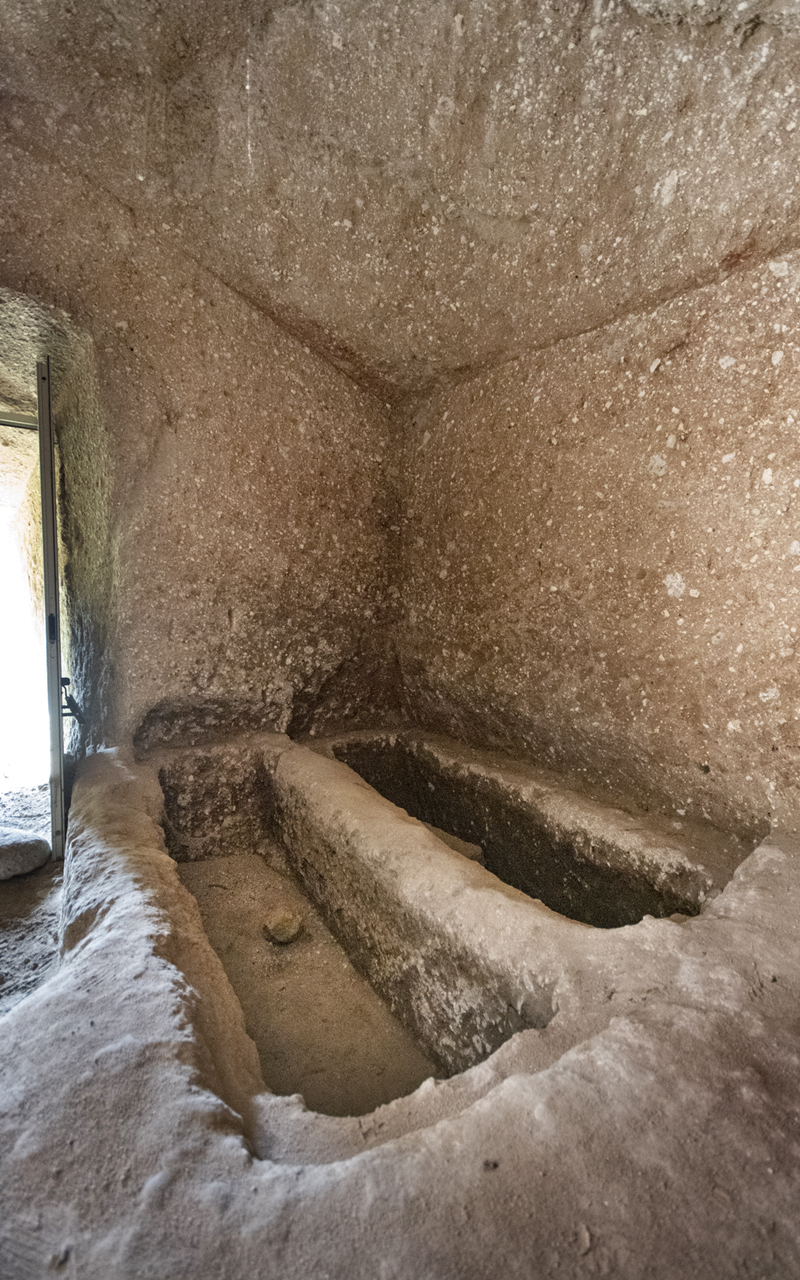
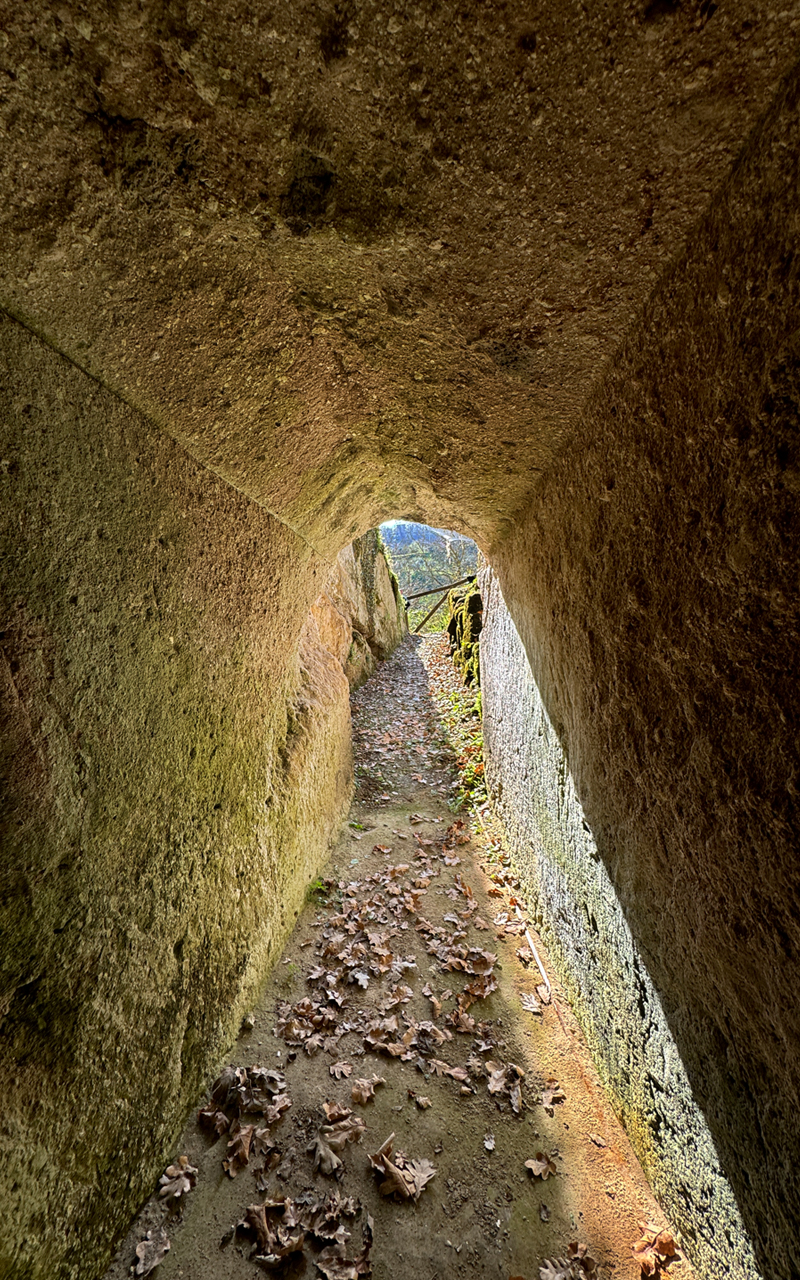
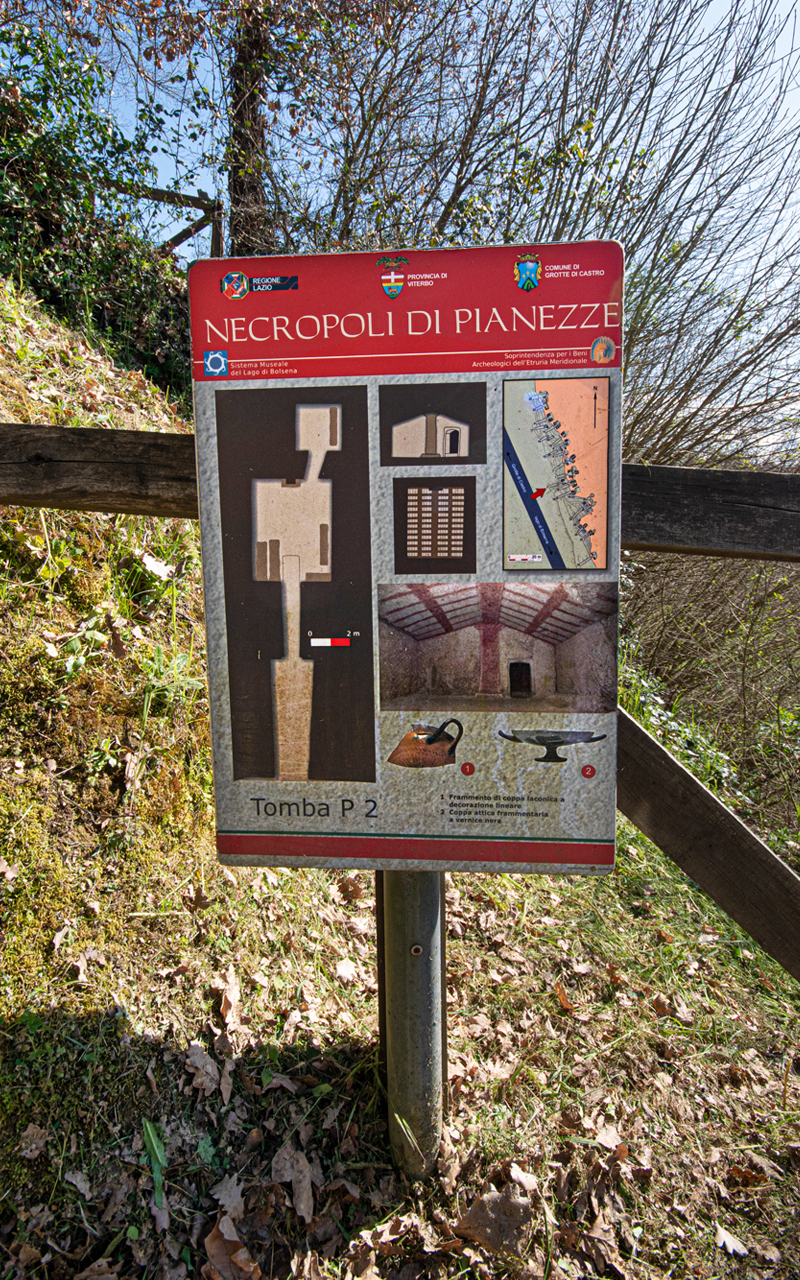
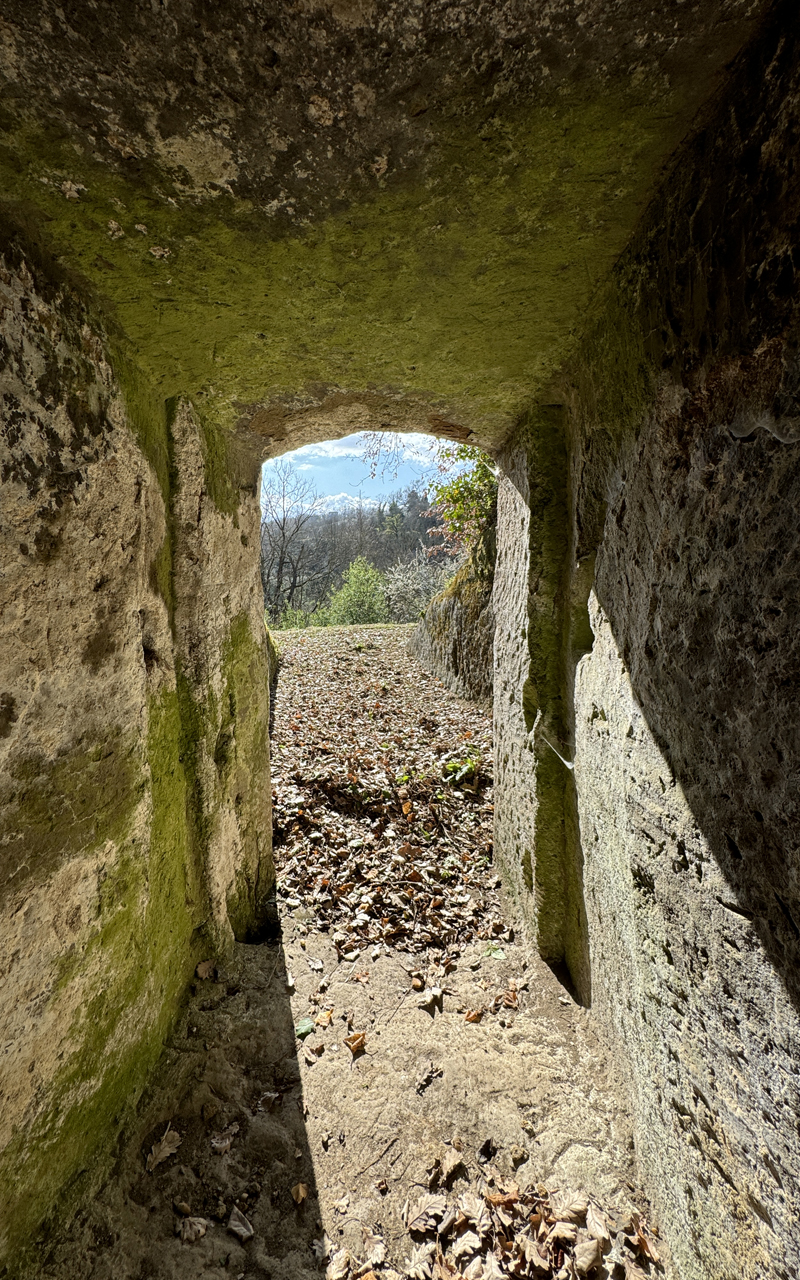
Access to the tomb, which is oriented to the west according to the usual pattern of the Pianezze necropolis, was through an external corridor over 7 metres long and a much narrower internal corridor, fully 4 metres in length. These led into the first burial chamber, rectangular in plan and arranged longitudinally to the entrance, with four burial pits.
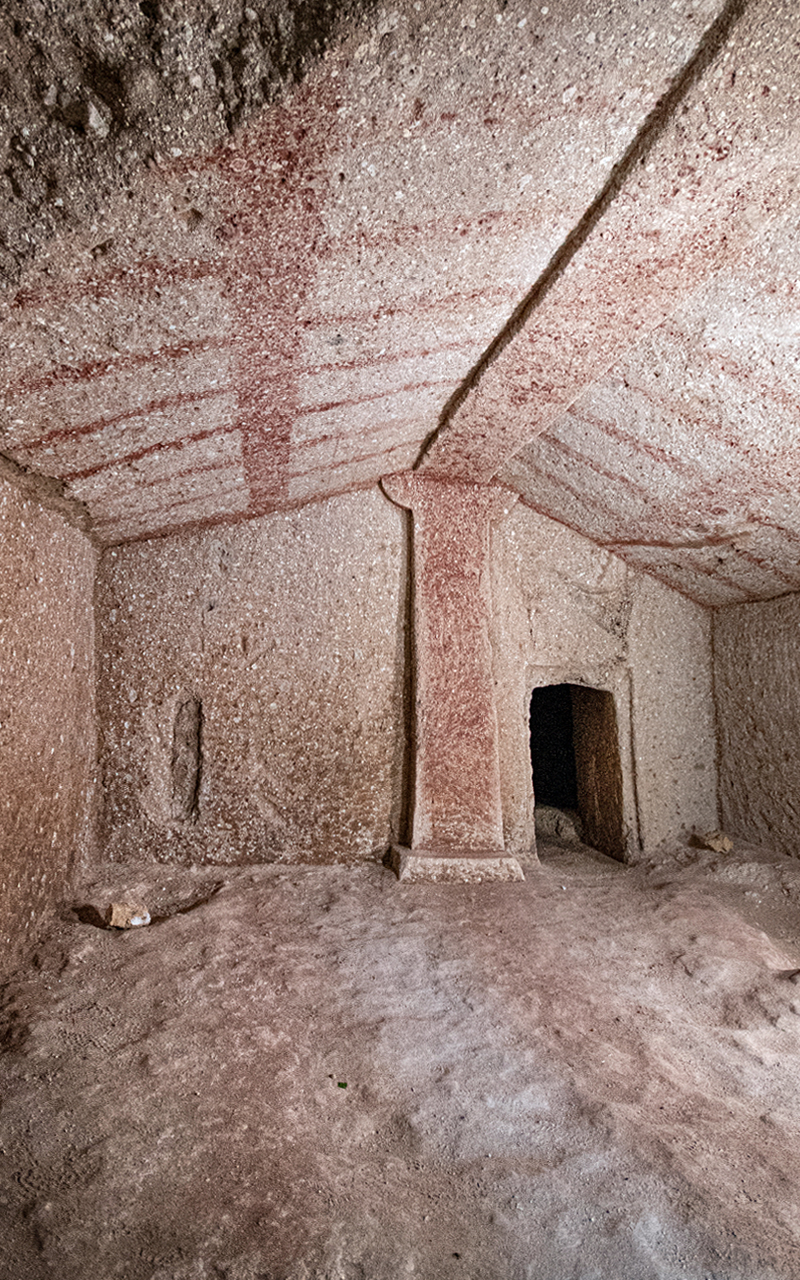
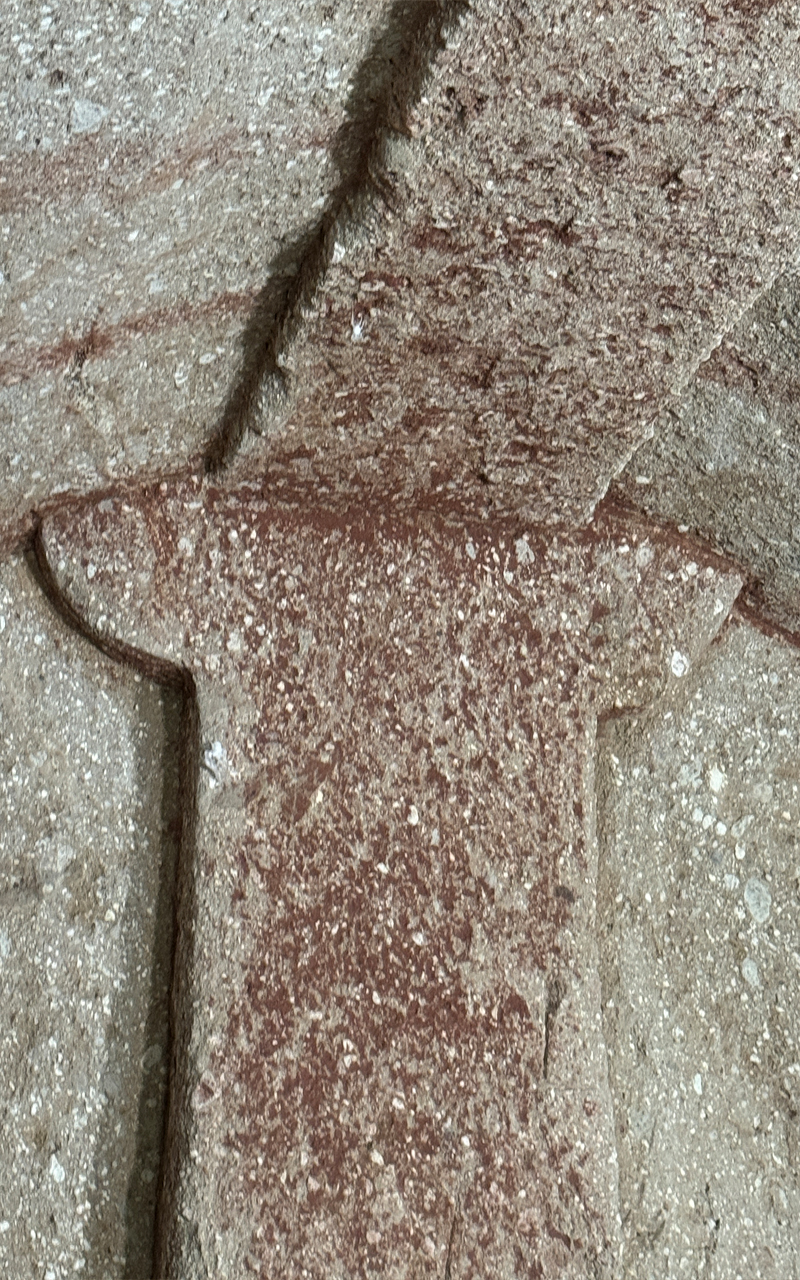
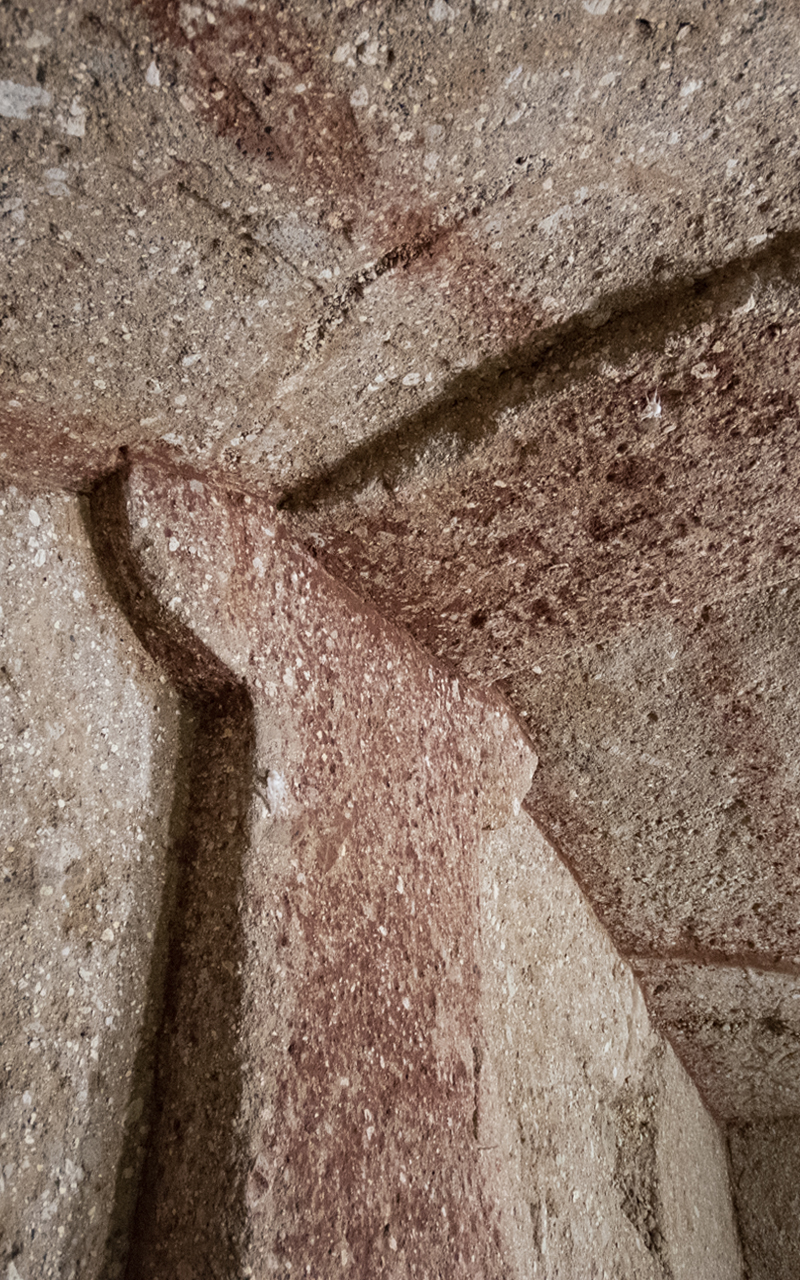
The double-pitched ceiling has a central beam, the columen, rendered in relief and entirely painted red. It rests on two elements that are also carved and painted: a moulded corbel on the entrance wall and a Tuscanic pillar on the rear wall, with base, rectangular-section shaft and Doric capital.
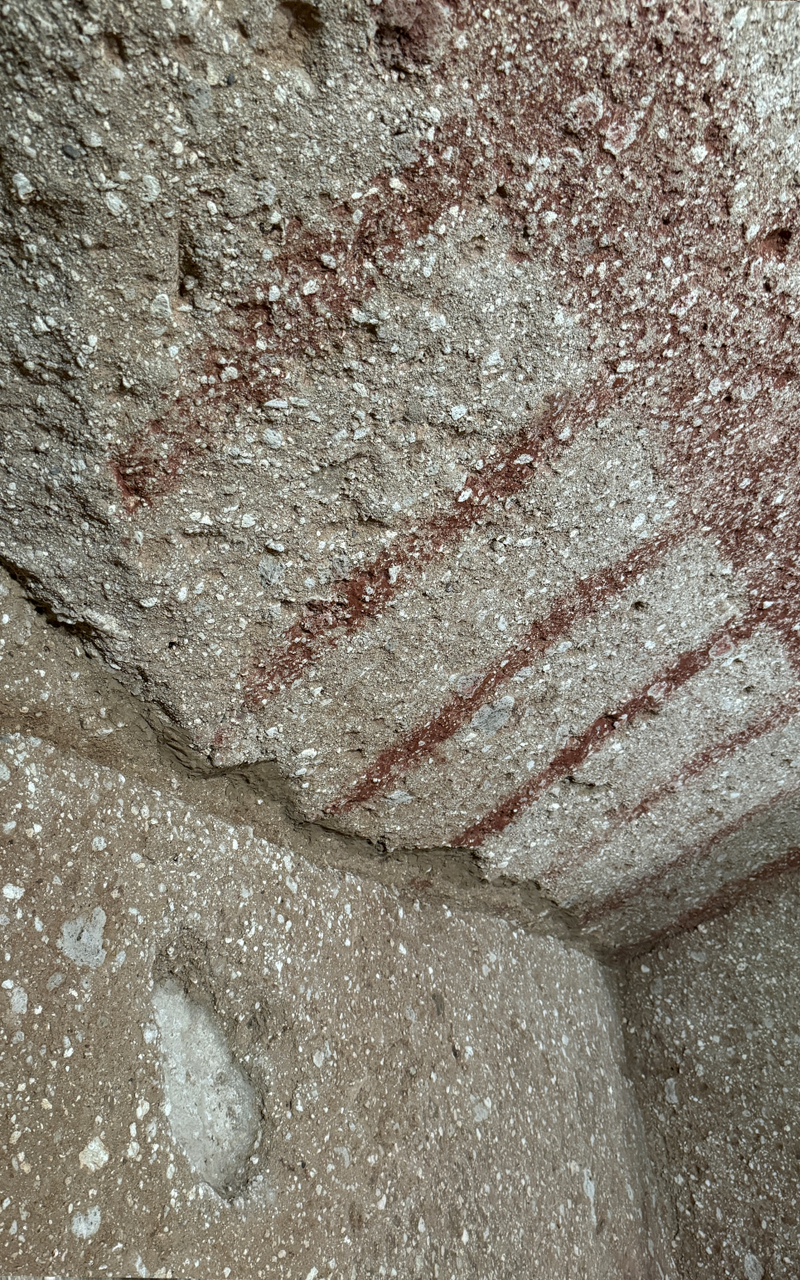
Painted only, instead, are the representations of two intermediate roof beams, the templa, parallel to the central beam; twenty-six smaller rafters, the cantherii, set at right angles to the central beam, thirteen on each side; and twelve thin lines, six on each slope, reproducing the tiles covering a domestic roof.
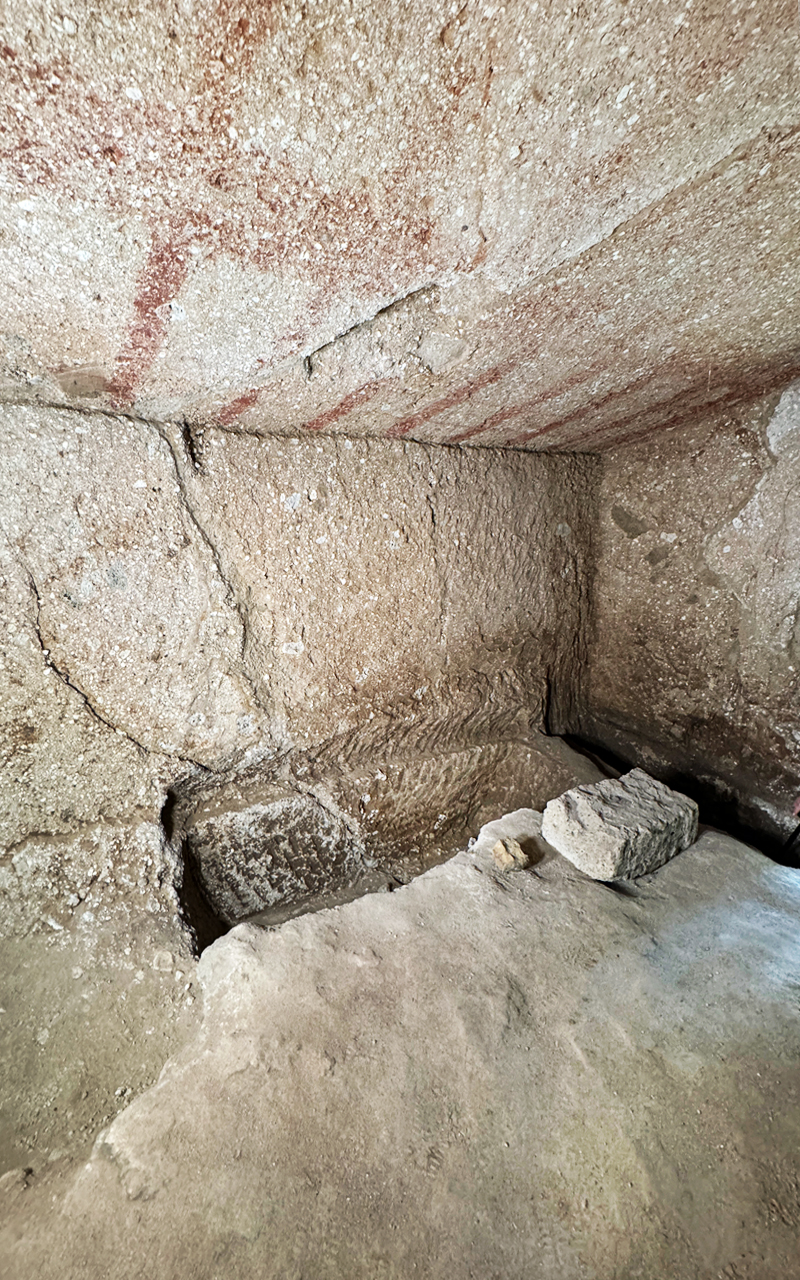
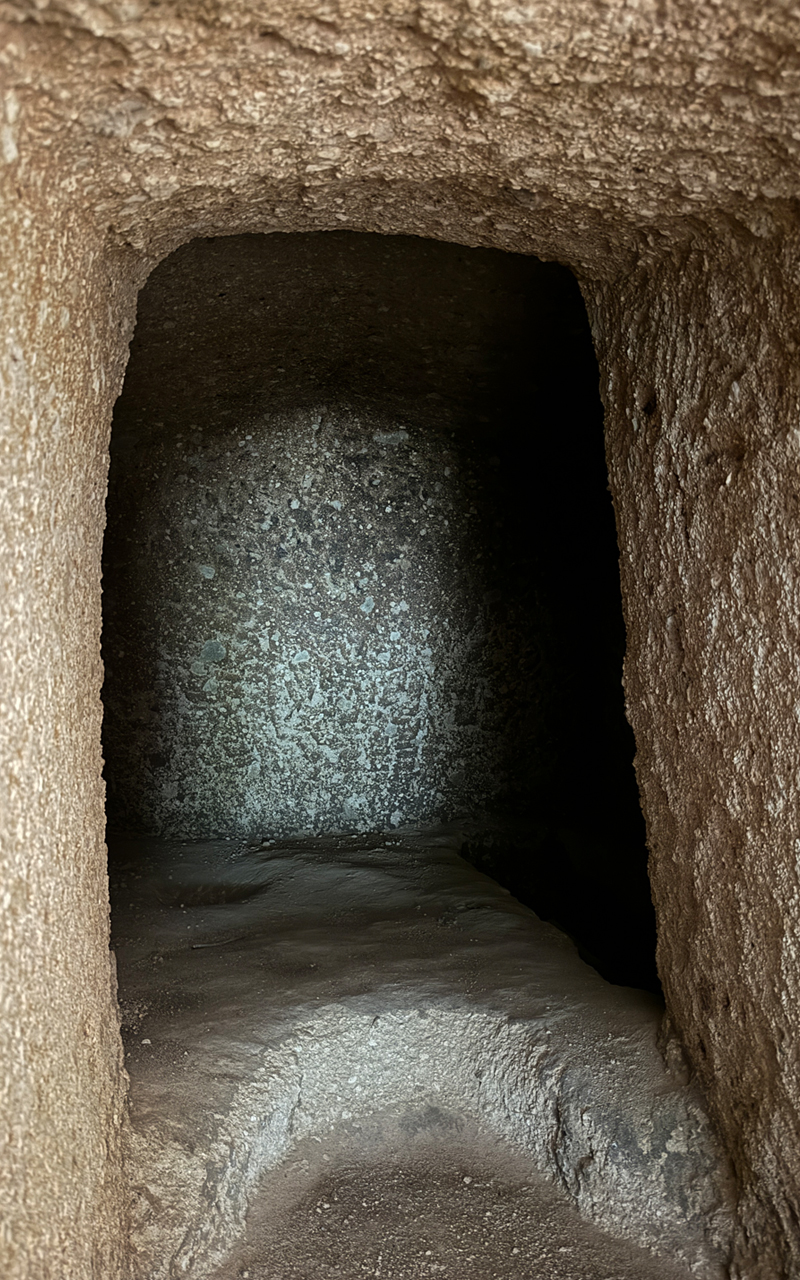
To the right of the pillar, a slightly arched entrance leads, through a corridor, to a second, smaller chamber, positioned to the right and off-centre in relation to the entrance. Here too the ceiling is double-pitched, while a single pit opens in the floor.
The ceramic fragments found during the clearing of the tomb testify to the importance of the family to which the funerary monument belonged and allow the period of use of the tomb to be placed in the second half of the 6th century BC.
Alongside a “Grotte type” cup datable to the first half of the 6th century BC, and a series of grey bucchero vessels of Orvieto production, datable between the third quarter of the 6th century and the 5th century BC, particular note should be made of a black bucchero spindle whorl with a globular, gadrooned body; a fragment of a Laconian cup with stylised decoration, datable to around the mid-6th century BC; and an Attic cup entirely coated in black glaze, later than the former and datable towards the end of the century.
There is also a fair quantity of ceramic fragments belonging to other vessels imported from Greece which, together with those mentioned above, suggest the former presence of rather important grave goods. These can be attributed to an emerging family within the aristocratic class of late-Archaic La Civita, whose prestige is further emphasised by the complexity and architectural quality of the tomb.
Entirely unusual and unrelated to this context is the presence, among the remains of the grave goods, of a large handle belonging to an impasto column krater, decorated with impressed concentric circles and disc-shaped lateral edges. It may still date to the Orientalising period and most probably entered the tomb during one of the earlier violations.