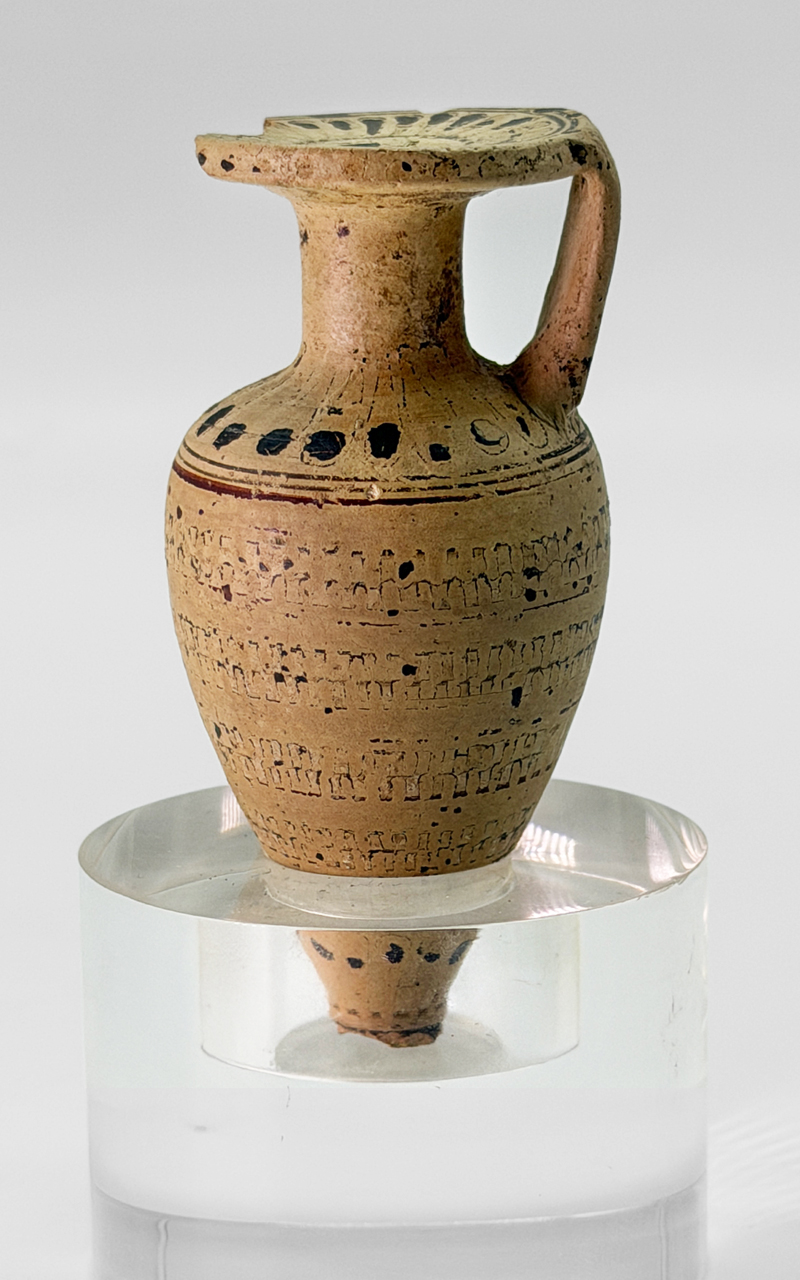
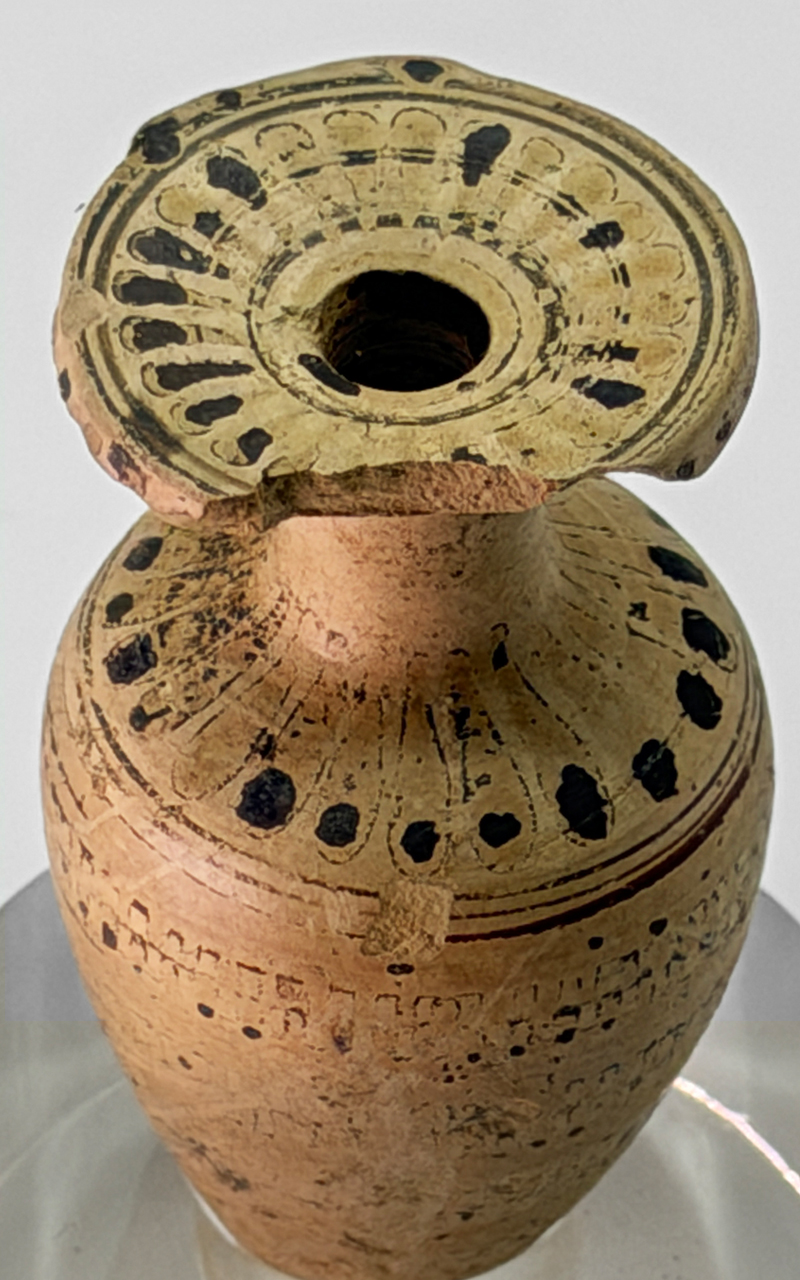
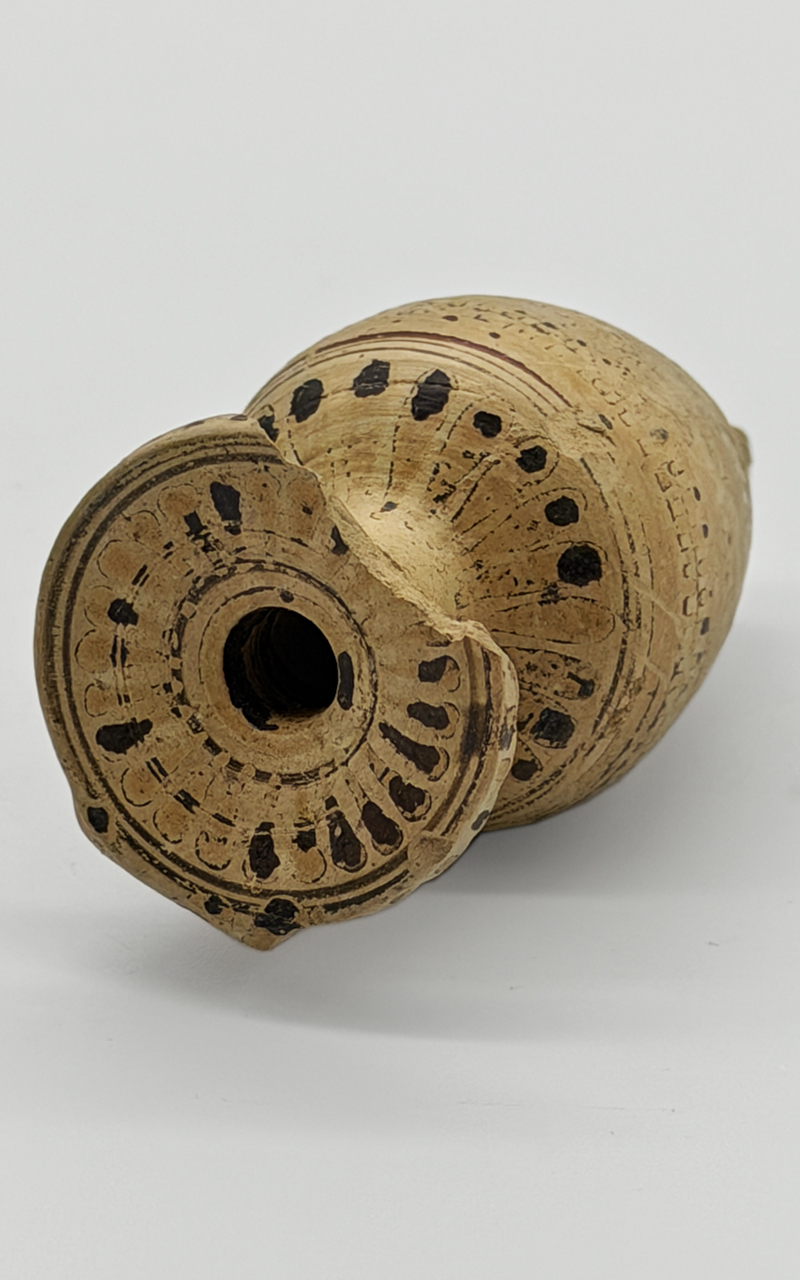
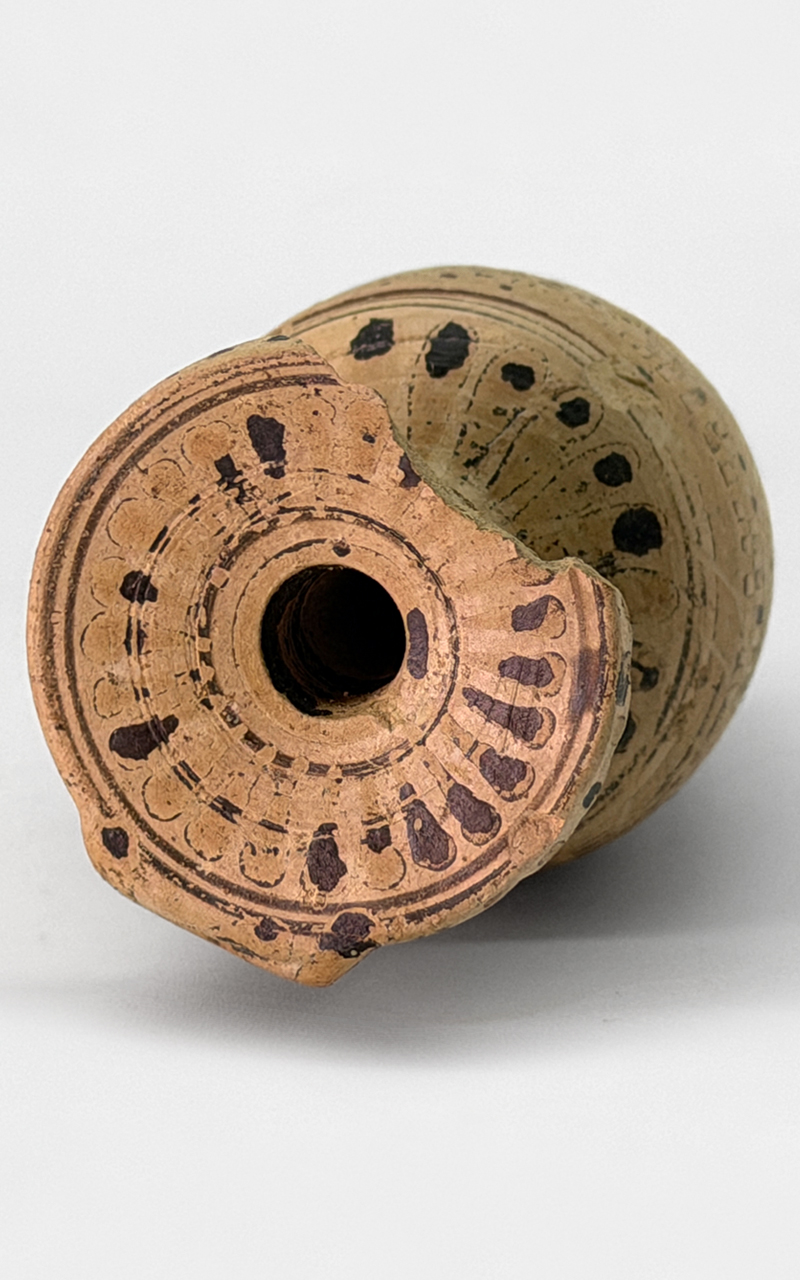
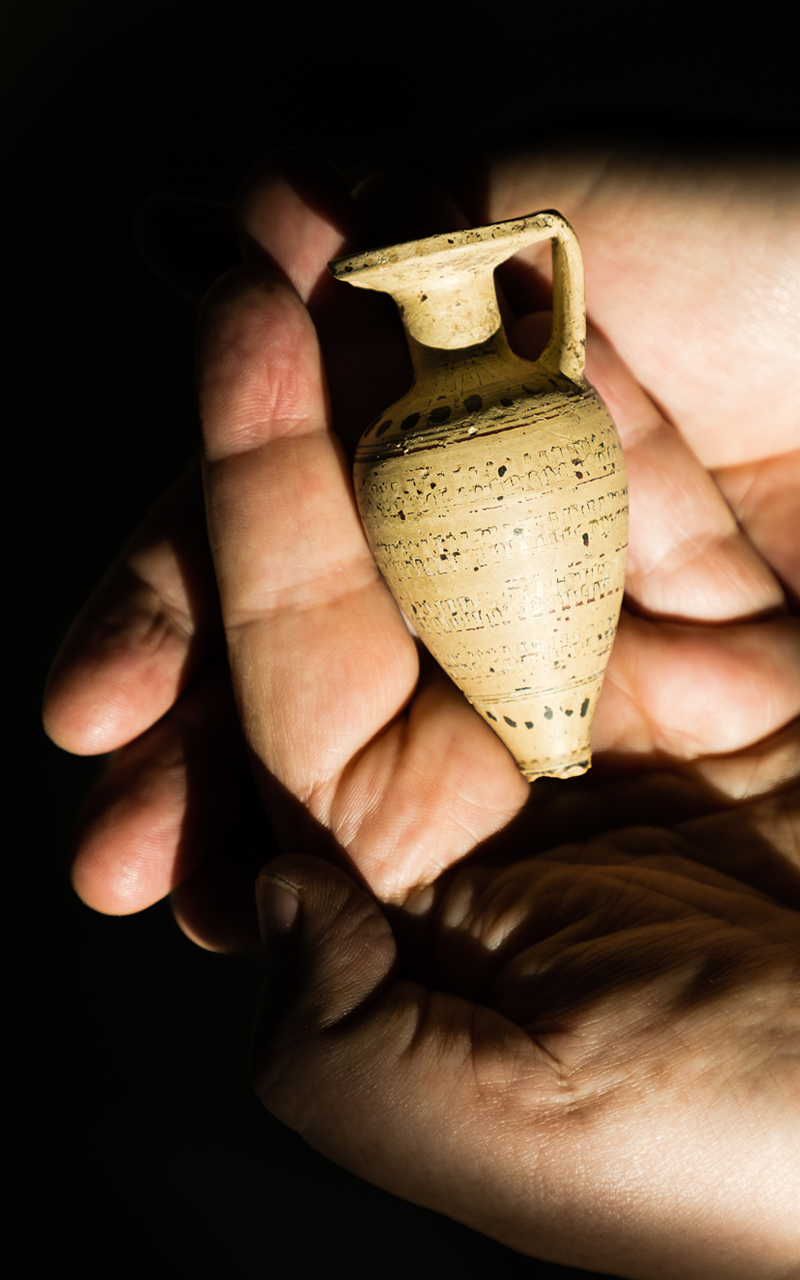
Tiny, elegant and surprisingly precious, the aryballos from Tomb CC1 in the necropolis of Centocamere can be dated to the last quarter of the 7th century BC, fully within Protocorinthian production. Its compact form, with a disc-shaped mouth, a short, clearly distinct cylindrical neck and a piriform body tapering into a small truncated-conical foot, was designed to contain precious perfumes and ointments intended for body care and daily rituals.
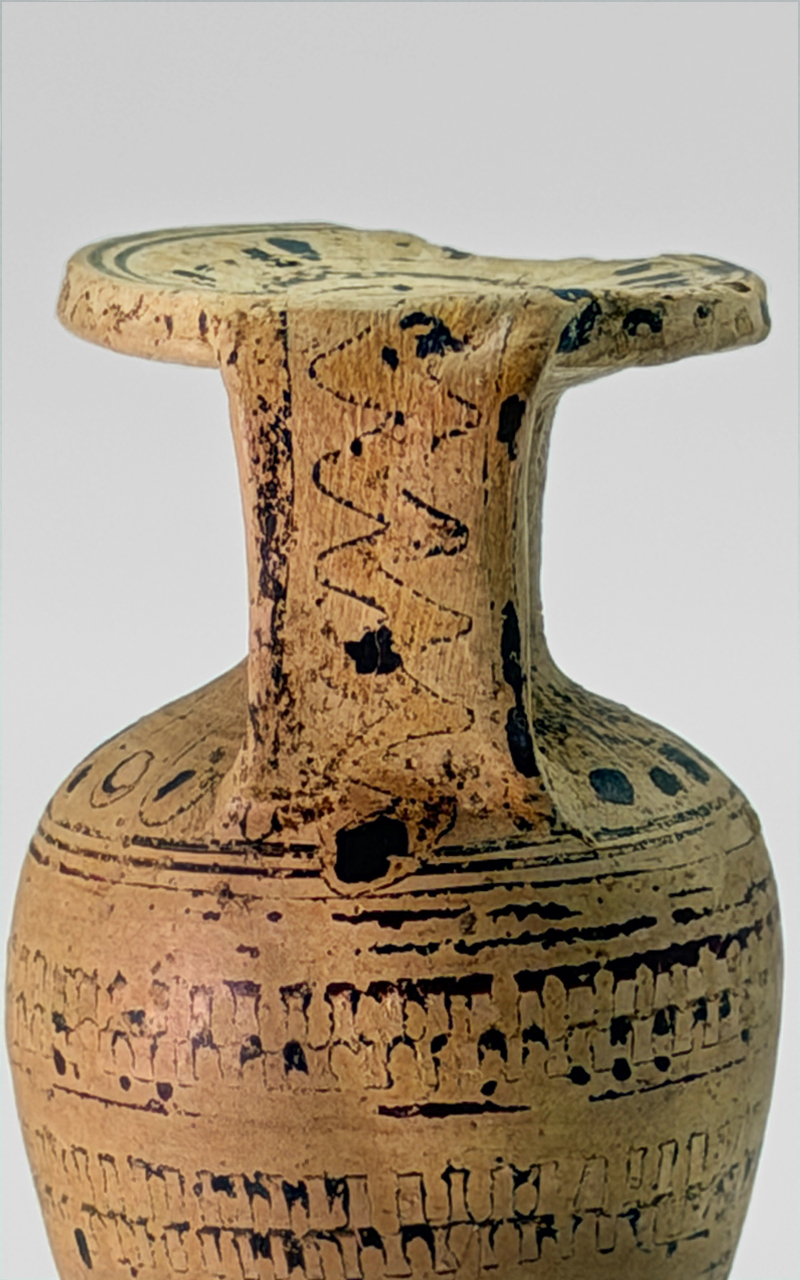
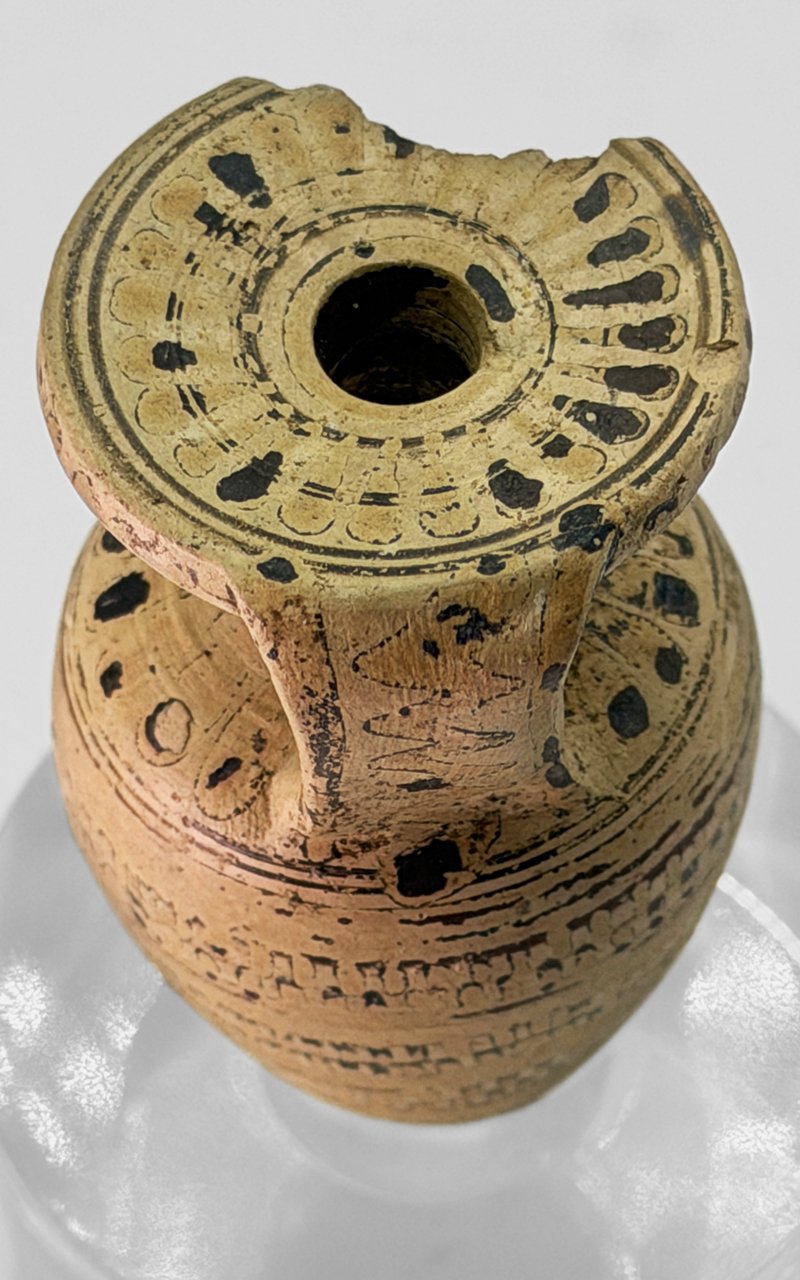
The yellowish clay and brownish-black paint reveal refined craftsmanship, enriched by minute decoration: fluting within concentric circles on the top of the mouth, traces of small dots on the exterior, a checkerboard pattern alternating with bands on the body, further fluting on the shoulder and around the foot, while the handle is crossed by a vertical zigzag line.
These motifs are simple only in appearance. They belong to the geometric repertoire typical of Protocorinthian pottery and give the vessel a harmonious and recognisable visual rhythm.
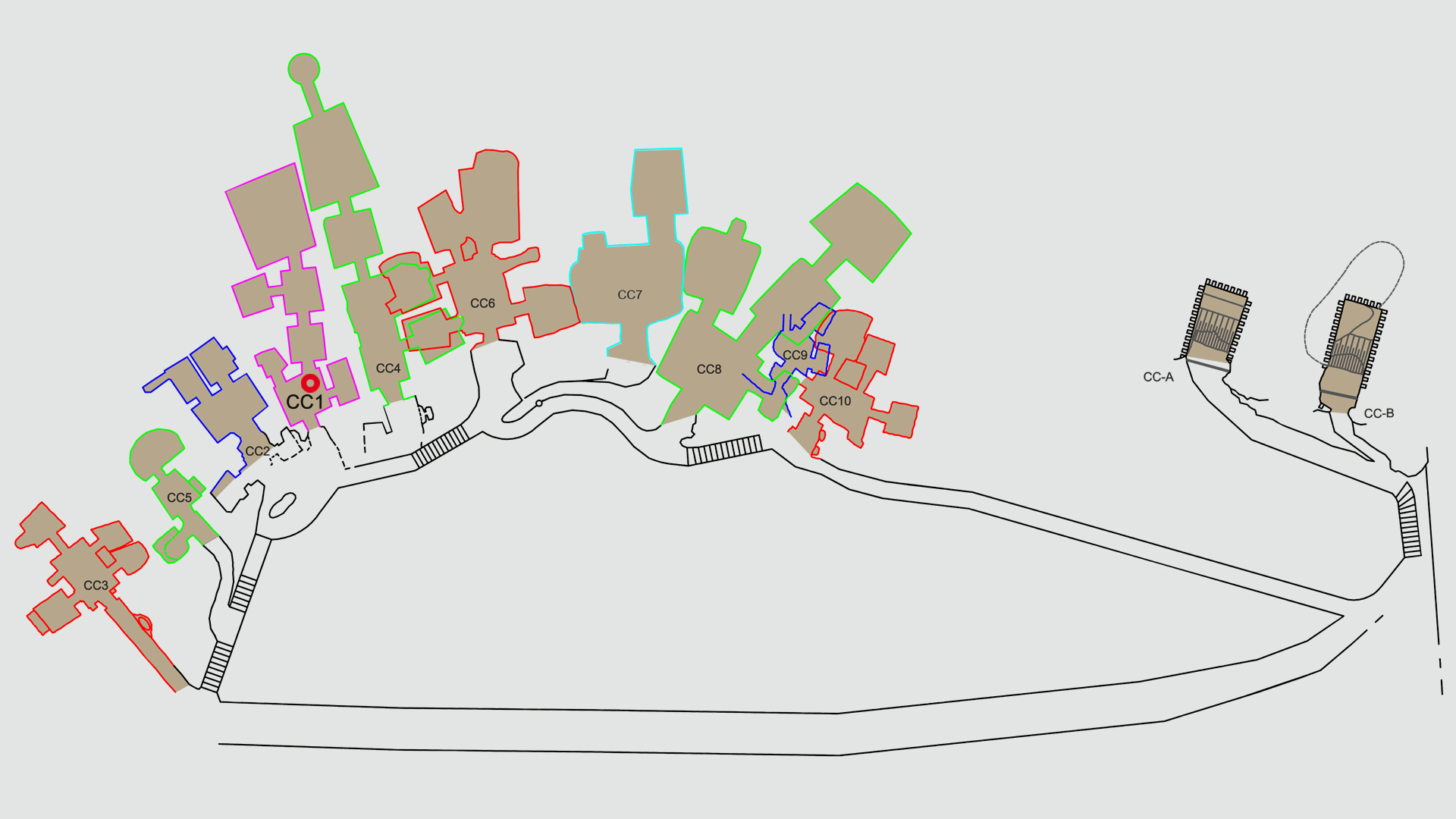
The context of discovery adds historical value to the artefact. The aryballos formed part of the grave goods of a young girl and was deposited intact in a small rectangular pit cut into the centre of Chamber D, within a tomb of unusually complex structure, consisting of seven rooms and nineteen pits. The very presence of this vessel, with its characteristic decoration, provides an important terminus ante quem for the construction of the tomb itself.
The intact discovery of the grave goods is an exceptional event for the necropolis of Centocamere, which was long frequented and often violated in modern times. The possibility of recovering unaltered objects is due to the unusual position of some burials, placed in unexpected locations and therefore missed by the tomb robbers. This small aryballos, which has survived unharmed for more than 2,700 years, thus restores not only a fragment of daily life, but also a story of archaeological fortune.