Vigna la Piazza Necropolis: dagger sheath from Tomb VLP15
In the Etruscan world, weapons were not merely instruments of offence, but also signs of rank and social identity. Between the 7th and 6th centuries BC, swords, daggers, spears and armour frequently appear in male funerary assemblages, bearing witness to the central role of the warrior within local aristocracies. The high quality of ironworking, often complex and technically advanced, reflects the level achieved by the metallurgical workshops of inland Etruria.
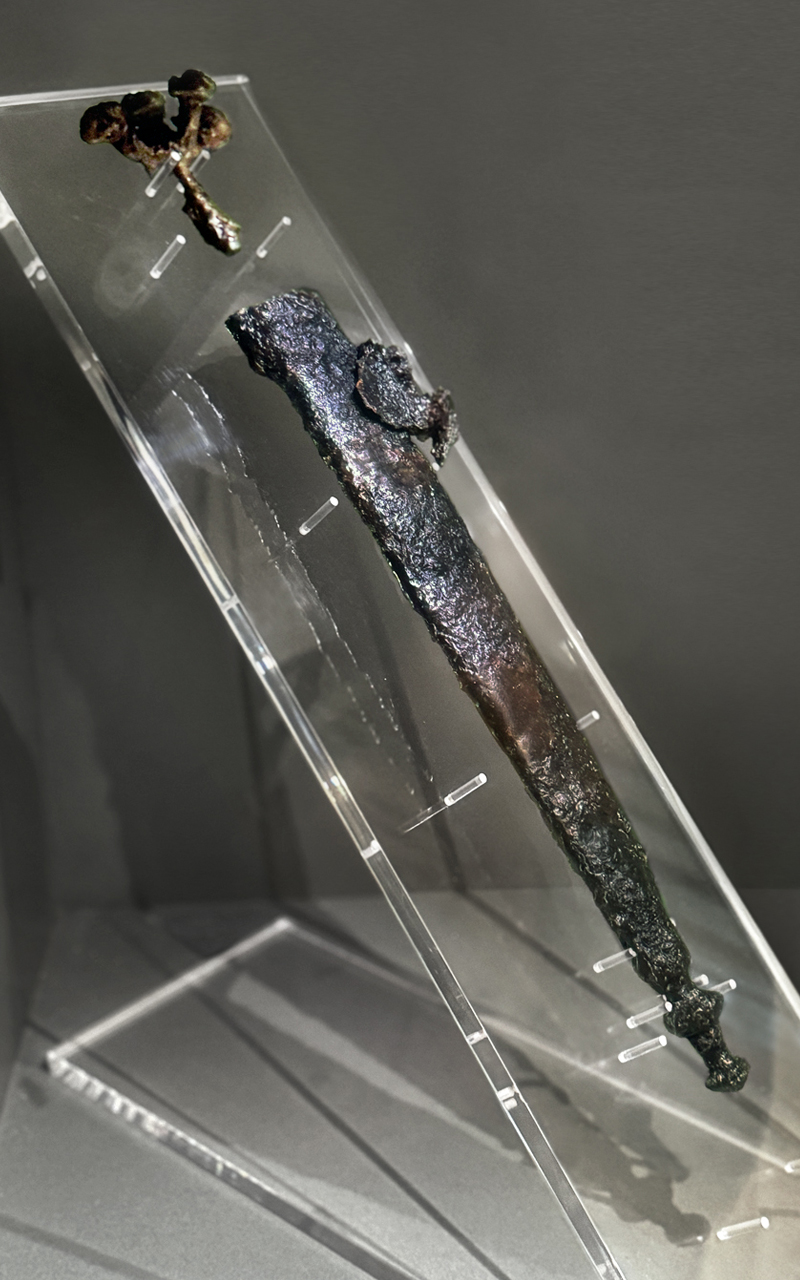
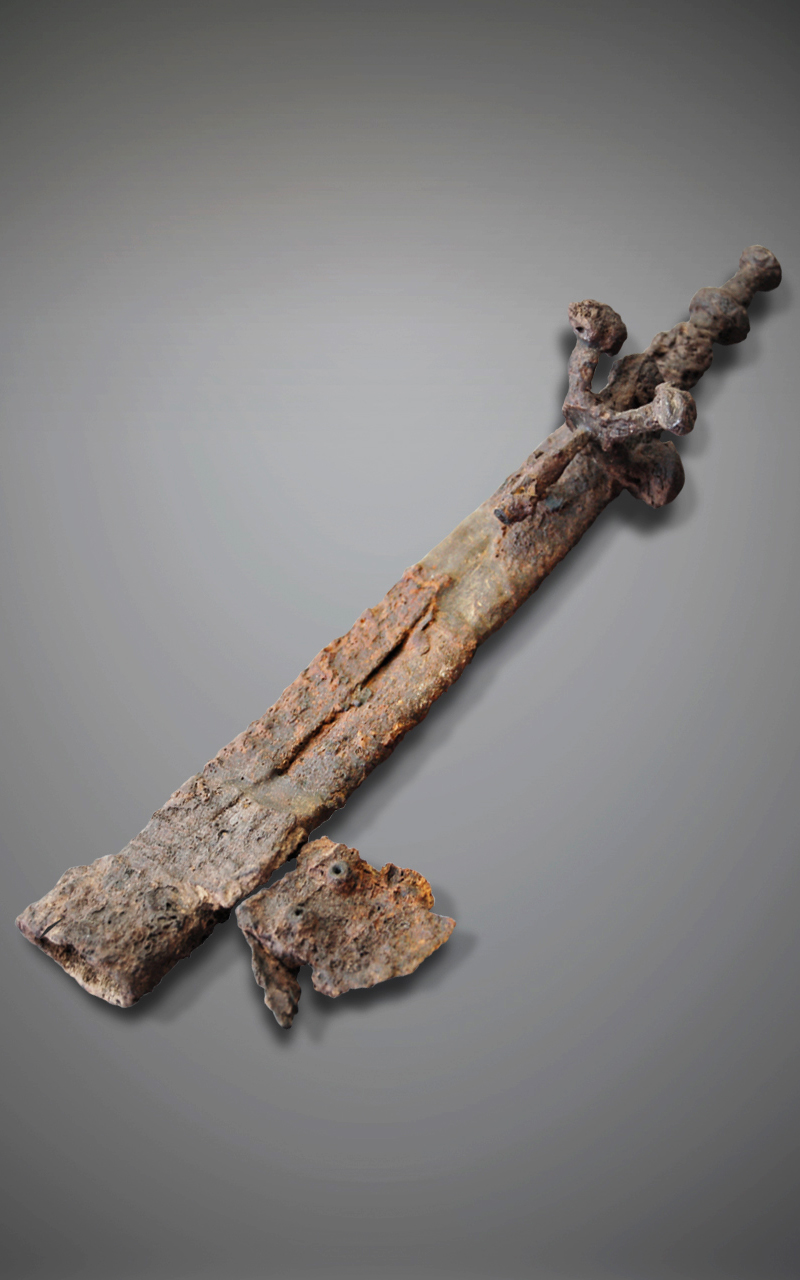
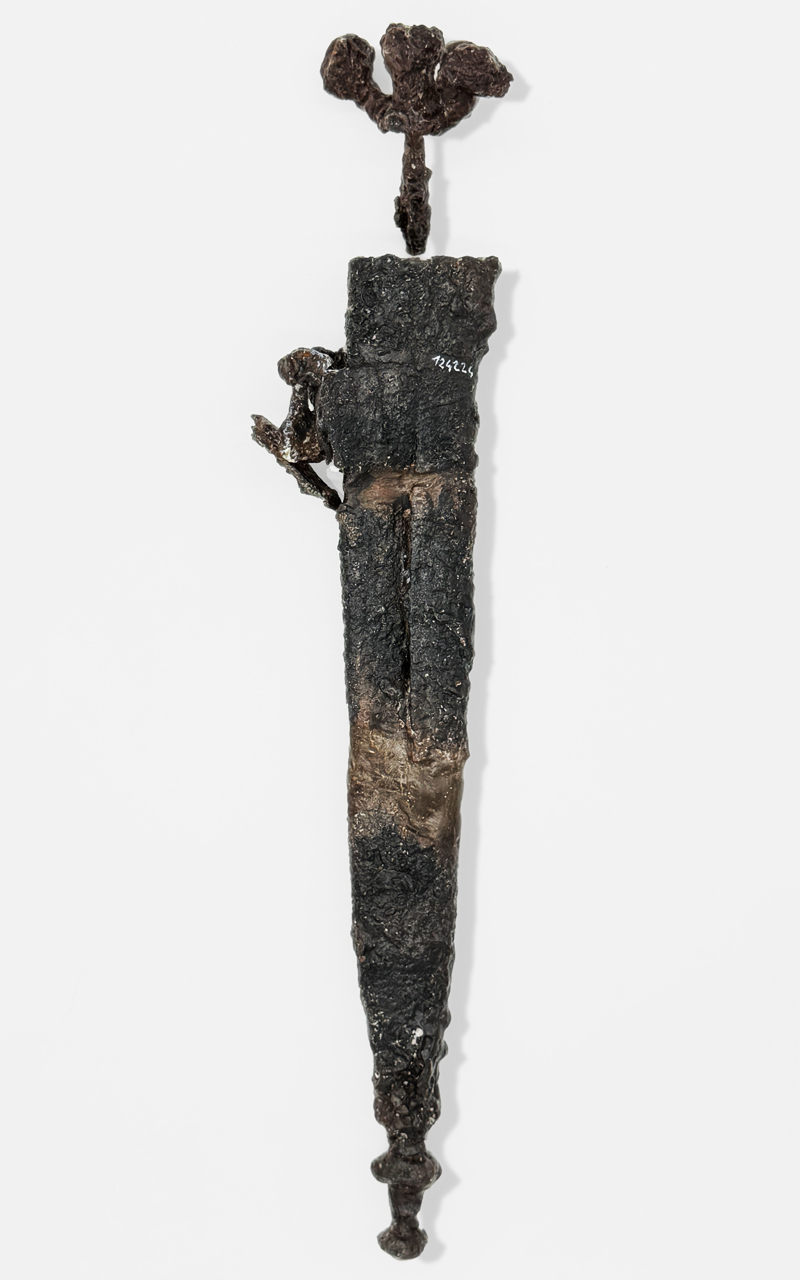
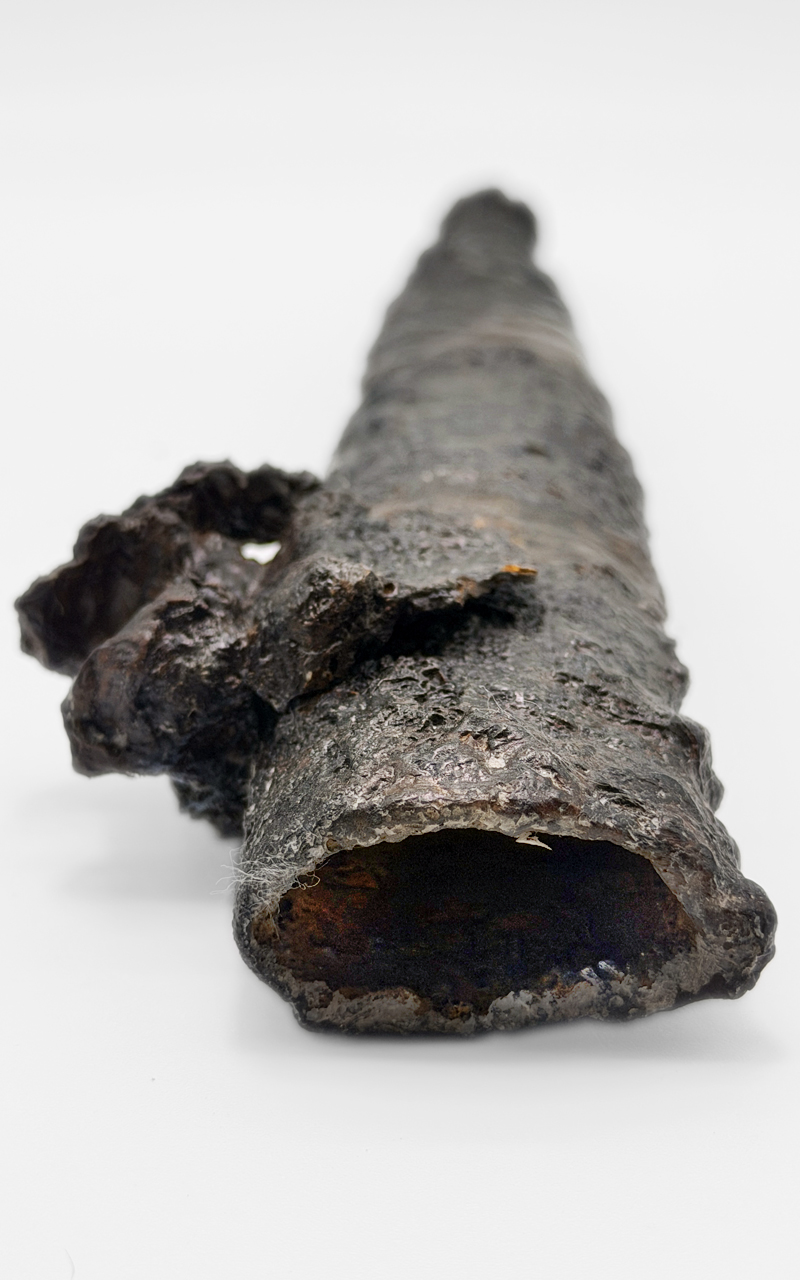
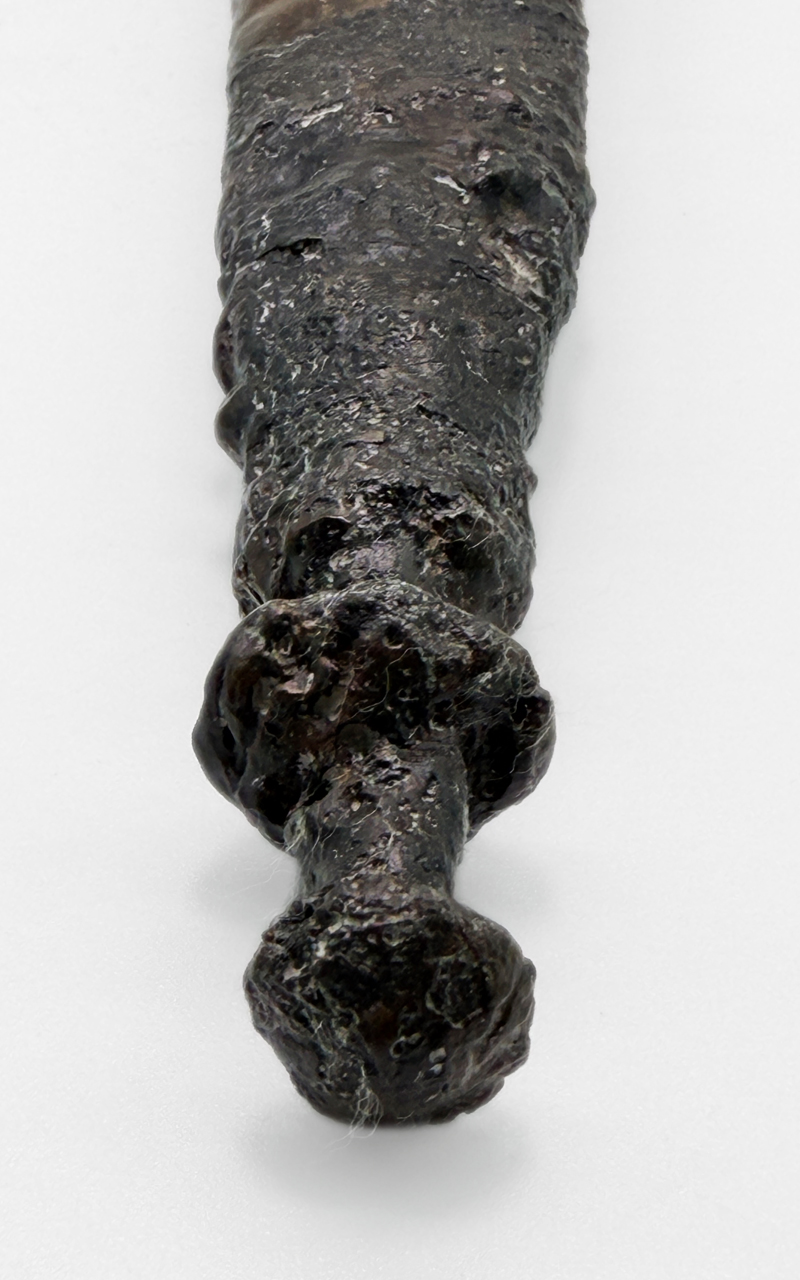
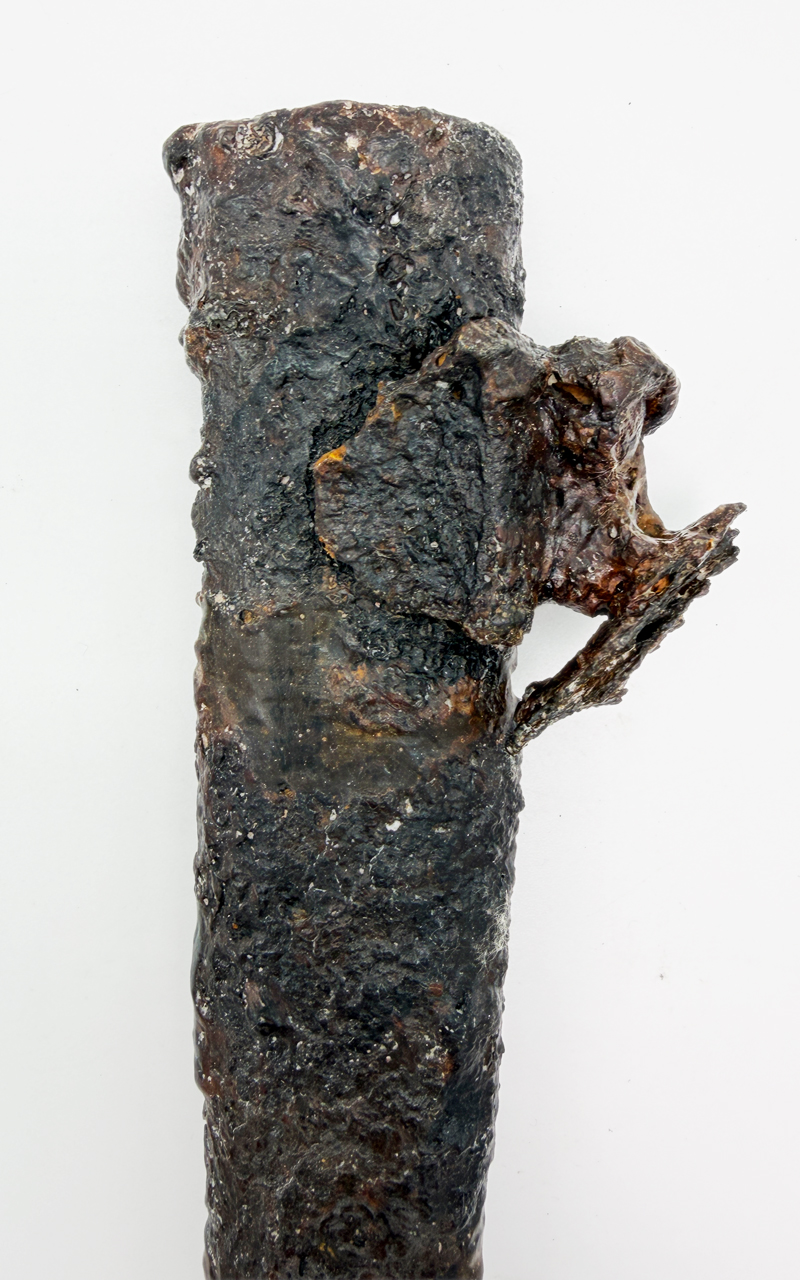
A notable example of this is the iron dagger sheath, restored and reassembled from several fragments, found in Tomb VLP15 in the necropolis of Vigna la Piazza. It consists of a folded and welded sheet, with the lower end shaped into a pronounced annular rib ending in a small conical globule. The original suspension loop is preserved separately.
At the time of discovery, part of the weapon’s handle still adhered to the sheath: a pommel formed of five radiating arms, each ending in a small globule. This condition made it possible to recognise that the dagger had been placed in the tomb unsheathed and inverted in relation to the sheath, according to a deliberate ritual choice. After restoration, the weapon and sheath are now displayed in their correct position.
Although fragmentary, this sheath reveals the craftsmanship and typological development of Etruscan weapons, offering a direct insight into the material culture and symbolic values of the communities that inhabited the territory of Grotte di Castro.