Spouted Pot
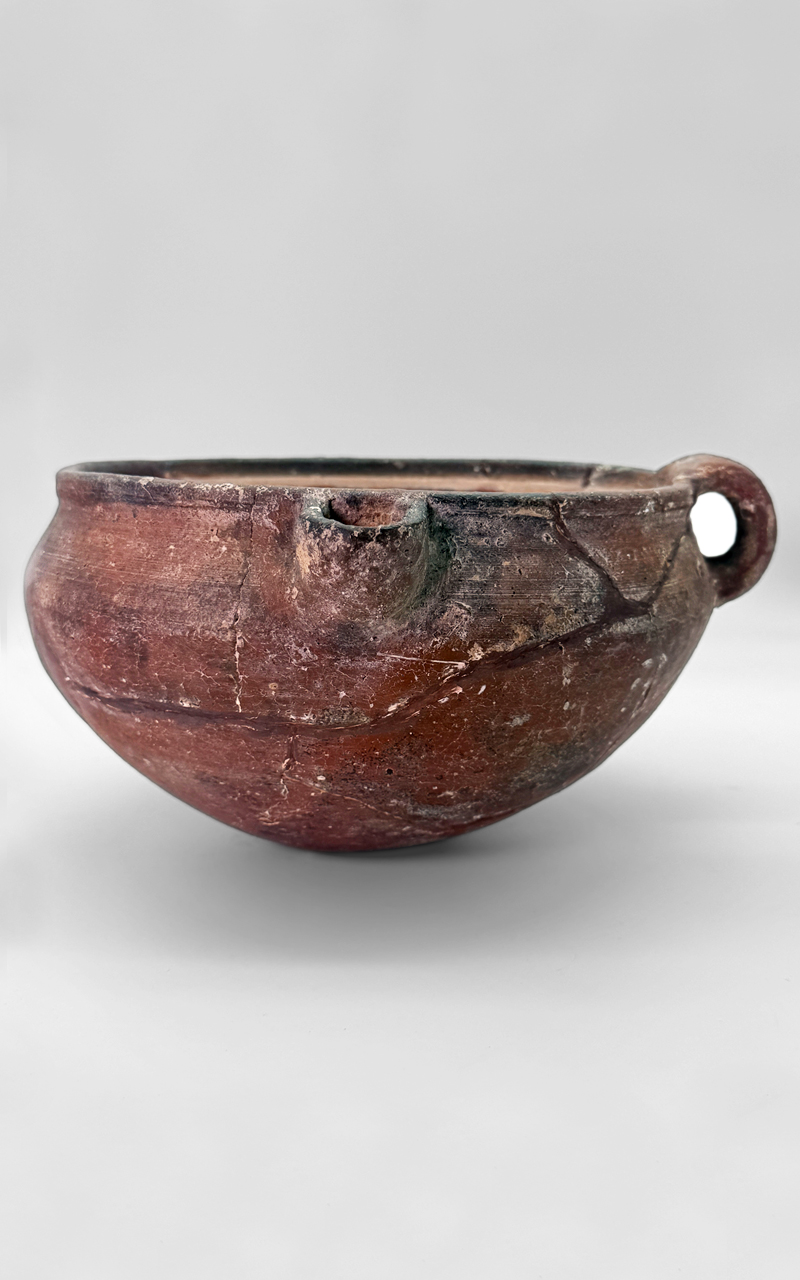
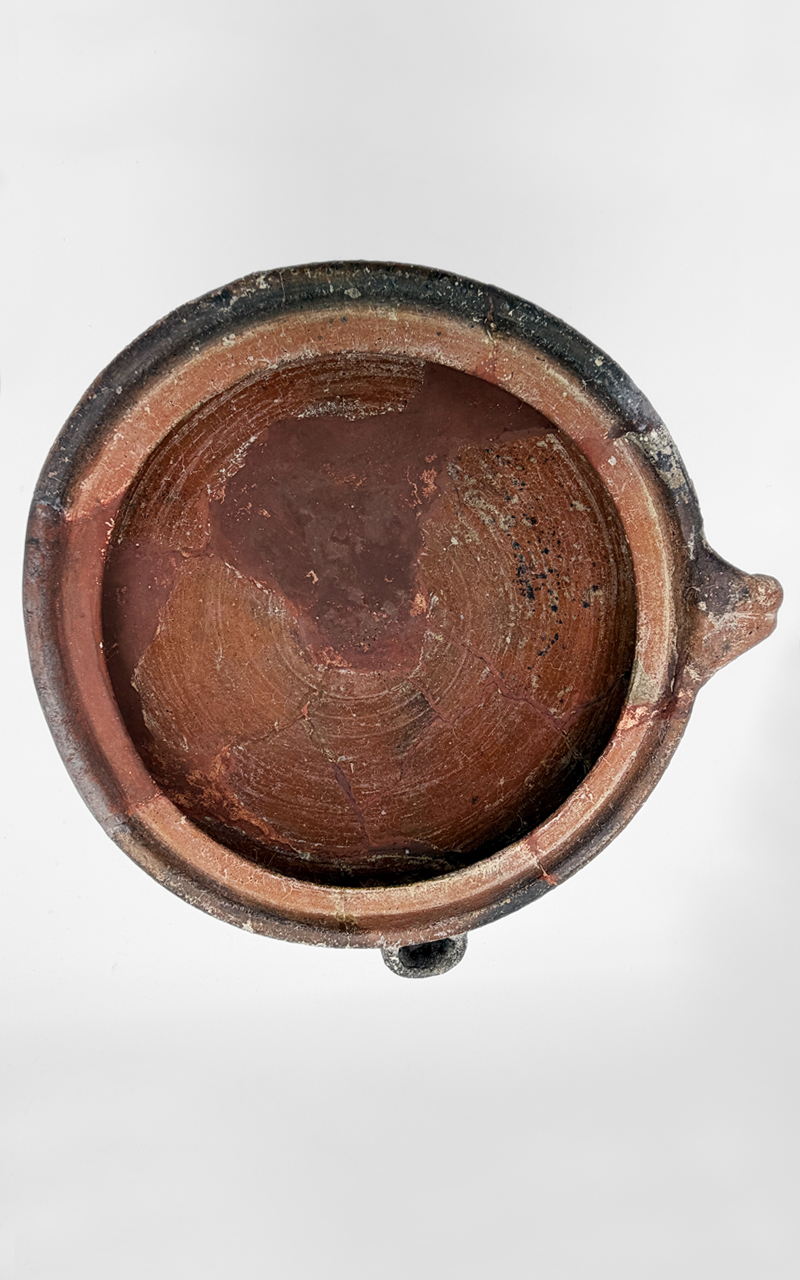
The spouted pot is an artefact that allows us to approach the culinary practices of Etruscan communities in the Archaic period with great precision. Its robust body, shaped in impasto pottery resistant to high temperatures, testifies to a well-established technical production, designed to meet the needs of domestic cooking. It was a vessel intended for slow cooking, for preparations requiring steady heat and prolonged time on the hearth: soups, dishes based on cereals or legumes, and foods that formed the basis of the daily diet.
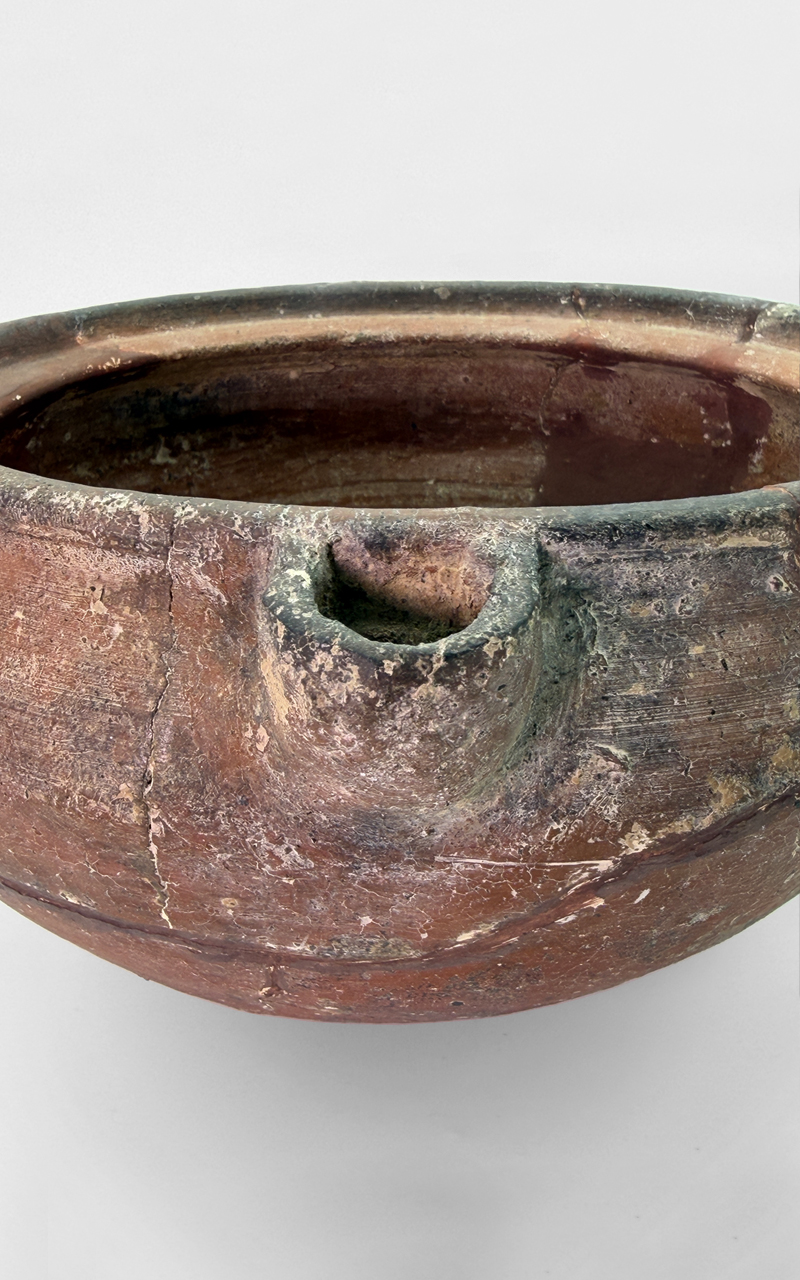
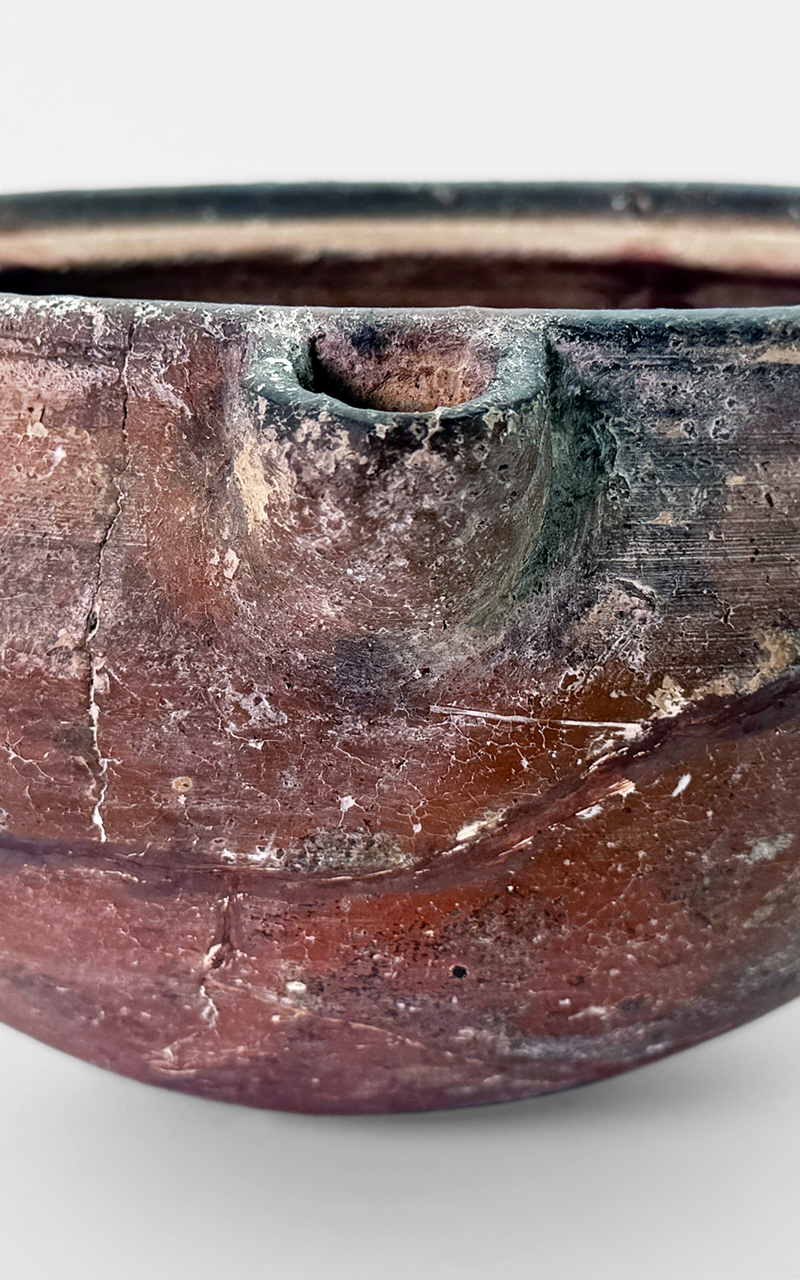
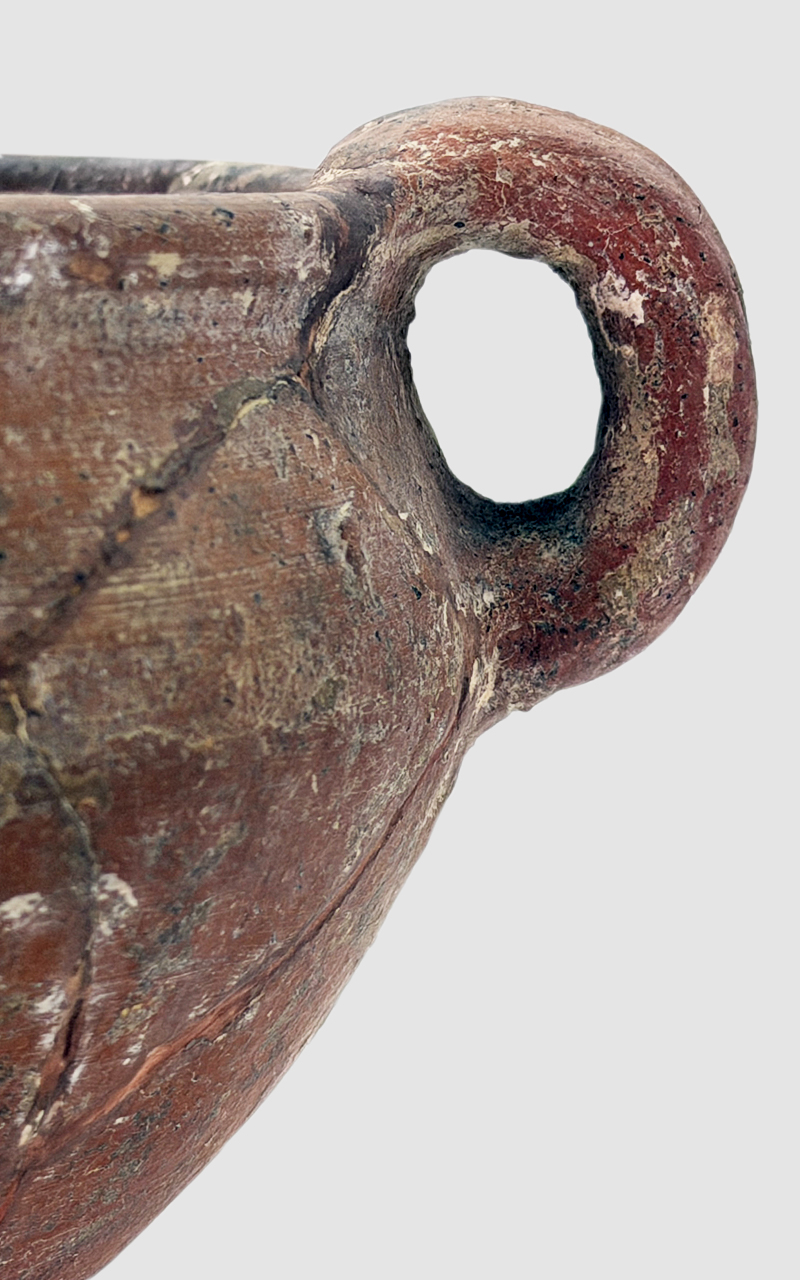
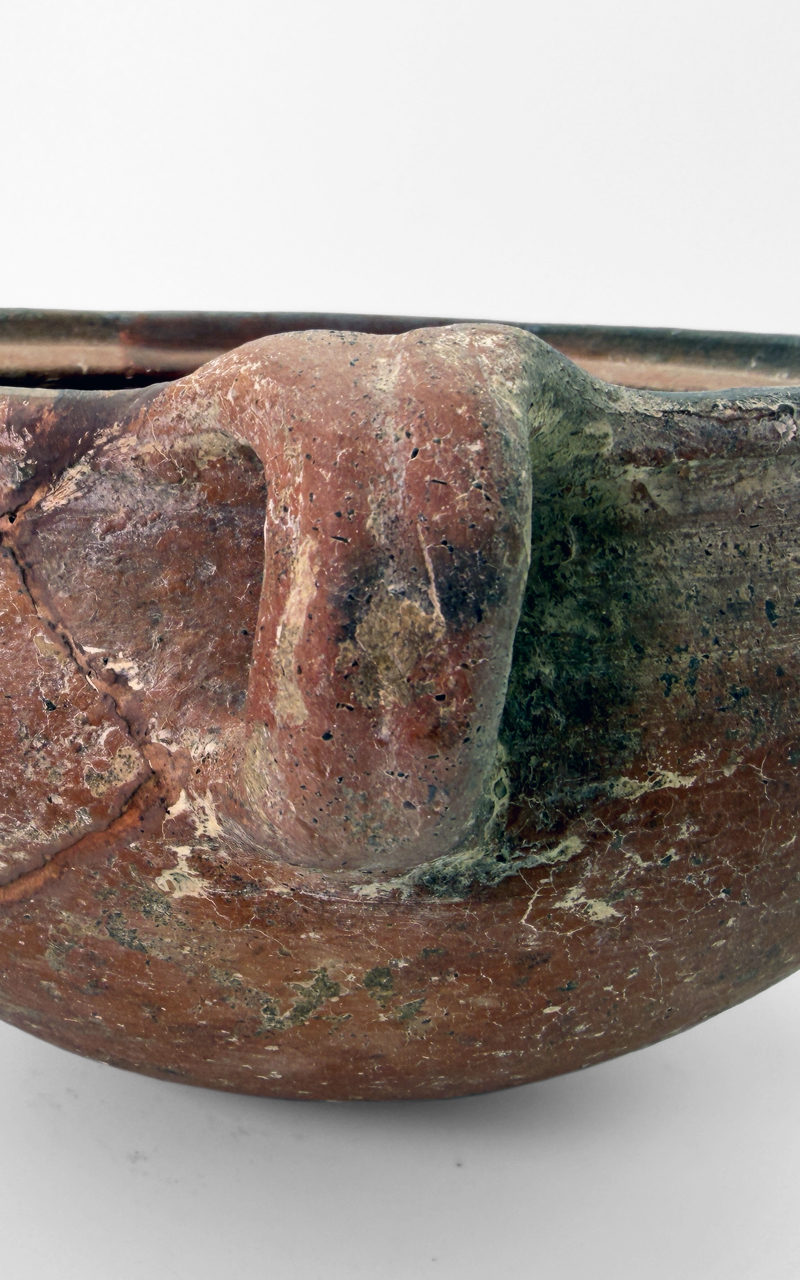
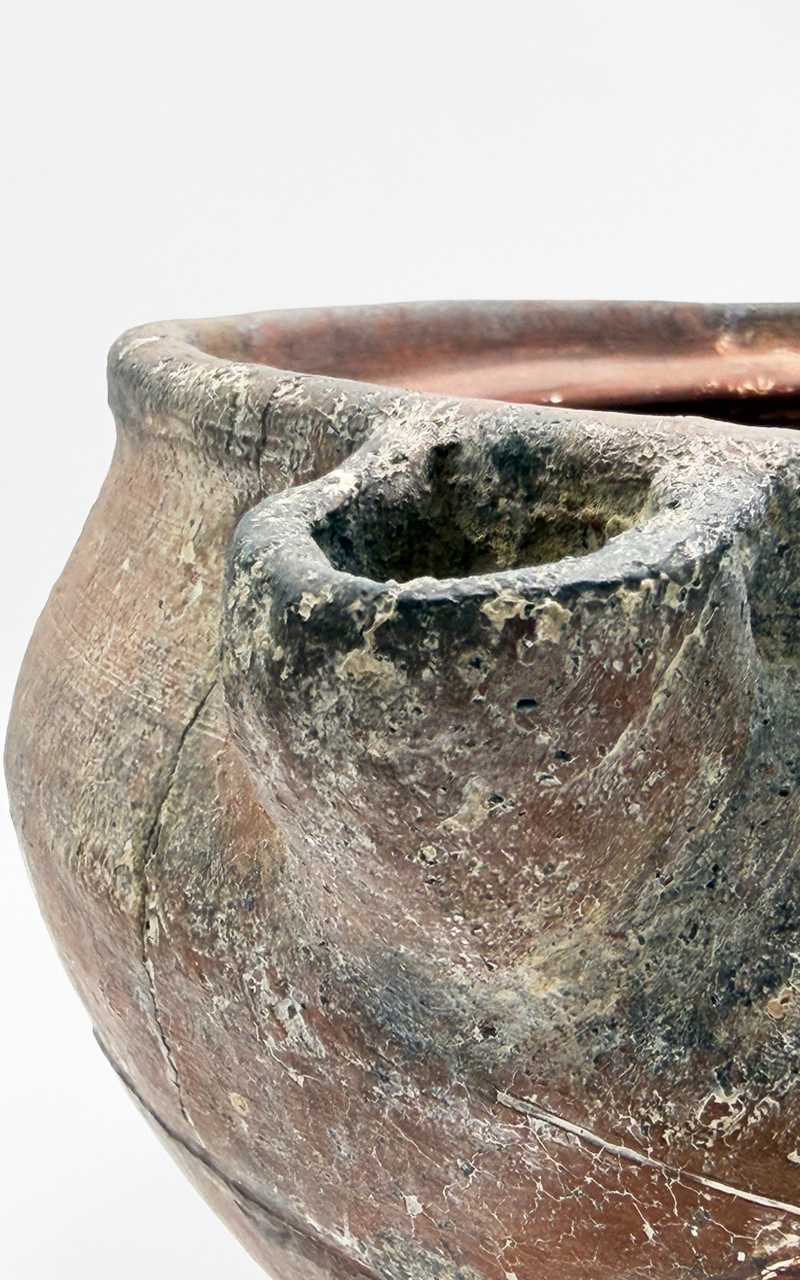
The spout, set vertically on the shoulder, had a precise and practical function: it allowed steam to escape in a controlled way, preventing overflow and ensuring even cooking. The lateral handles, solid and well positioned, were designed to make it easier to grip and lift the vessel from the fire, an everyday action that required stability and safety.
From a typological point of view, the form of the pot finds precise parallels in Gravisca Type C, one of the most widespread models in coastal and inland Etruria. The presence of similar examples at Grotte di Castro confirms the circulation of standardised forms and the adoption of shared technical solutions. Three spouted pots are known in the territory: two come from the necropolis of Vigna la Piazza and one from the necropolis of Casale Centocamere, dated to the Archaic period. Their discovery in funerary contexts suggests that objects connected with domestic life could be deposited as part of the grave goods, perhaps to evoke everyday activities or skills recognised in the individual.
Alongside the pot, the “Grotte type” cup from Tomb VLP 7 offers a further element for understanding the material culture of the territory. Made of partially polished reddish-brown impasto, it has a conical bowl and a trumpet-shaped foot with a raised edge, now only partly preserved. The blackish patches on the surface testify to exposure to fire and to the everyday use of the vessel. Footed bowls are very common in the Archaic grave goods of Grotte di Castro and display distinctive features that set them apart from contemporary models from the Orvieto area: it is precisely these specific characteristics that have led scholars to define them as a local variant, recognisable by form, clay body and finish.
The function of the cup is not unambiguous. It may have been used as a table vessel, but some examples, because of their size and shape, may also have served as covers for small containers. A significant clue comes from the necropolis of Centocamere, where an identical cup was found upside down over a small two-handled olla, perhaps used to protect the contents of the vessel.
Considered together, these artefacts directly document the organisation of Etruscan cooking, the use of the hearth and the spread of functional forms within Archaic communities. The pot and the cup, with their technical specificities and possible uses, offer a concrete picture of food practices, production choices and everyday gestures that accompanied the lives of the inhabitants of Grotte di Castro, restoring the depth of a material culture that combined functionality, tradition and community identity.