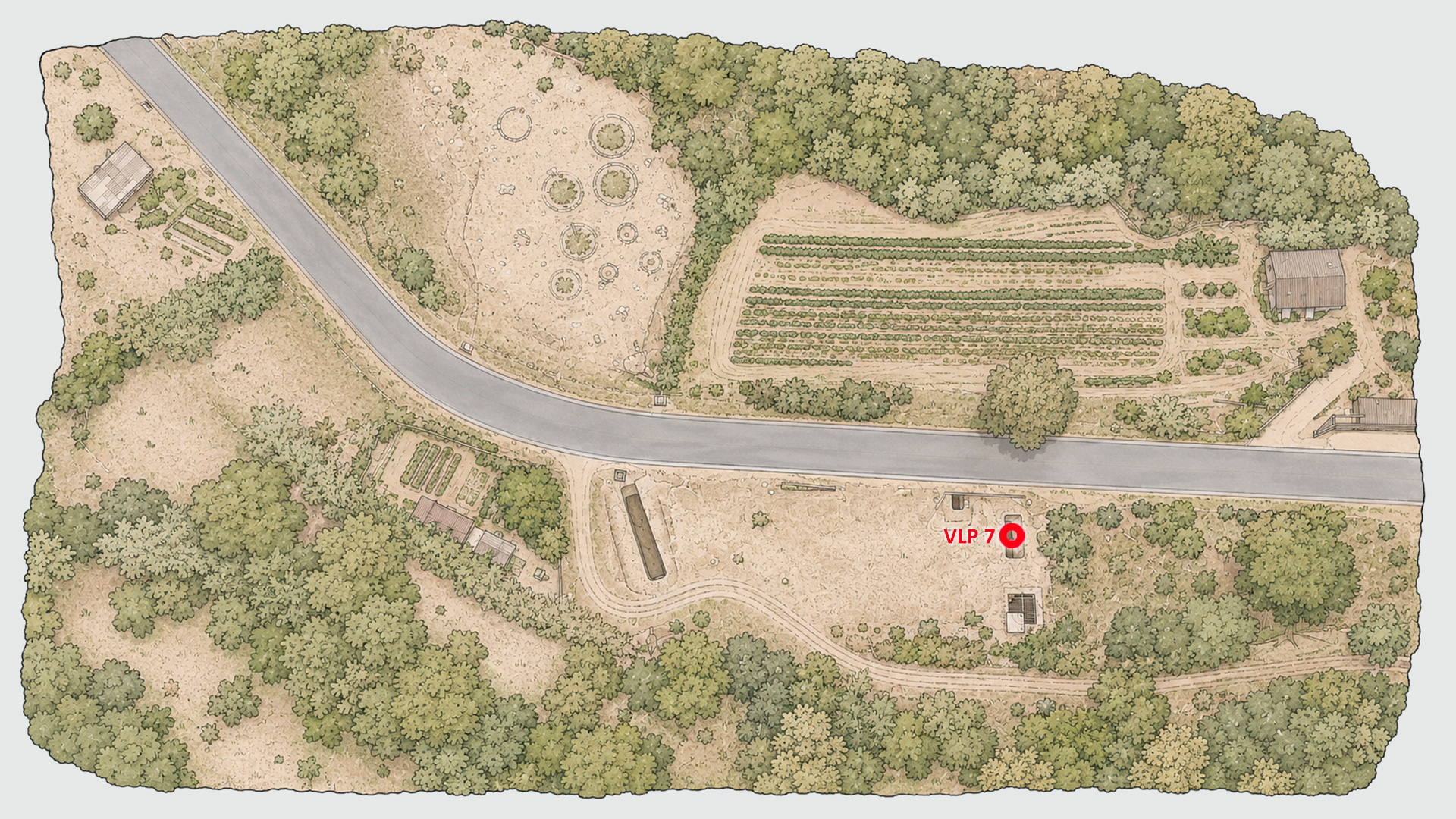
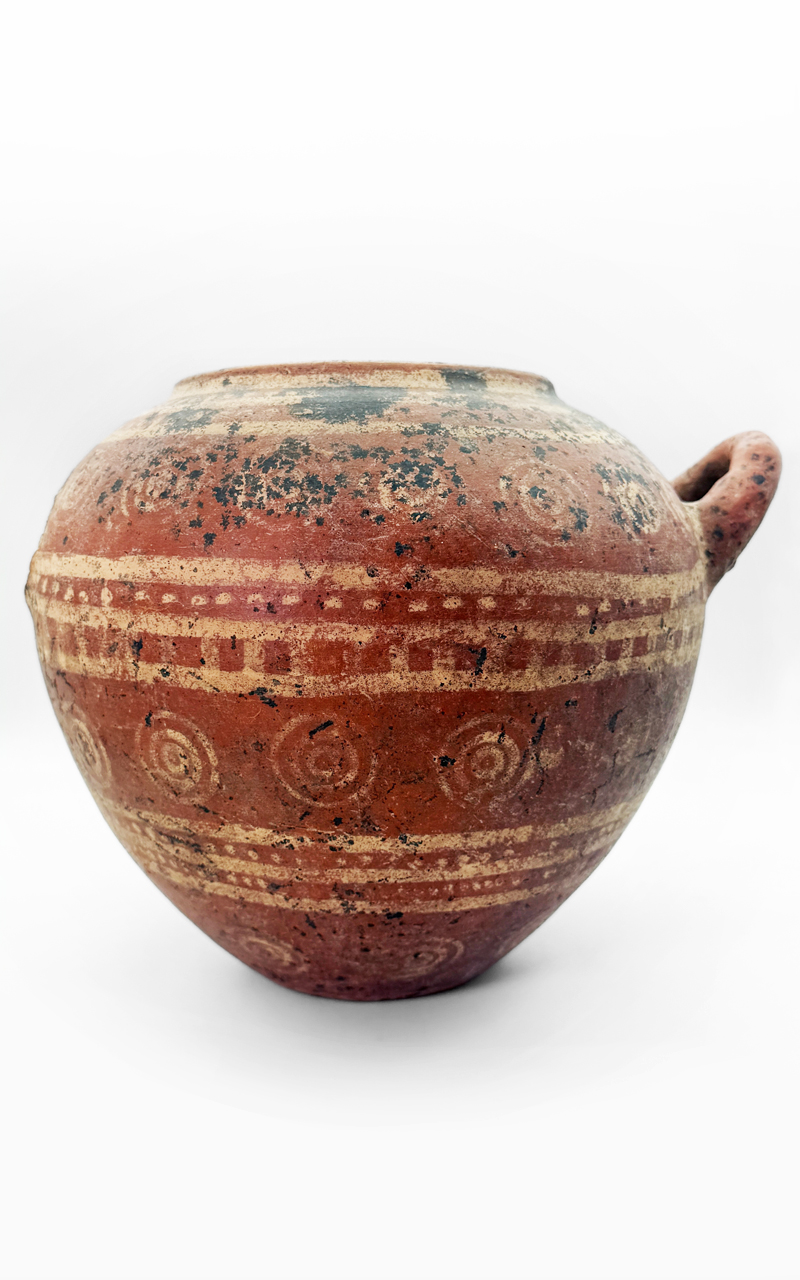
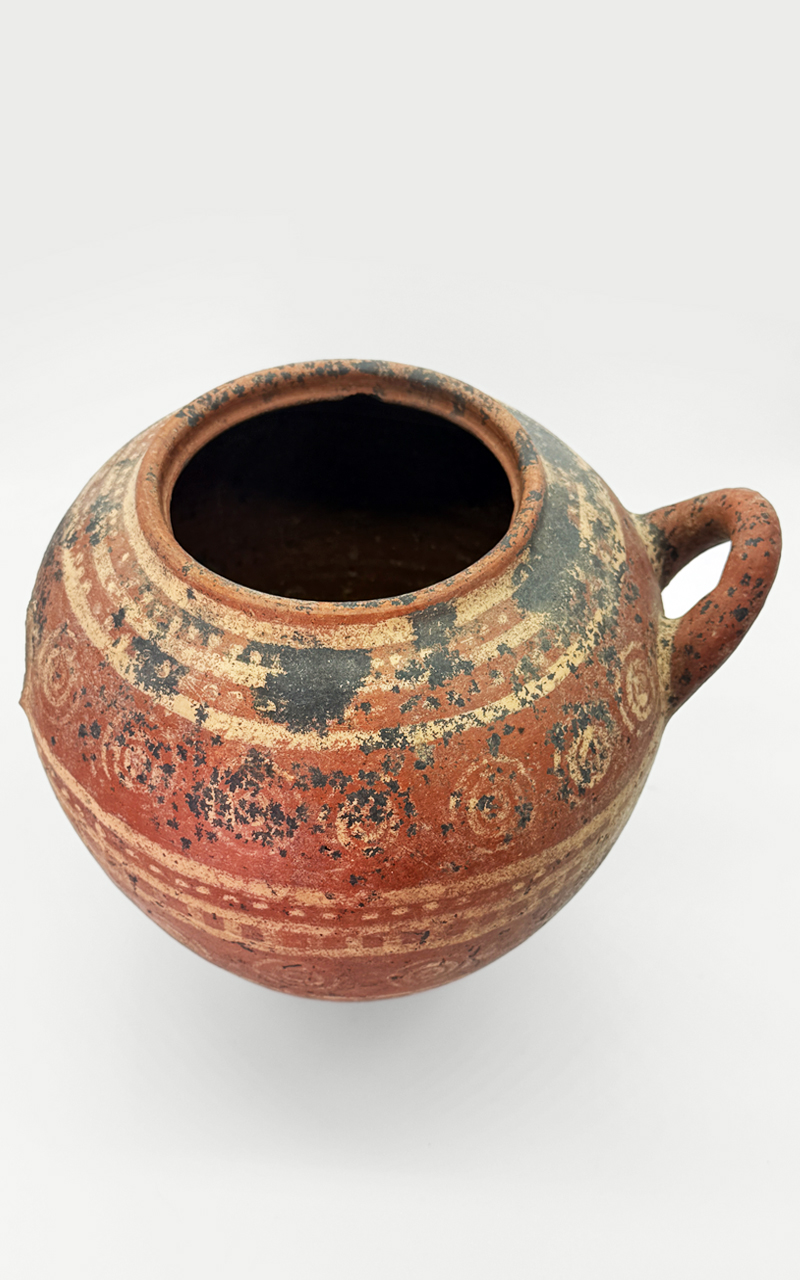
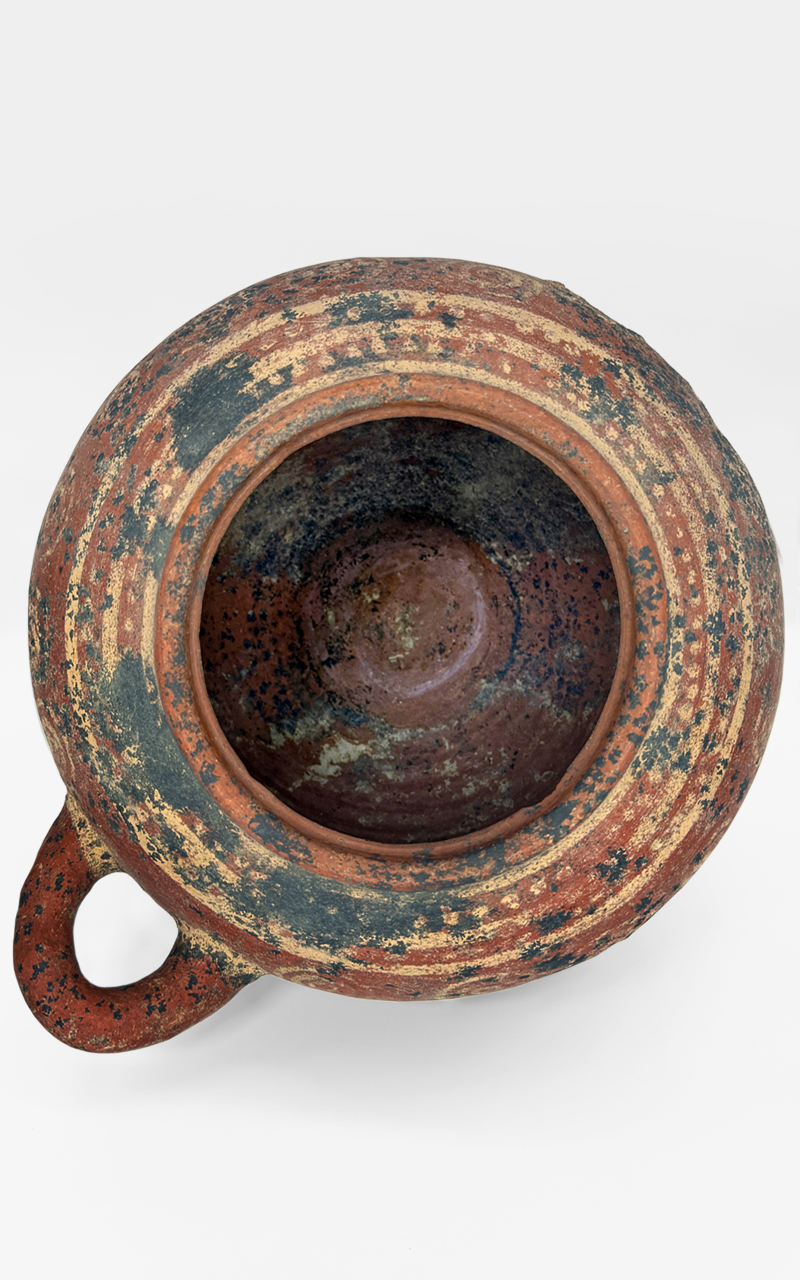
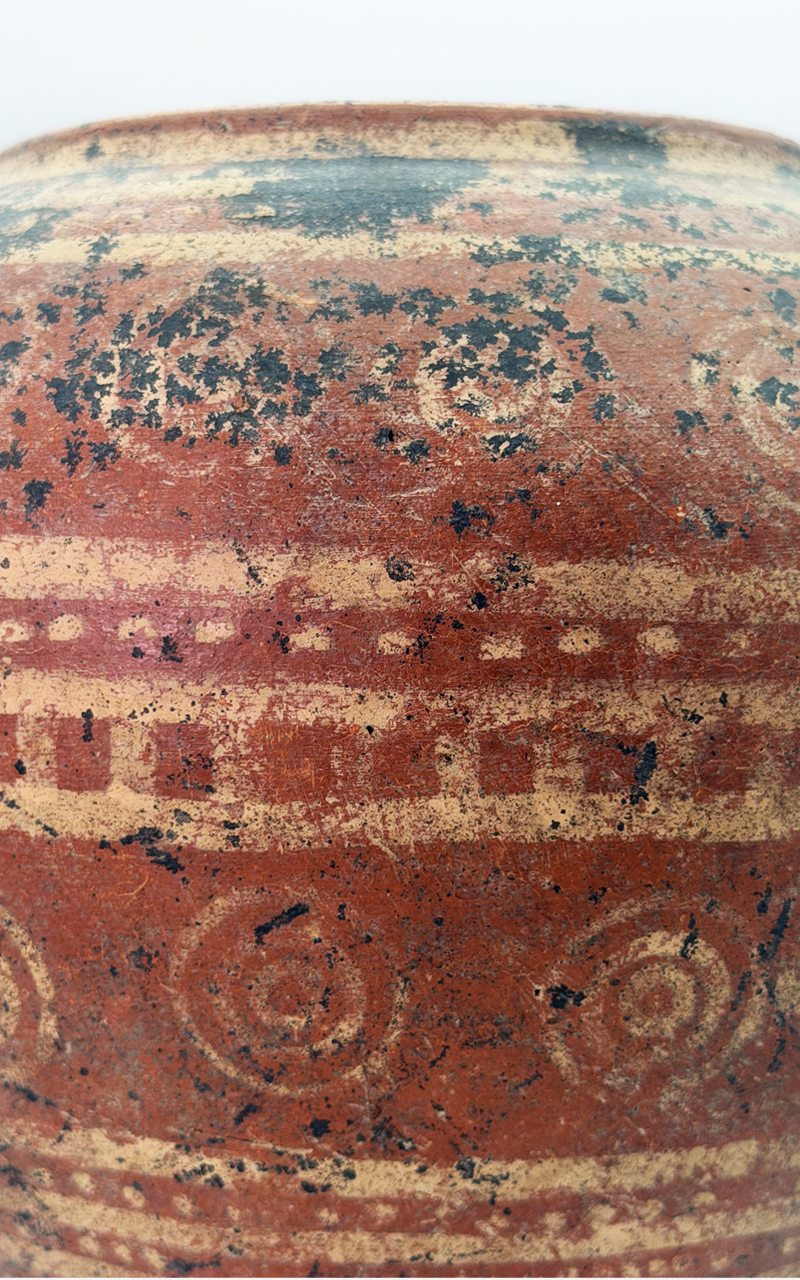
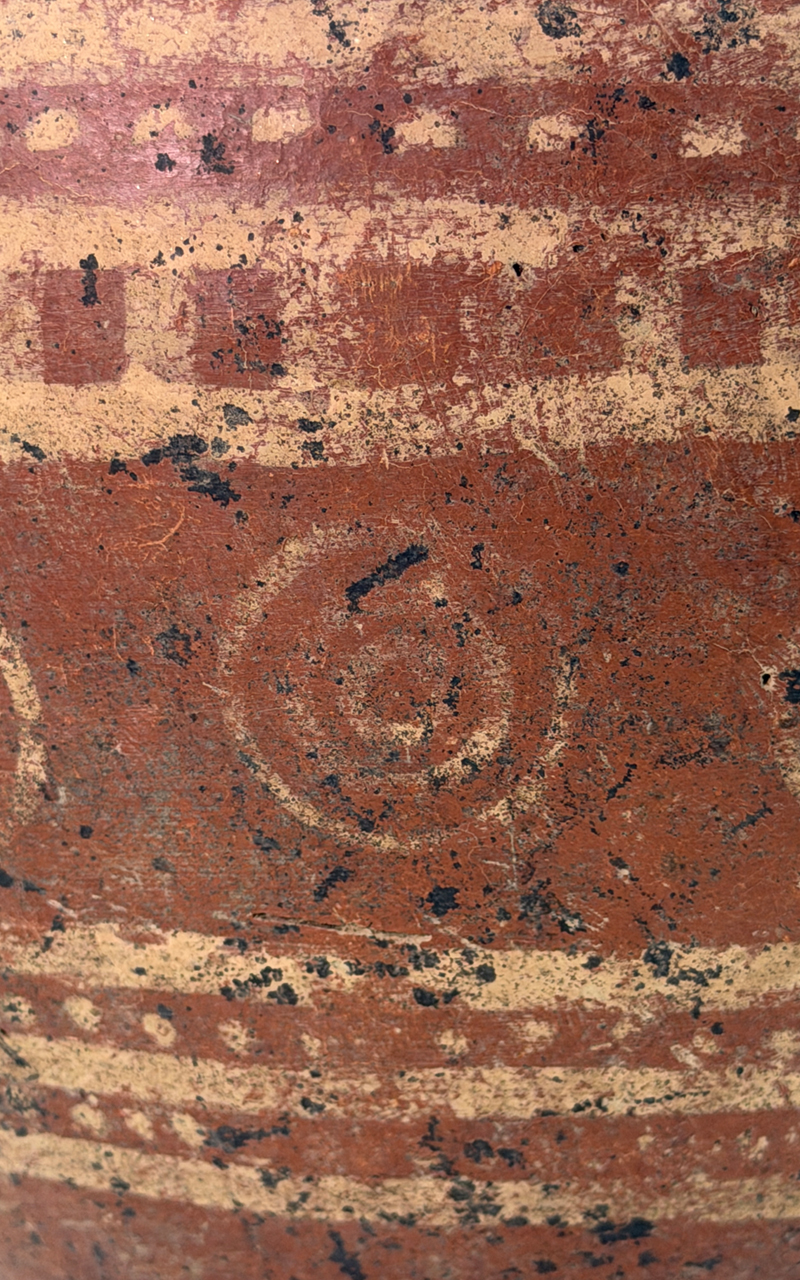
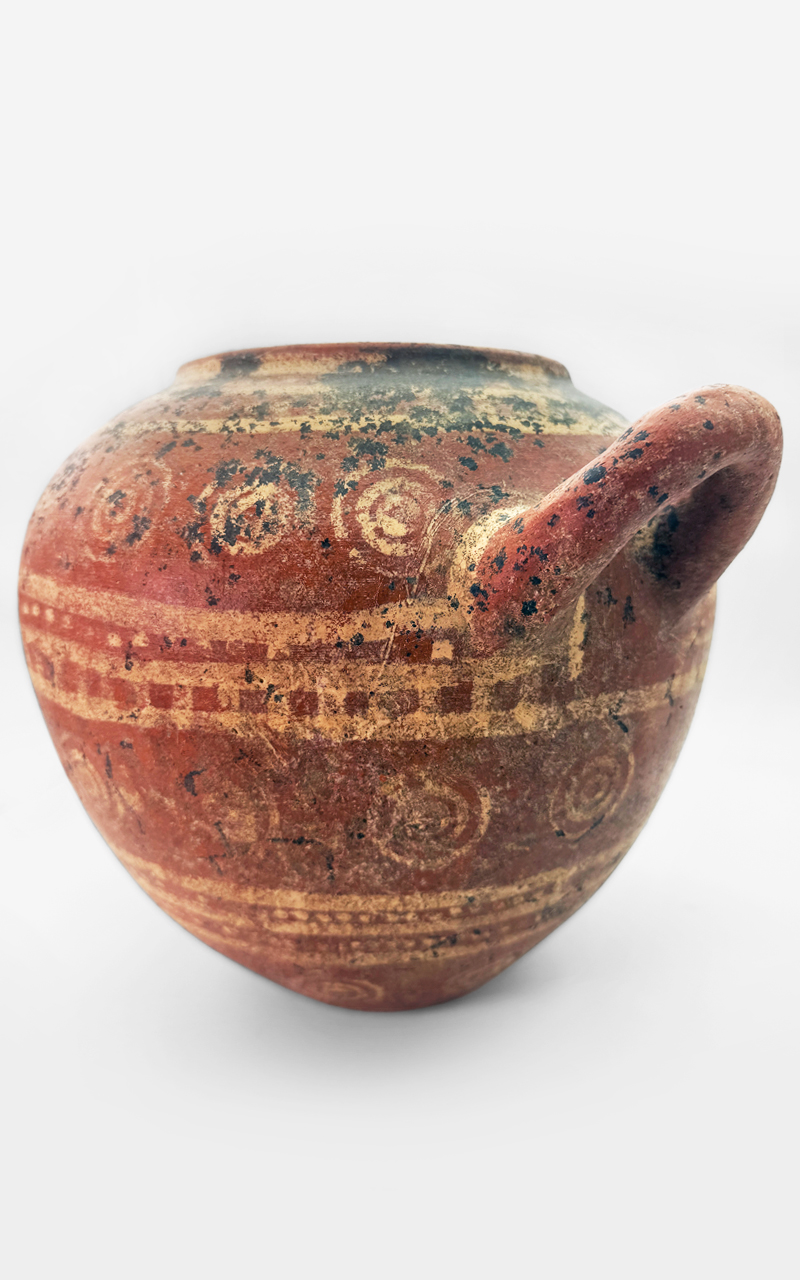
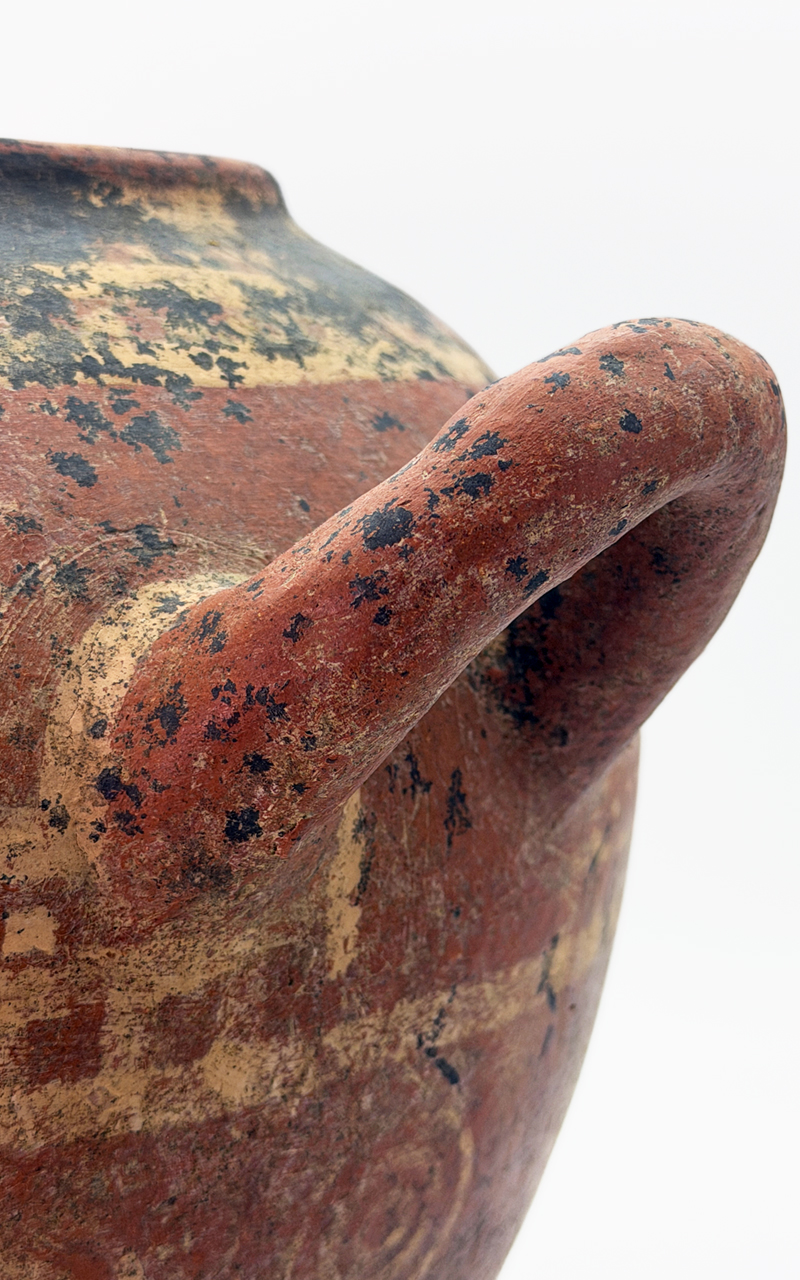
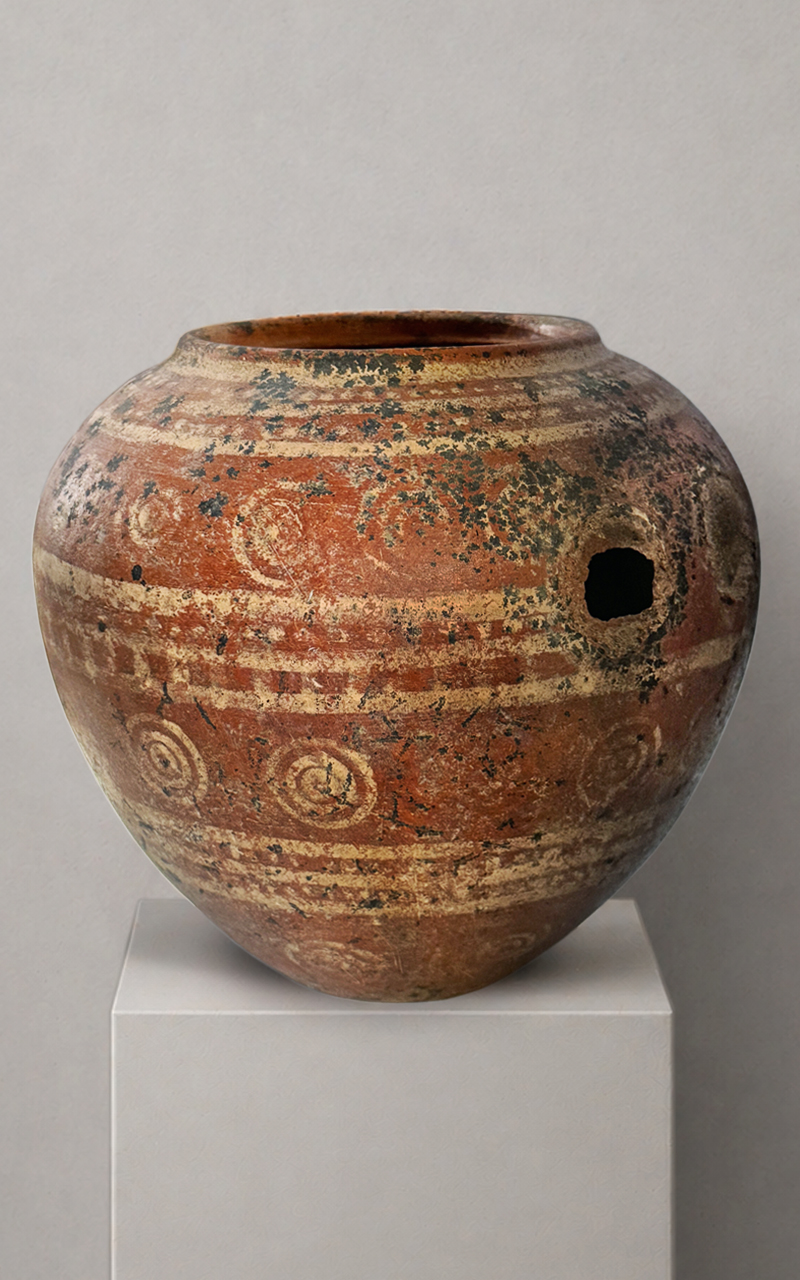
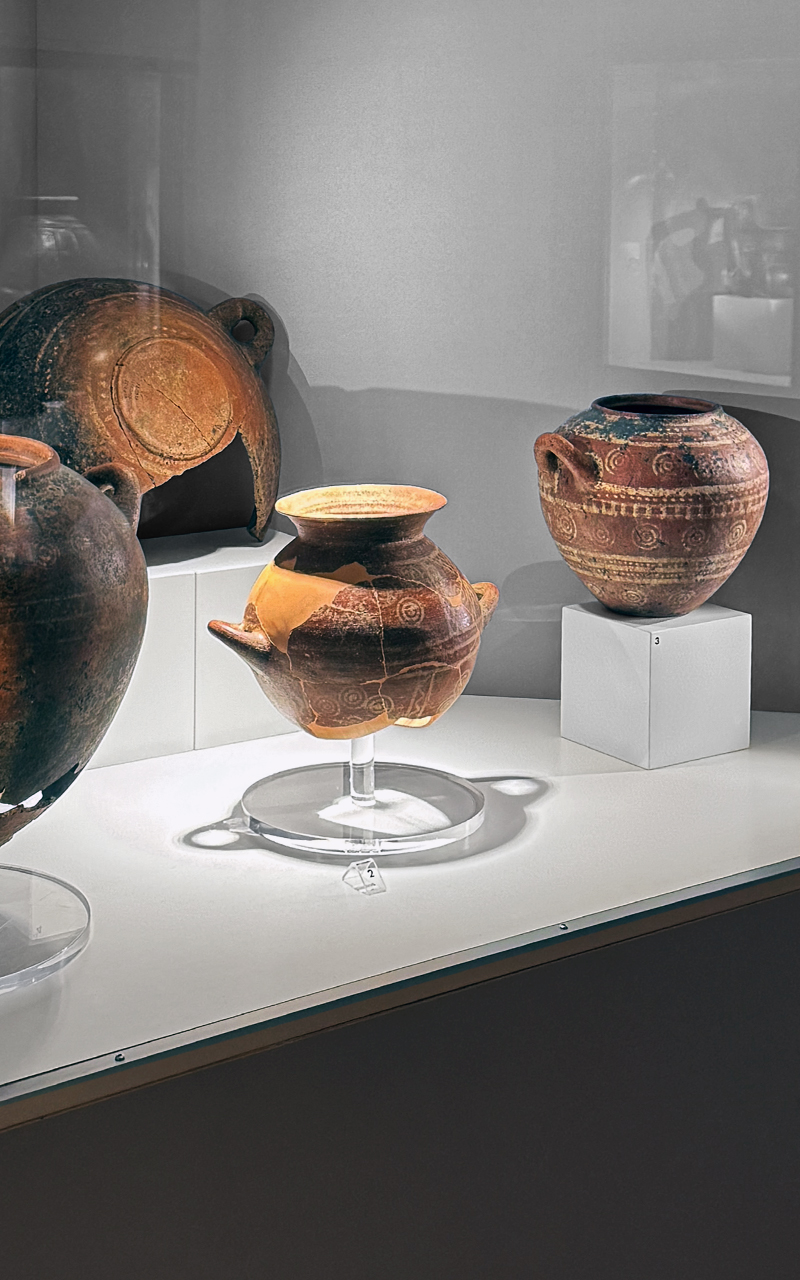
Painted impasto pottery represents one of the most characteristic productions of La Civita, where clay working and vessel decoration are closely intertwined with the history of the communities that made them. Within this tradition, the class known as white-on-red stands out, so called because of the use of white paint applied directly onto the reddish surface of the vessel, without any preparatory layer.
This production is essential in its forms and mainly includes the two-handled olla, the amphora and the basin with horizontal handles or grips: vessels intended for everyday life. The decoration, apparently simple, in fact reveals careful attention and a precise choice of motifs: concentric circles that structure the space, rows of dots placed between horizontal bands, and wavy lines that seem to evoke the movement of water.
The reddish surface of the impasto, left visible, becomes an integral part of the final effect, creating a chromatic contrast that enhances the white painting. The quantities in which these vessels have been found suggest the existence of one or more workshops active at La Civita, attributable to the group identified by Gabrici.
From here, white-on-red pottery seems to have reached several centres in the area: Orvieto, Barano near Bolsena, Pitigliano and Sovana. The circulation of these artefacts bears witness not only to commercial exchanges, but also to the spread of shared decorative models, capable of crossing territories and communities.
From a chronological point of view, the phase of greatest flourishing of this production falls between the late 7th and early 6th century BC, while its origins may date back to the late 8th century BC.
Alongside white painting, a production also developed using brown or red paint applied over a light cream-coloured slip, intended mainly for large flat-bottomed amphorae. Here the decoration is enriched with large palmettes painted on the shoulder, indicating a more elaborate aesthetic approach and a desire to distinguish the more monumental forms.