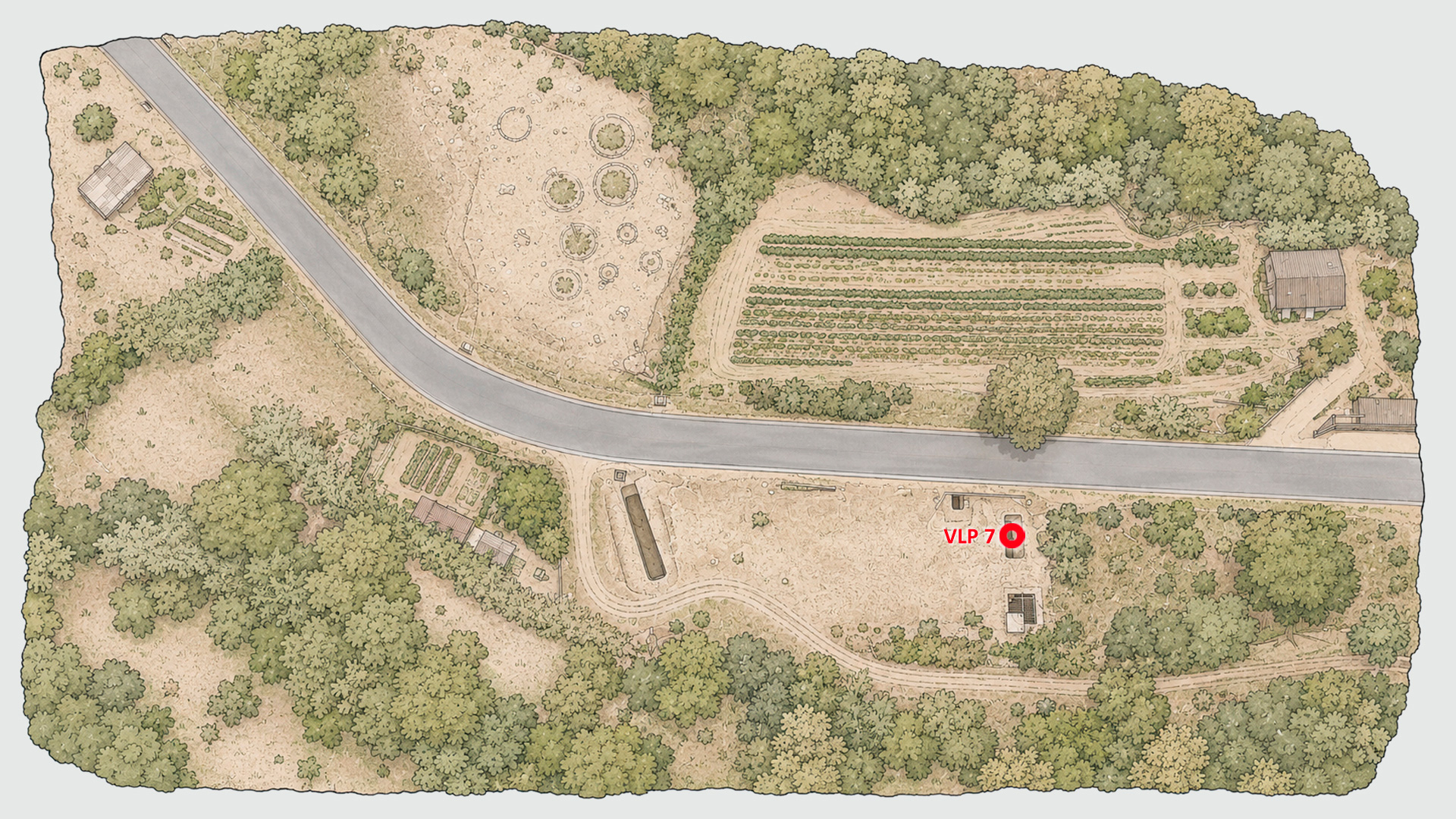
The necropolis of Vigna la Piazza is the closest to the Civita plateau, where the Etruscan city was located, and it is also the one that has yielded the earliest tombs. The necropolis was used for more than two centuries; burials beneath small tumuli are attested here, including VLP1, the earliest, as well as sarcophagus burials from the first half of the 7th century BC and chamber tombs used over several generations, from the second half of the 7th century to the end of the 6th century BC.
Tomb No. 7 was identified in January 1990 during works for the construction of the aqueduct. It proved to have been looted several times, resulting in the disappearance of precious objects and metal vessels. In the atrium, the collapse of the ceiling at an unspecified time sealed what remained of the grave goods.
The plan of Tomb VLP7 consists of a long dromos and a small doorway, slightly tapering towards the top, which gives access to a central quadrangular chamber. This served as an atrium for three small side chambers, thus reproducing the model of the Etruscan house.
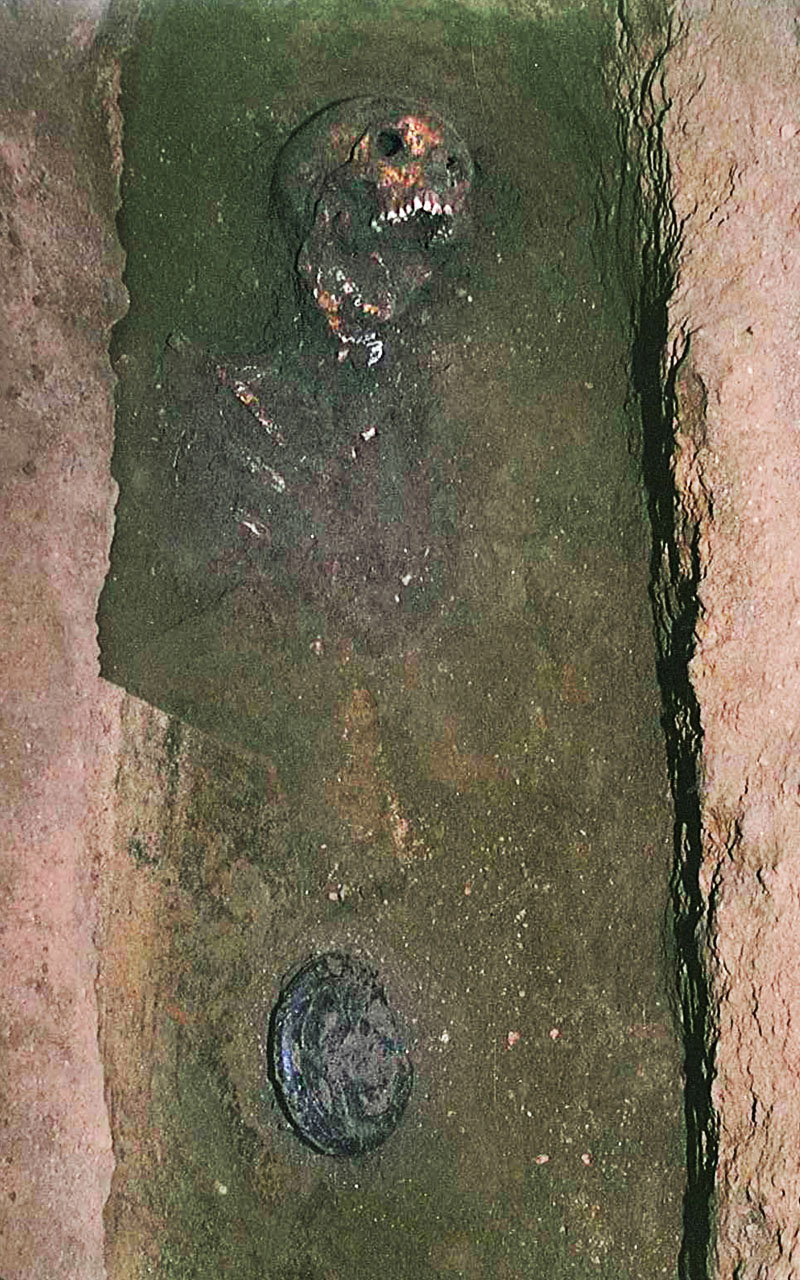
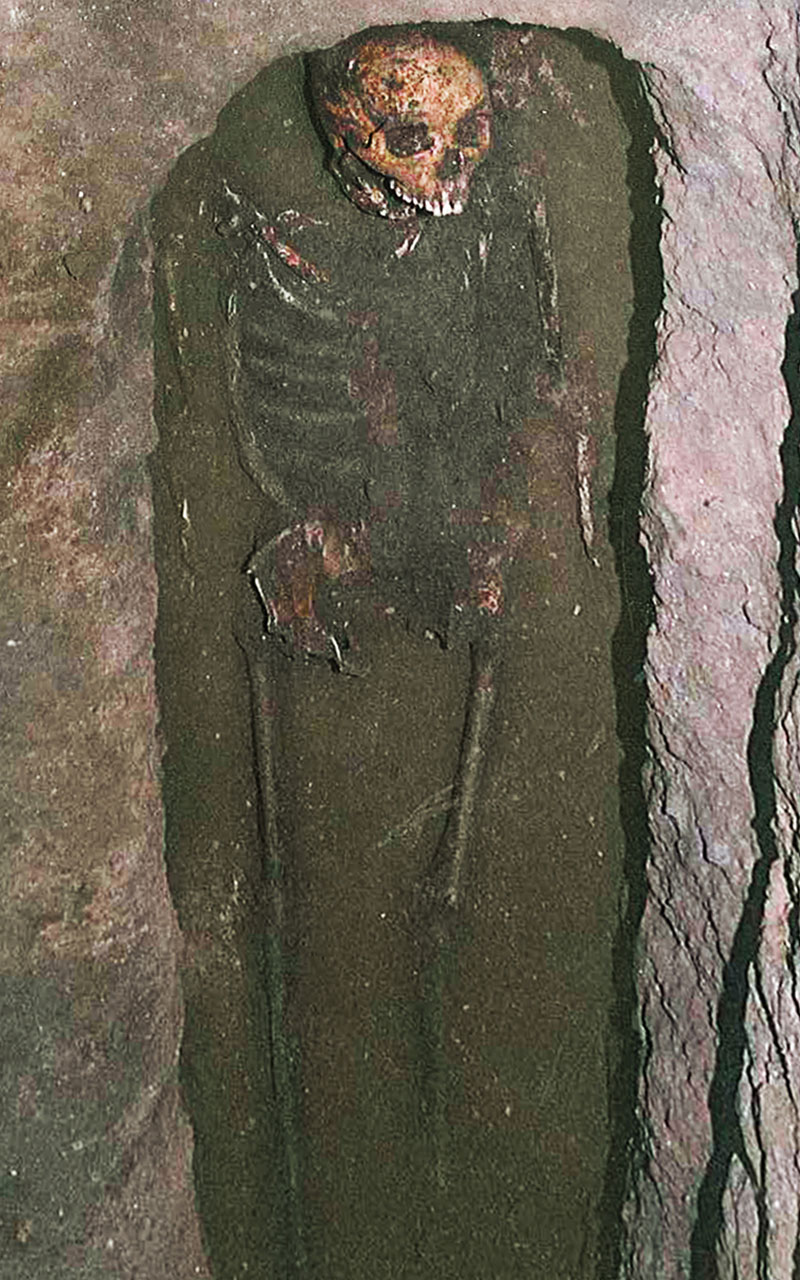
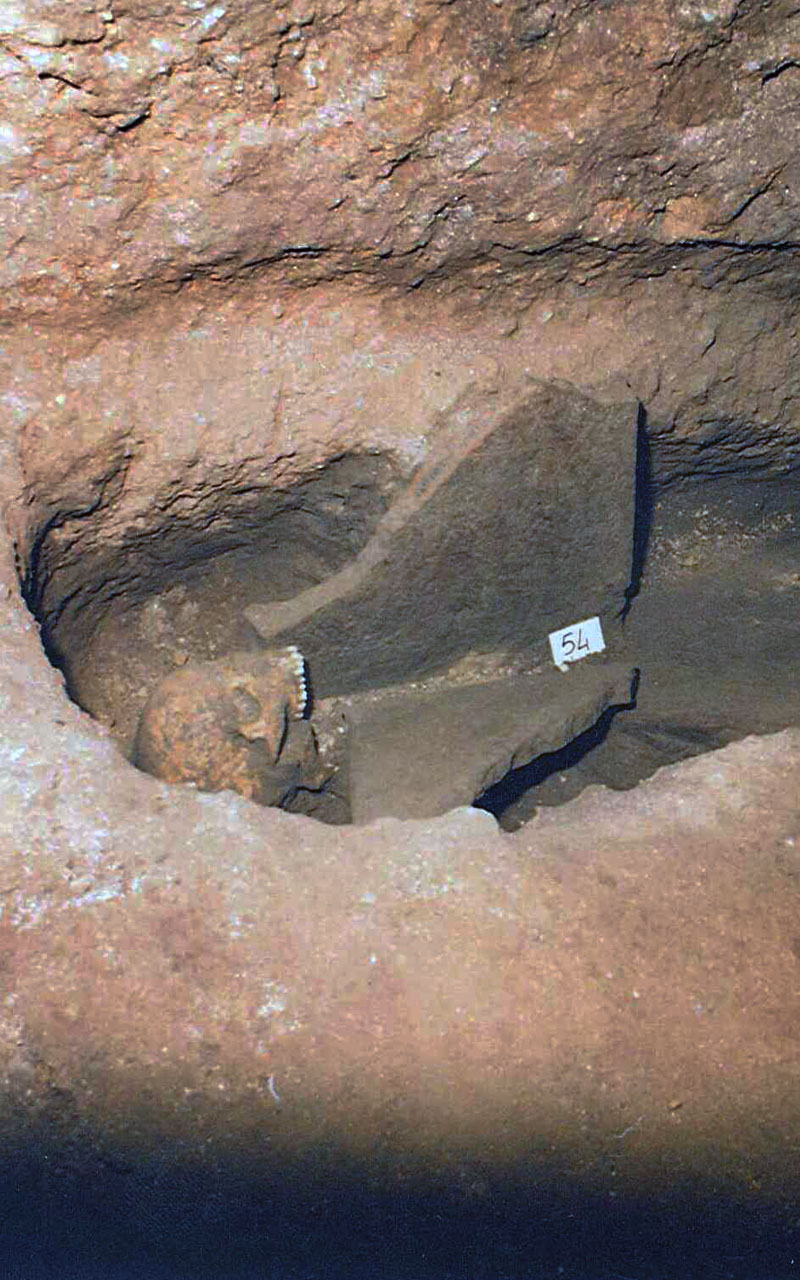
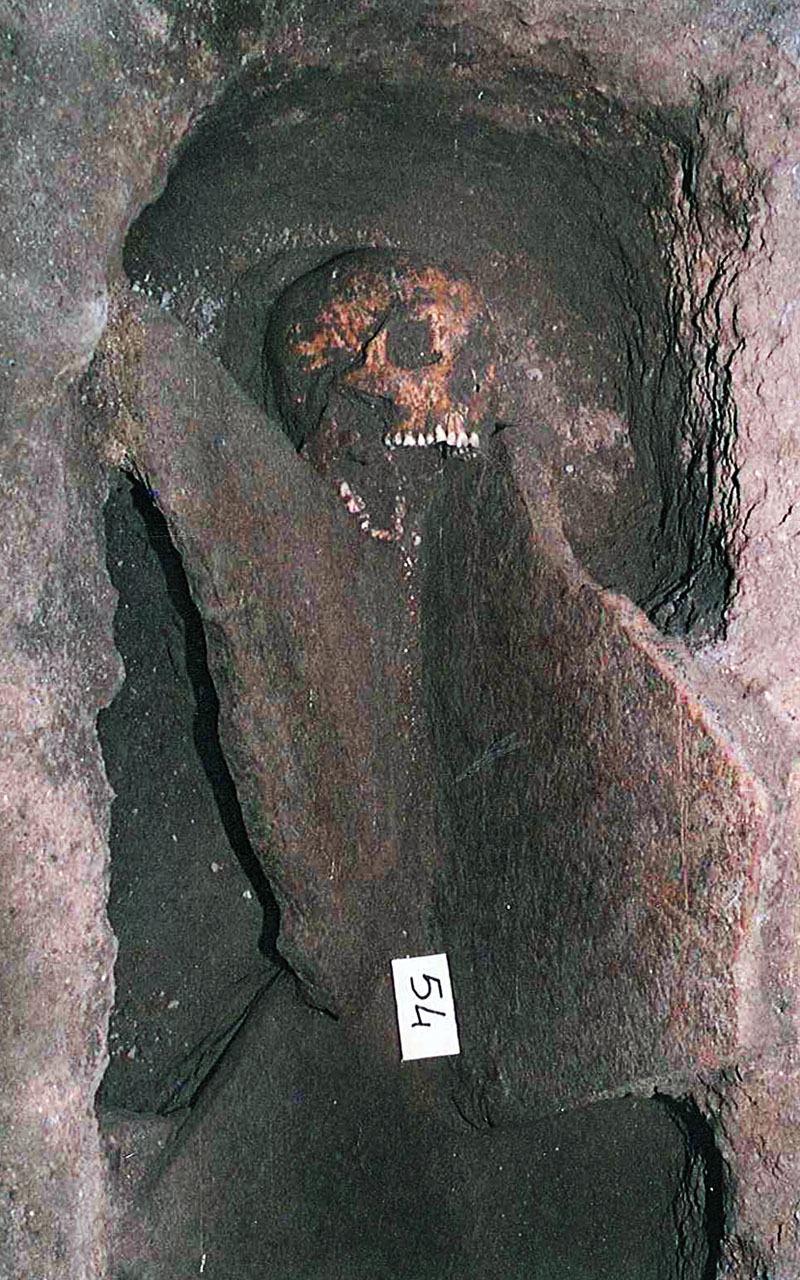
The burial rite, as usual, was inhumation, with the deceased laid in pits dug into the floor or in loculi cut into the walls. The burials were closed with large terracotta tiles or with tuff slabs.
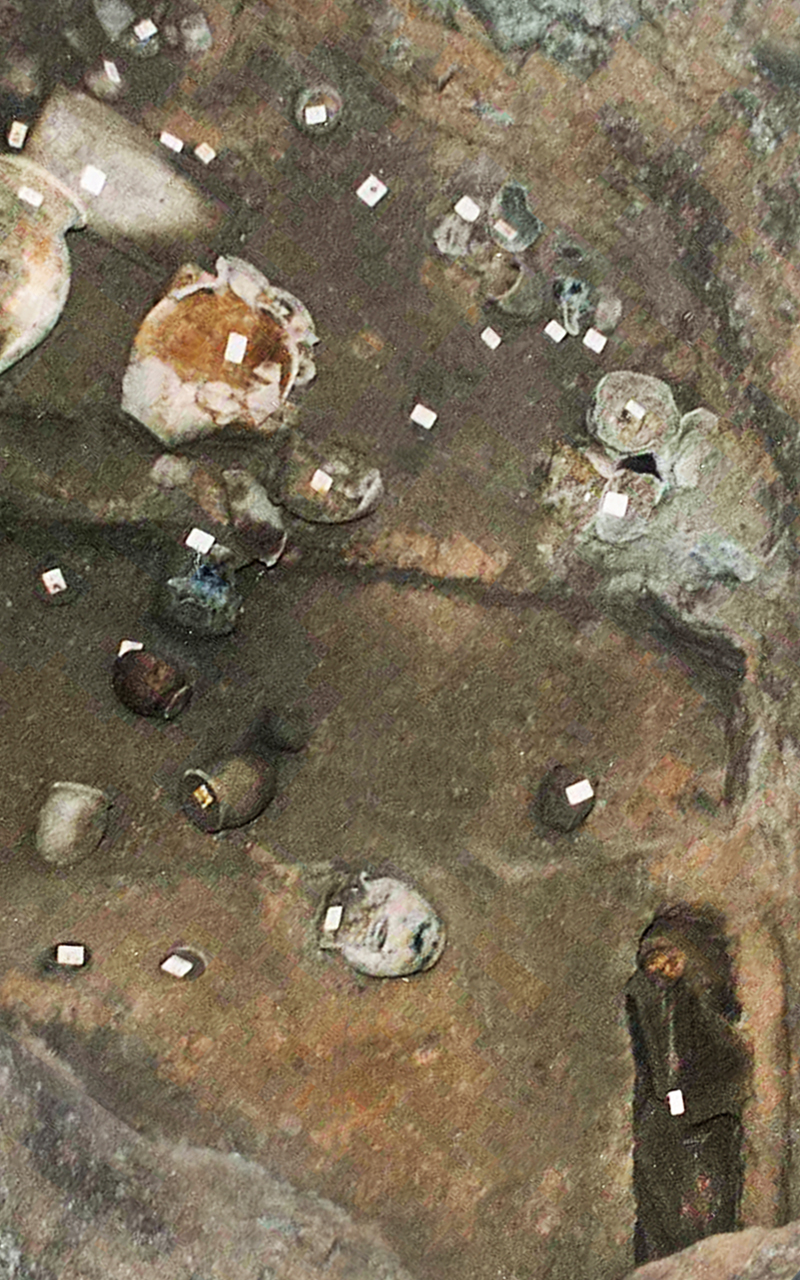
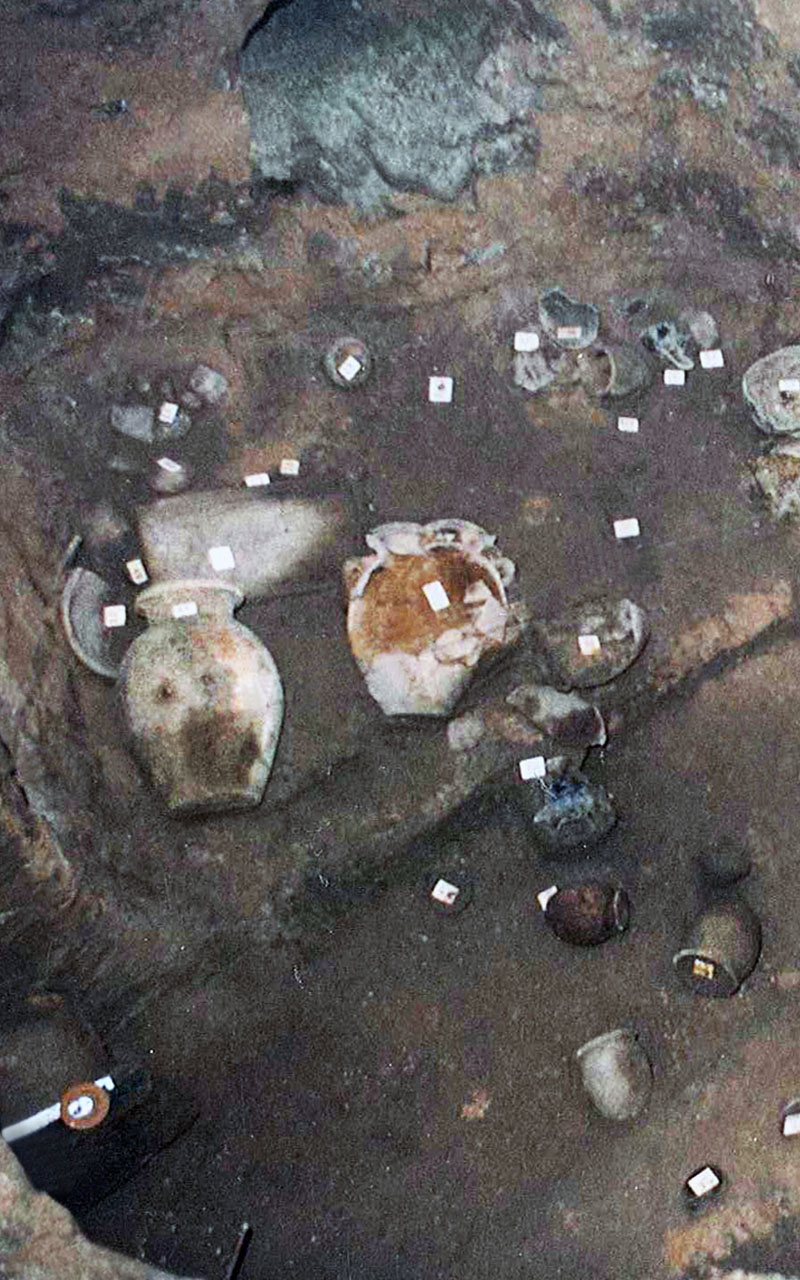
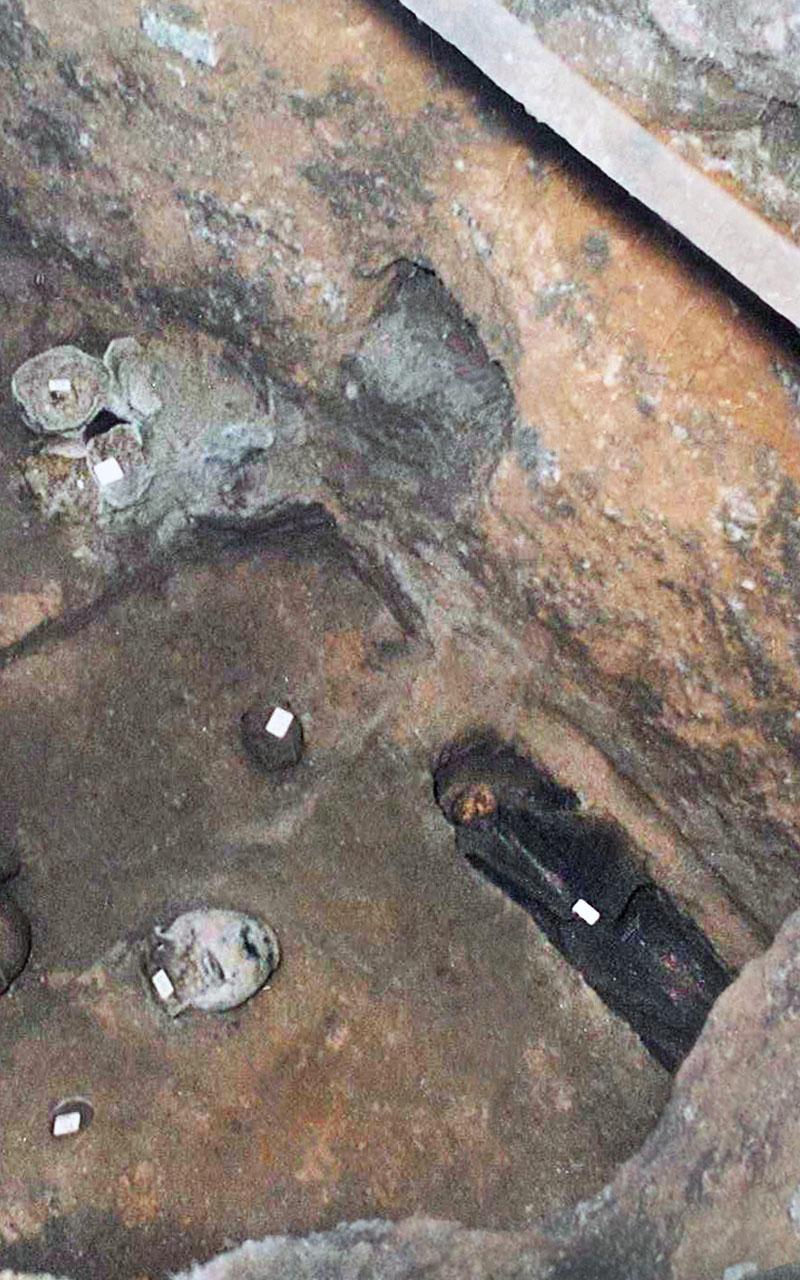
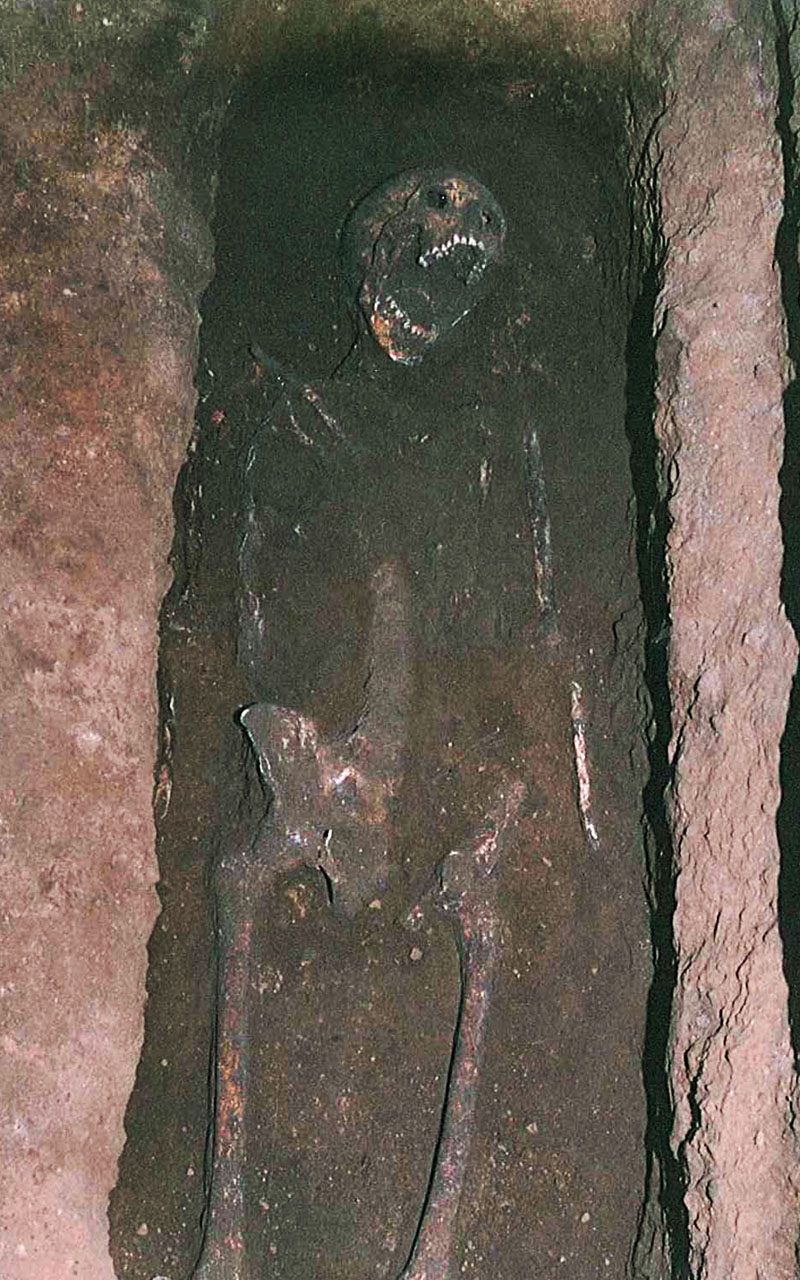
The pit dug along the right side of the rear wall of the atrium, closed with large tiles, still preserved the bones of the deceased. The other pit, dug near the right wall of the atrium, was covered with tuff slabs and contained the remains of two individuals.
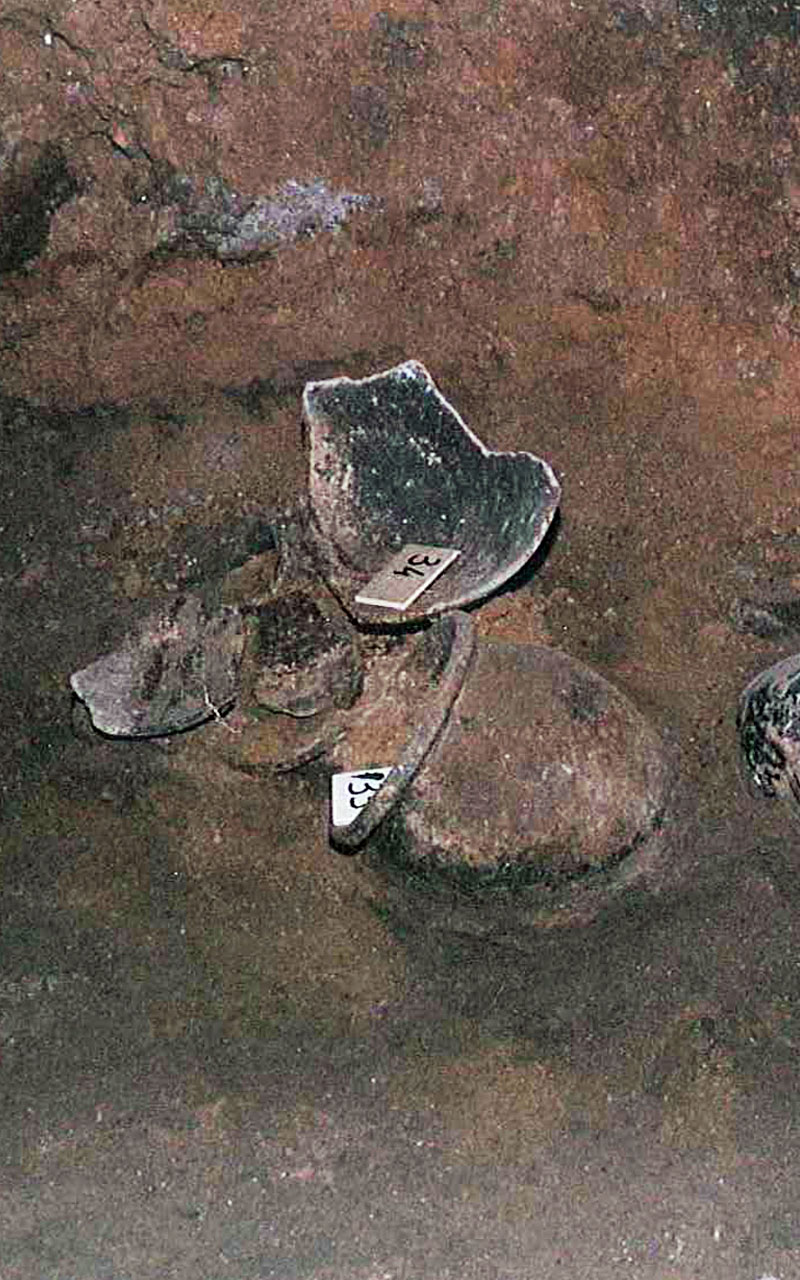
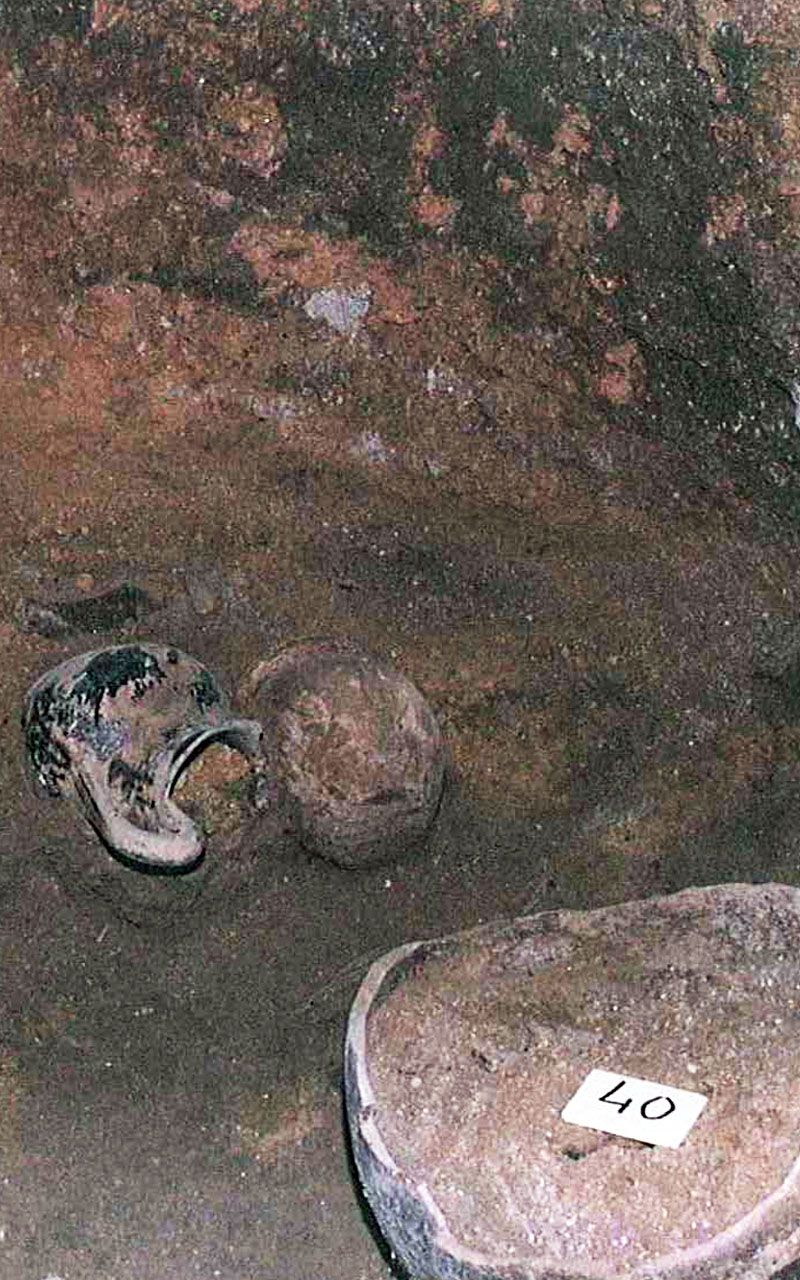
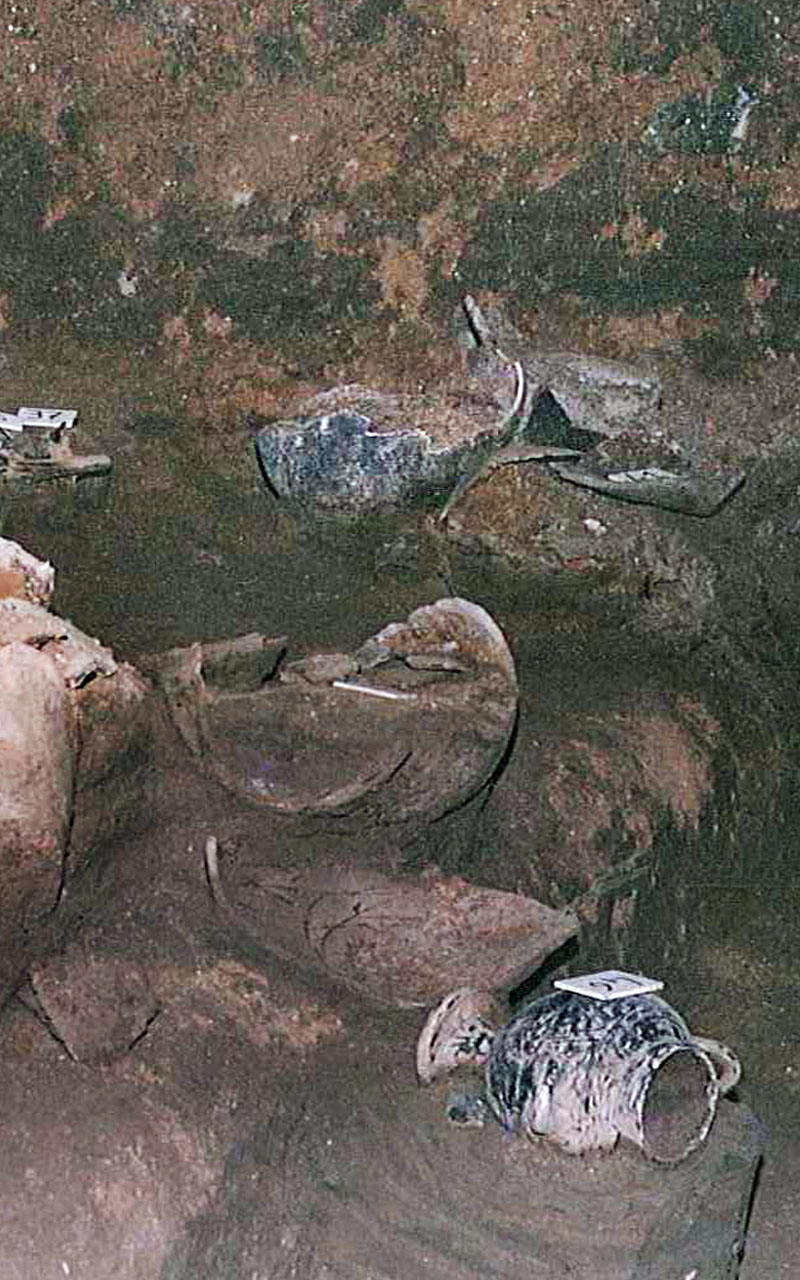
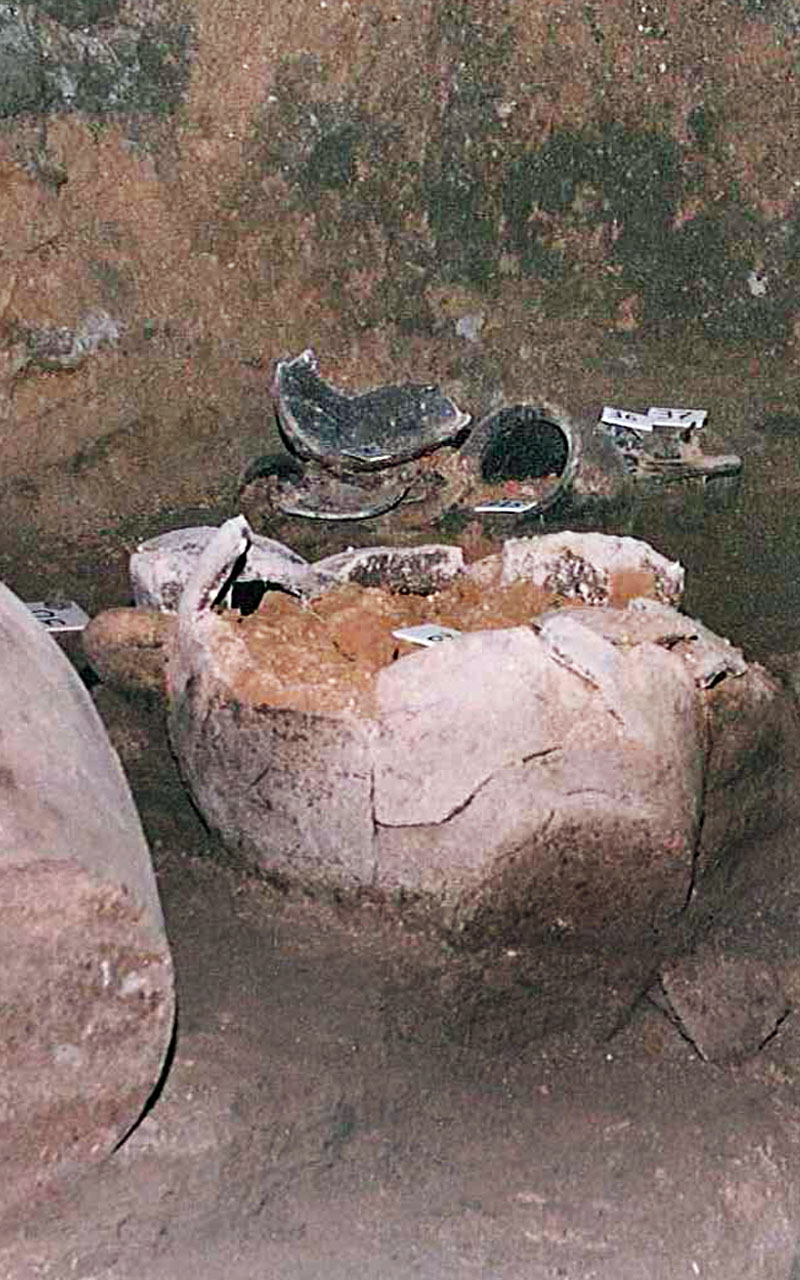
The greatest concentration of the remains of the grave goods was found in the left half of the atrium. In the three side chambers, the pits, like the loculi, had already been emptied and yielded only sporadic remains of grave goods. The chamber opening onto the rear wall of the atrium is roughly worked and has an unusual elliptical plan.