
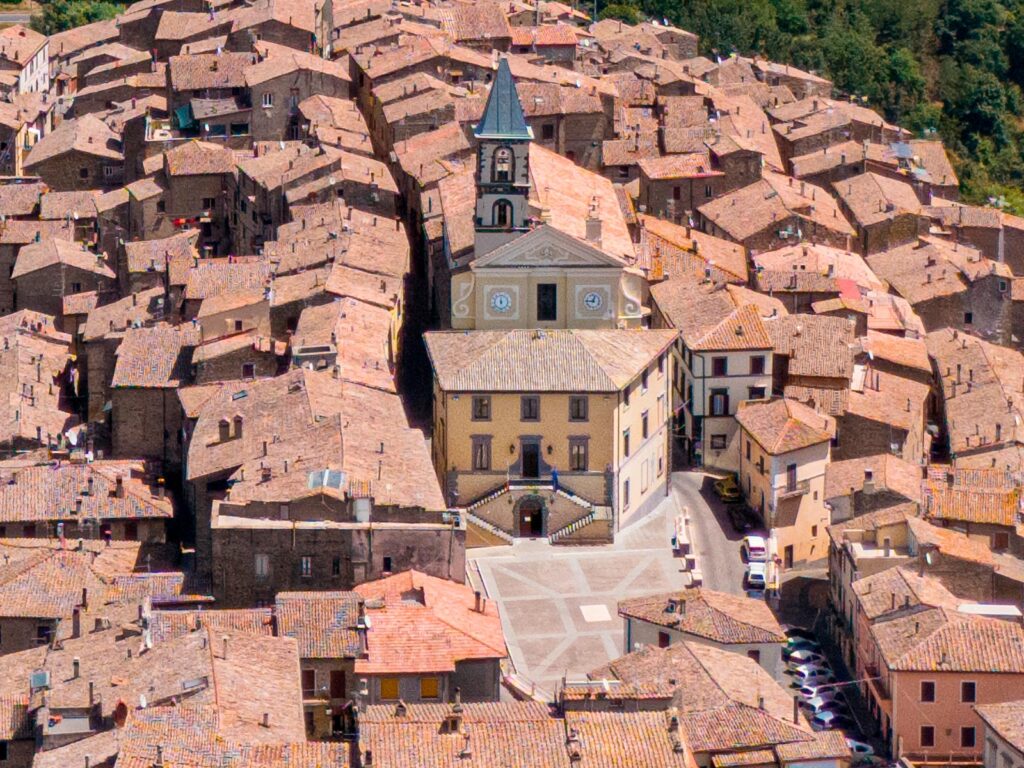
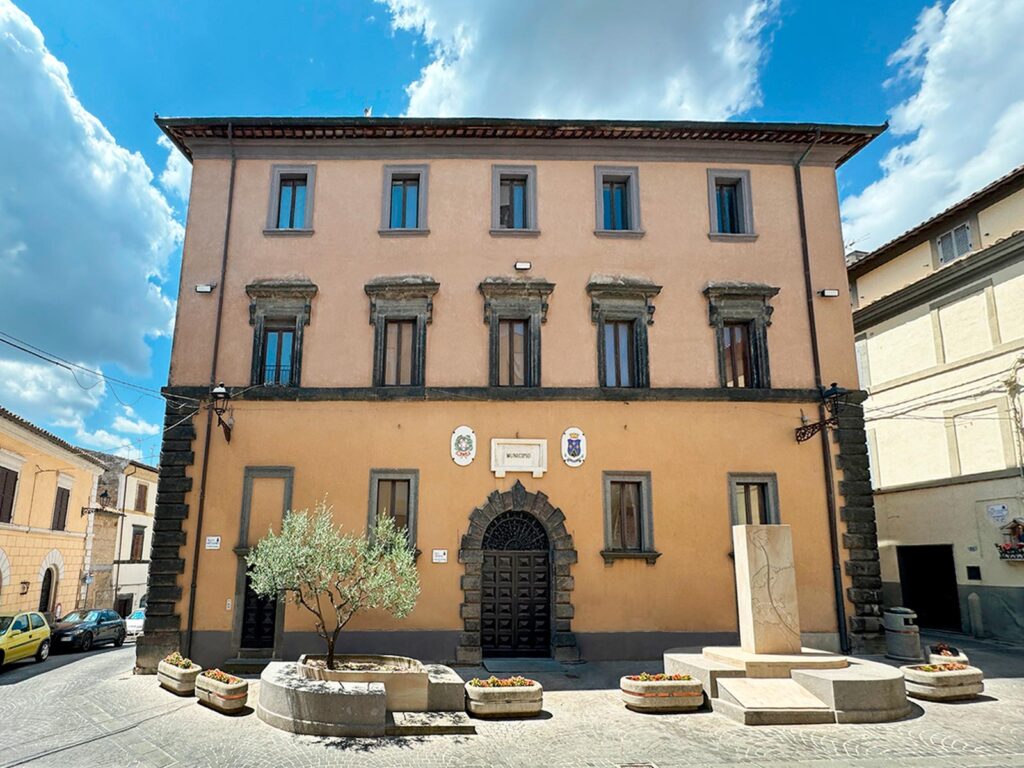
Overlooking Piazza Matteotti and the church of San Pietro, the Palazzo del Vignola is one of the most significant buildings in Grotte di Castro. Originally the seat of civic government and designed in the 16th century by Jacopo Barozzi, known as Vignola, it still preserves important original architectural features and now houses the collections of Museo Civita.
A palace born from reconstruction
The history of the palace is connected to an event that profoundly changed the appearance of the village. The earthquake of 30 May 1563 seriously damaged the previous town hall, making an almost complete reconstruction necessary.
Jacopo Barozzi, known as Vignola, one of the most important architects of the Italian Renaissance and at that time engaged in works promoted by the Farnese family, was called for the new project.
The works lasted about eighteen years and led to the creation of a building destined to become the administrative centre of the community.
The imprint of the Renaissance
Although the palace has undergone changes and restorations over the centuries, some original elements designed by Vignola are still perfectly recognisable.
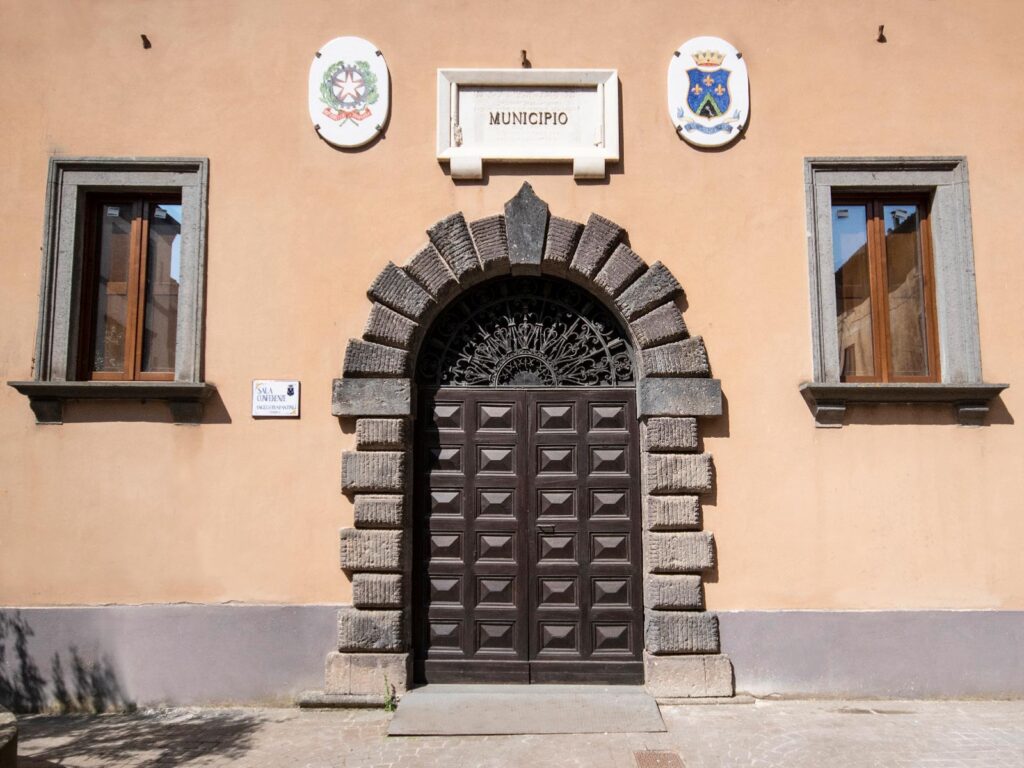
On the main façade, the monumental portal, the five Renaissance windows in nenfro on the piano nobile and the rusticated corners are preserved, giving the building balance and solidity.
These details express the architectural language of the Renaissance and testify to the role Grotte di Castro played within the territories administered by the Farnese.
The staircase that challenges gravity
The most surprising element of the building is found inside.
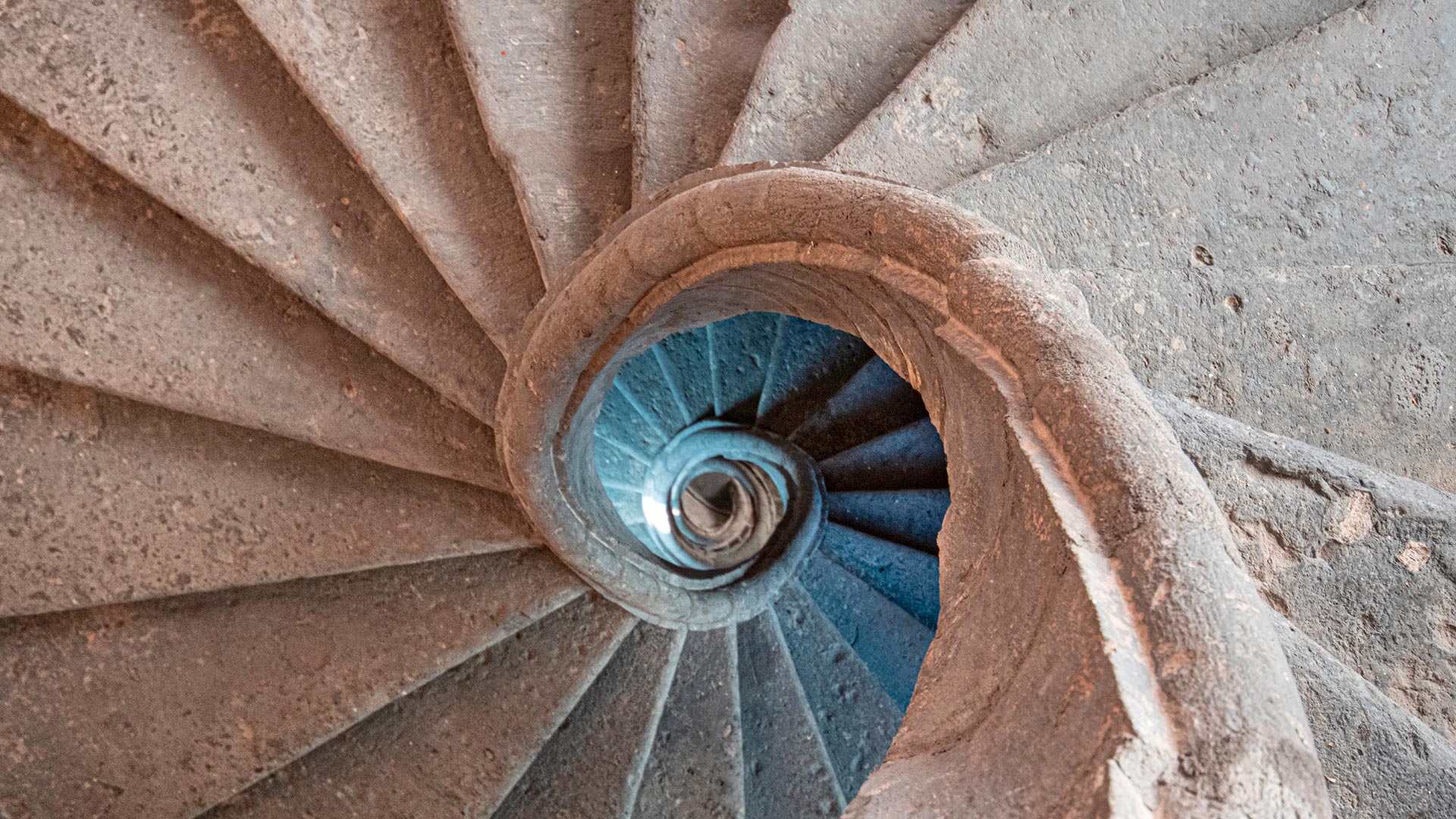
The spiral staircase designed by Vignola is one of the most fascinating architectural details of the palace. With its 66 steps, it develops in a continuous spiral without the support of a central column.
The structure is completely self-supporting: each step contributes to the balance of the entire construction through a sophisticated system of thrusts and counterweights. The result is a staircase that appears light and suspended, transforming a simple vertical connection into a true spatial experience.
It remains one of the elements most admired by visitors.
From Palazzo Comunale to Museo Civita
For centuries the palace housed the administrative activities of the village. In the 20th century, after further interventions made necessary by the damage caused by another earthquake, the building continued to maintain its central role in the life of the community.
Since 2012 it has been the home of Museo Civita, housing the archaeological collections from the Etruscan necropolises of the territory.
The choice to place the museum inside the palace created a direct dialogue between the archaeological heritage preserved in the rooms and the more recent history of the village.
A building that tells many stories
Visiting the Palazzo del Vignola means encountering different periods in the history of Grotte di Castro.
Its walls tell of the Renaissance, the administrative life of the community, the earthquakes that marked the territory and the birth of Museo Civita.
It is a building that continues to fulfil its original function: to be a central place in the cultural and civic life of the village.
To observe during your visit
The Renaissance portal
One of the original elements designed by Vignola.
The windows of the piano nobile
Made of nenfro and still perfectly preserved.
The spiral staircase
A masterpiece of Renaissance engineering composed of 66 self-supporting steps.
The historic rooms
Rooms that preserve traces of the different functions carried out by the palace over the centuries.
The fireplace on the piano nobile
From the palace of Innocenzo Iuzzi.
| Architect: | Jacopo Barozzi, known as Vignola |
| Start of reconstruction: | After the earthquake of 1563 |
| Duration of works: | About 18 years |
| Original function: | Palazzo Comunale |
| Current function: | Home of Museo Civita |
| Distinctive feature: | Self-supporting spiral staircase |