
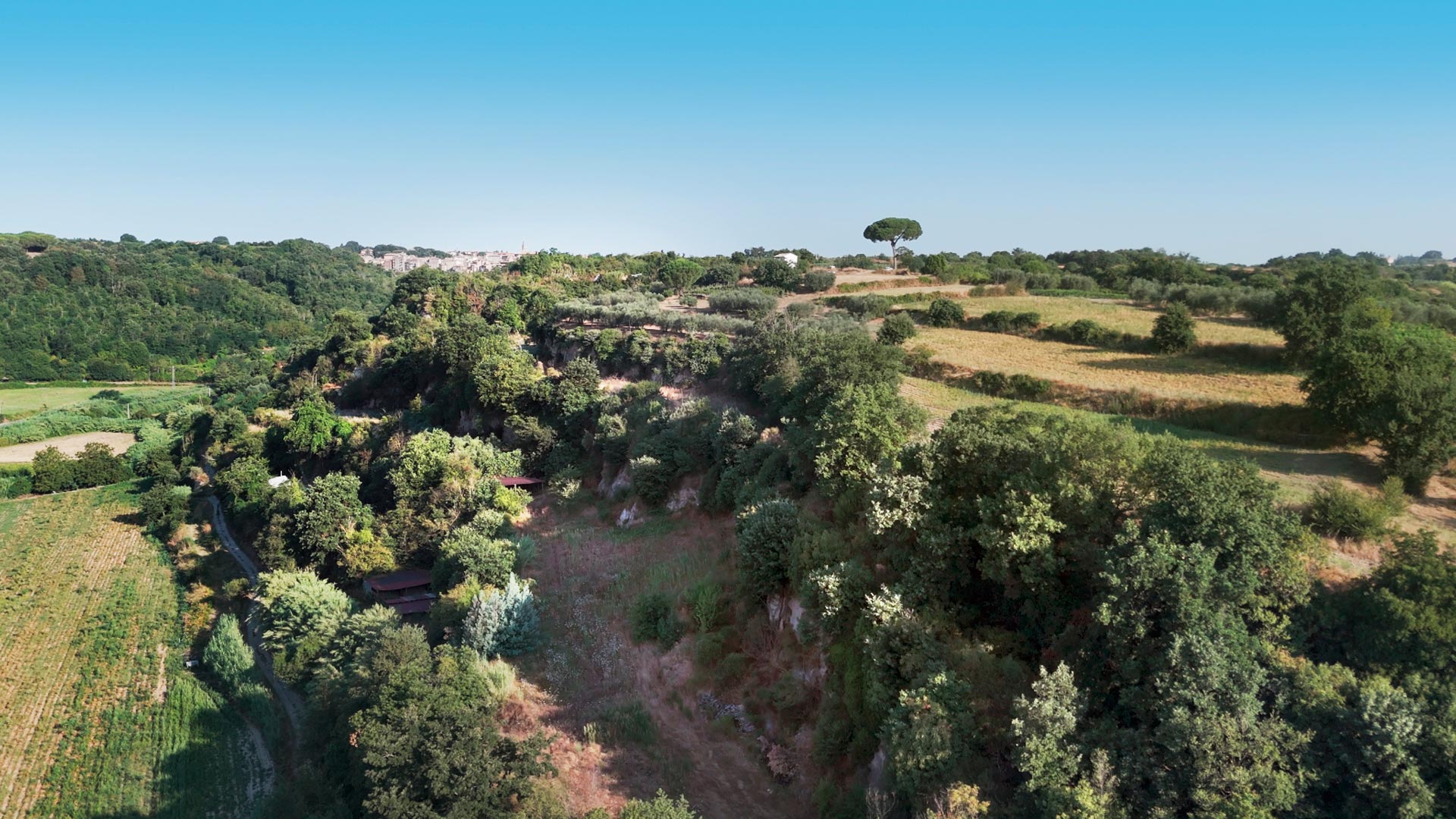
Around the plateau of the Civita, where the ancient Etruscan settlement once stood, lies one of the most important funerary complexes in northern Lazio. The necropolises of Vigna la Piazza, Centocamere and Pianezze preserve hundreds of burials that allow us to reconstruct the evolution of the society, beliefs and relationships of a community that lived on the shores of Lake Bolsena between the 8th and 5th centuries BC.
Cities of the dead beside the city of the living
For the Etruscans, the place of burial was not separated from daily life.
The necropolises stood outside the settlement but reflected its social organisation, family structure and the prestige of the different communities.
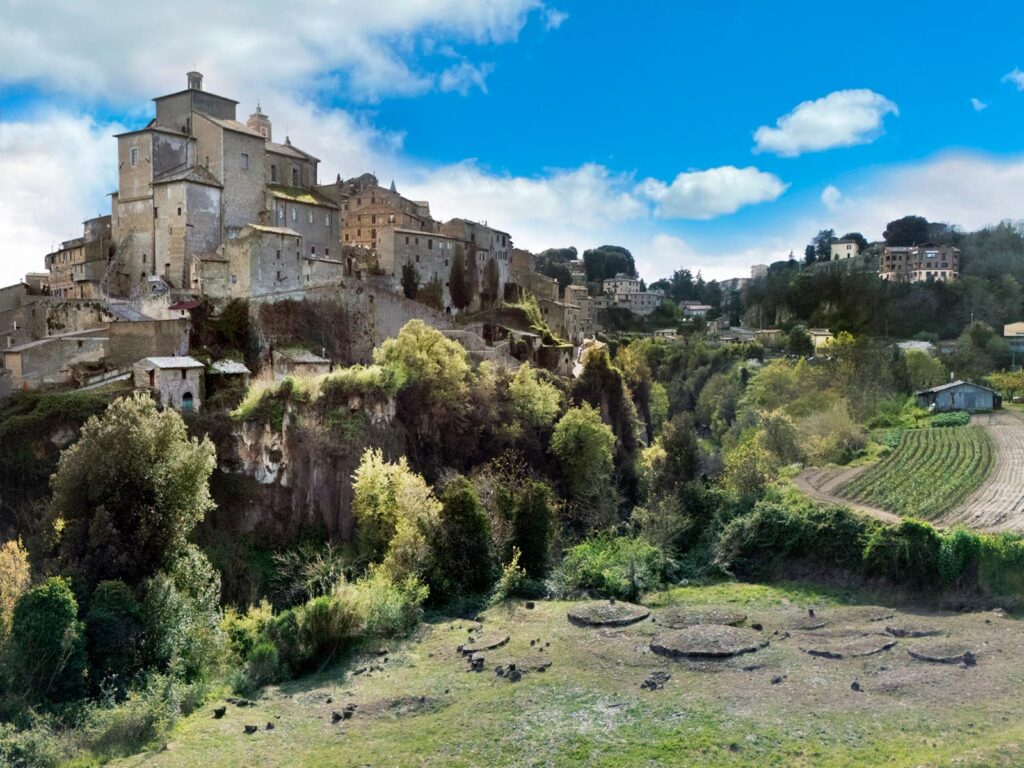
In Grotte di Castro as well, the funerary areas developed around the Civita along the slopes of the tuff cliff. Even today the landscape preserves this continuous dialogue between the place of life and the place of memory.
An extraordinary archaeological heritage
Archaeological research has brought to light hundreds of burials from different periods.
The tombs document the evolution of the Etruscan community over more than three centuries, from the earliest burials at the end of the 8th century BC to the more monumental forms of the Archaic period.
Grave goods, hypogeal architecture, everyday objects and ritual evidence now make it possible to understand fundamental aspects of the life of the ancient inhabitants of the Civita.
Many of the artefacts found in the necropolises are now preserved and displayed in Museo Civita.
Three necropolises, three different stories
Vigna la Piazza
This is the oldest necropolis and the closest to the settlement.
Its burials document the earliest phases of the Etruscan community of the Civita and preserve a rare group of circle tombs, a distinctive feature within the panorama of inland Etruria.
Centocamere
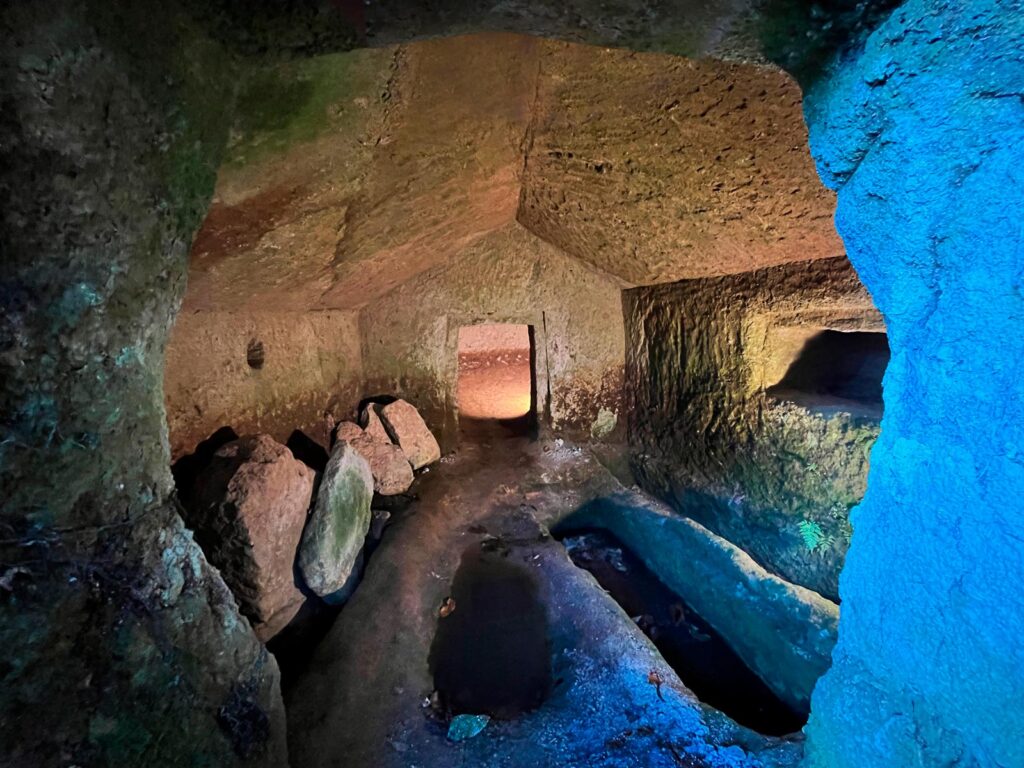
Located on the western side of the Civita, it takes its name from the numerous funerary chambers connected to one another by passages and tunnels.
Here are some of the most monumental chamber tombs in the territory, evidence of the growth and complexity of Etruscan society between the 7th and 6th centuries BC.
Pianezze
This represents the most recent phase in the funerary development of the Civita.
Its tombs document new architectural solutions and new rituals that accompanied the transformations of the Etruscan community during the 6th century BC.
Tuff as architecture
The necropolises of Grotte di Castro are deeply connected to the geological nature of the territory.
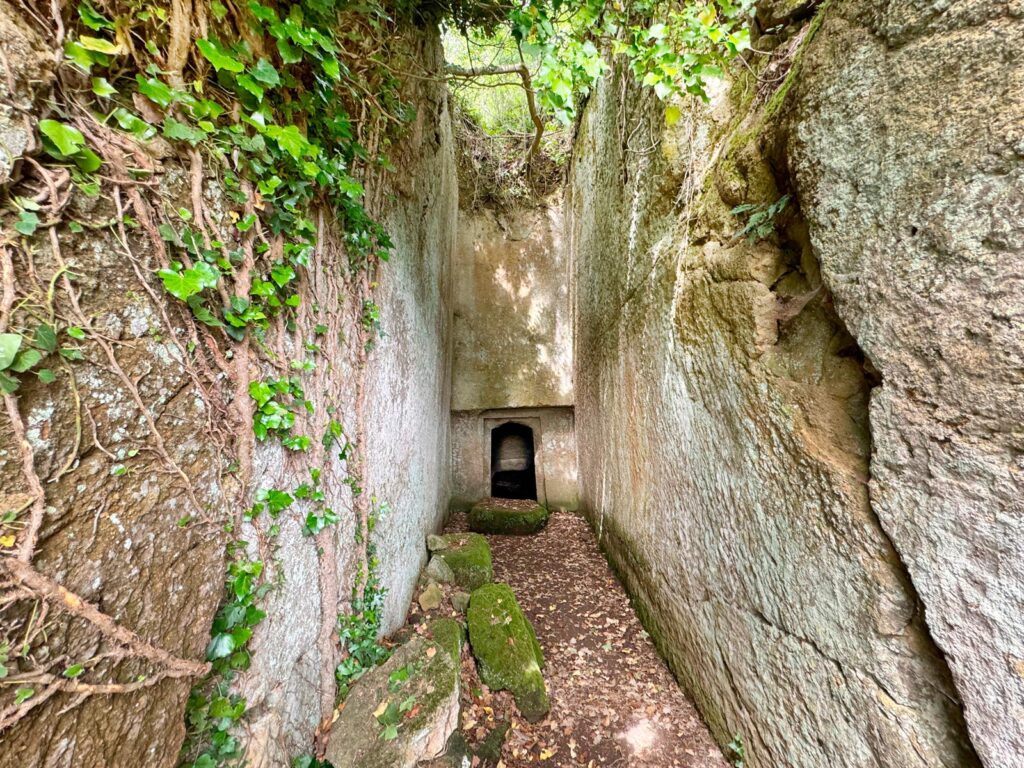
The tuff cliff allowed the Etruscans to carve articulated tombs, corridors, funerary chambers and monuments that still preserve much of their original structure.
The rock was not only a building material, but became an integral part of the funerary architecture and of the landscape.
A story that continues
Archaeological investigations continue today.
New discoveries help expand knowledge of the Civita and its necropolises, offering an increasingly complete view of the history of this territory.
Every tomb brought to light adds another piece to the understanding of a community that left deep traces in the landscape and in the cultural memory of Tuscia.
From the territory to the museum
A visit to the necropolises finds its natural completion in Museo Civita.
Here the artefacts from the excavations make it possible to deepen understanding of funerary rituals, daily activities and the relationships that connected the community of the Civita with other centres of Etruria.
Museum and necropolises thus form a single route of discovery that links the archaeological landscape to the objects that tell its story.
To explore further
Necropoli di Vigna la Piazza
The origins of the Civita and the circle tombs.
Necropoli di Centocamere
The great chamber tombs and funerary routes.
Necropoli di Pianezze
The transformations of Etruscan society in the 6th century BC.
Museo Civita
The artefacts and evidence from the excavations.
| Period of use of the necropolises: | 8th–5th century BC |
| Main areas: | Vigna la Piazza, Centocamere, Pianezze |
| Funerary types: | Circle tombs, chamber tombs, pit tombs, cassone tombs |
| Predominant material: | Volcanic tuff |
| Artefacts preserved: | Museo Civita in Grotte di Castro |