
For the Etruscans, death did not represent a definitive end. The necropolises of the Civita tell of a system of beliefs, gestures and rituals that accompanied the deceased in the passage towards the afterlife. Tombs, grave goods and funerary architecture still preserve traces of this complex symbolic world.
A passage between two worlds
The Etruscans regarded death as a transformation rather than a conclusion.
The deceased continued to maintain a bond with their family and community, which is why the moment of burial was of fundamental importance.
Every gesture performed during the funeral had a precise meaning and helped accompany the passage from earthly life to a new dimension of existence.
The journey to the burial place
The necropolises were placed outside the settlement but in close relationship with it.
The funeral procession followed the paths leading to the tombs, crossing the landscape the deceased had known during life.
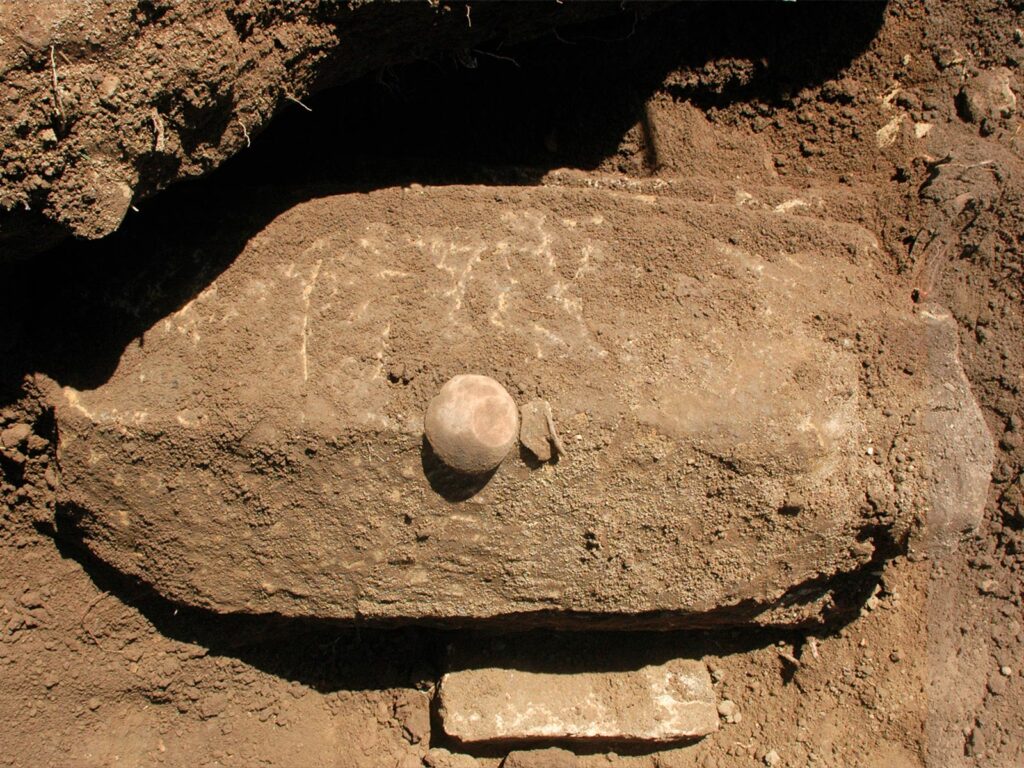
Recent archaeological research in the Necropoli di Centocamere has identified stretches of these ancient routes, where steps carved into the tuff are still visible and were used to reach the funerary areas.
The deposition of the deceased
In the necropolises of Grotte di Castro, the prevailing rite was inhumation.
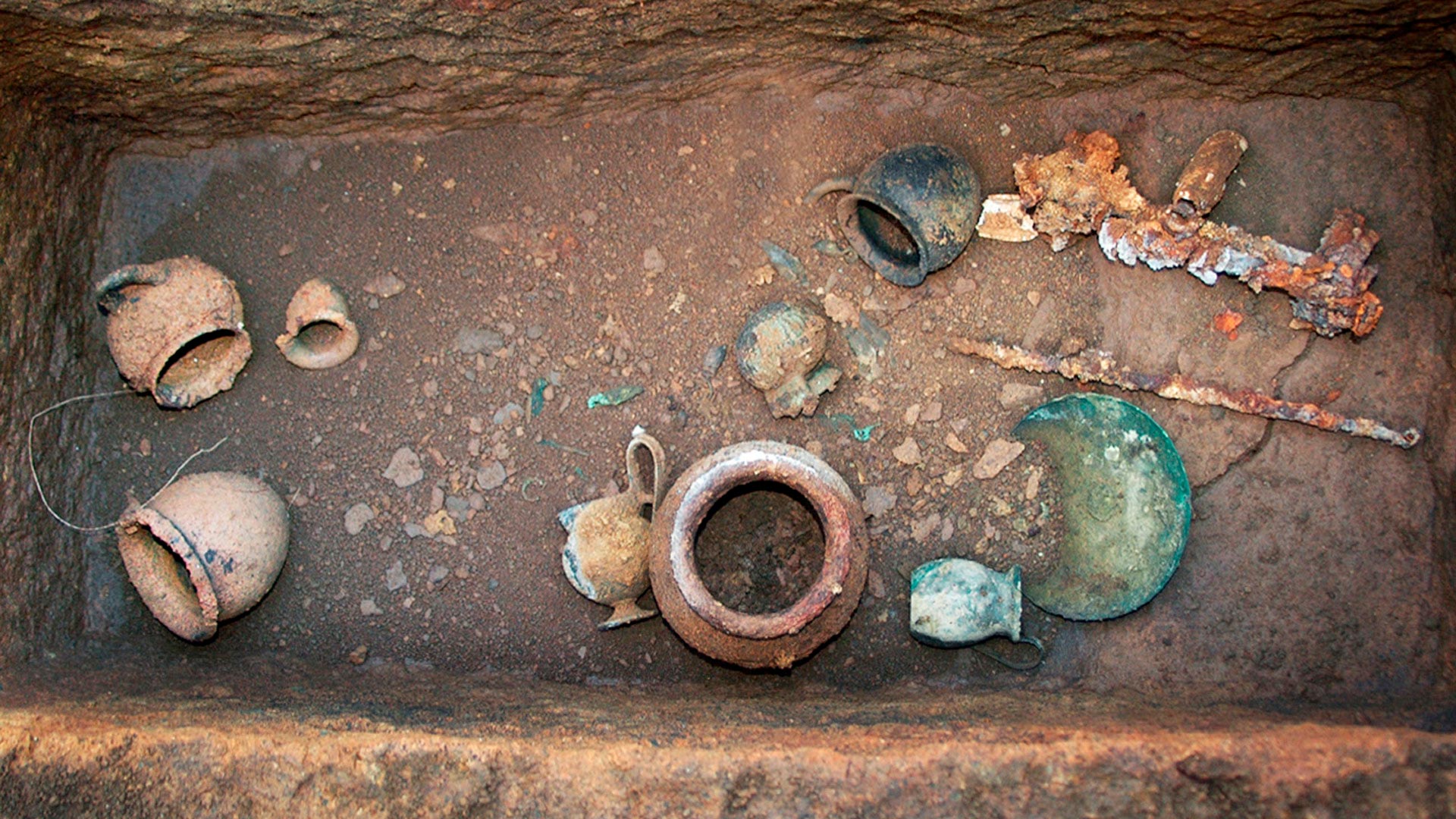
The body was laid inside the burial place, often accompanied by personal objects and the elements considered necessary for the journey to the afterlife.
The position of the deceased, the arrangement of the objects and the organisation of the funerary space followed rules and traditions handed down over time.
The meaning of the grave goods
Objects placed beside the deceased still tell us today about aspects of their identity.
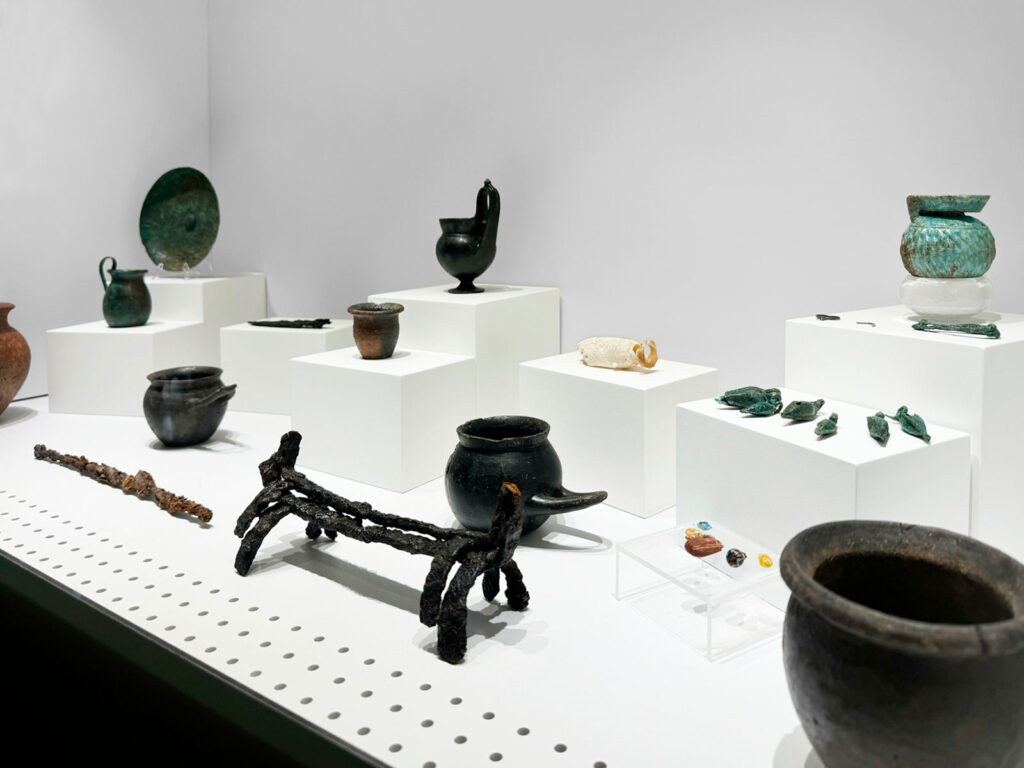
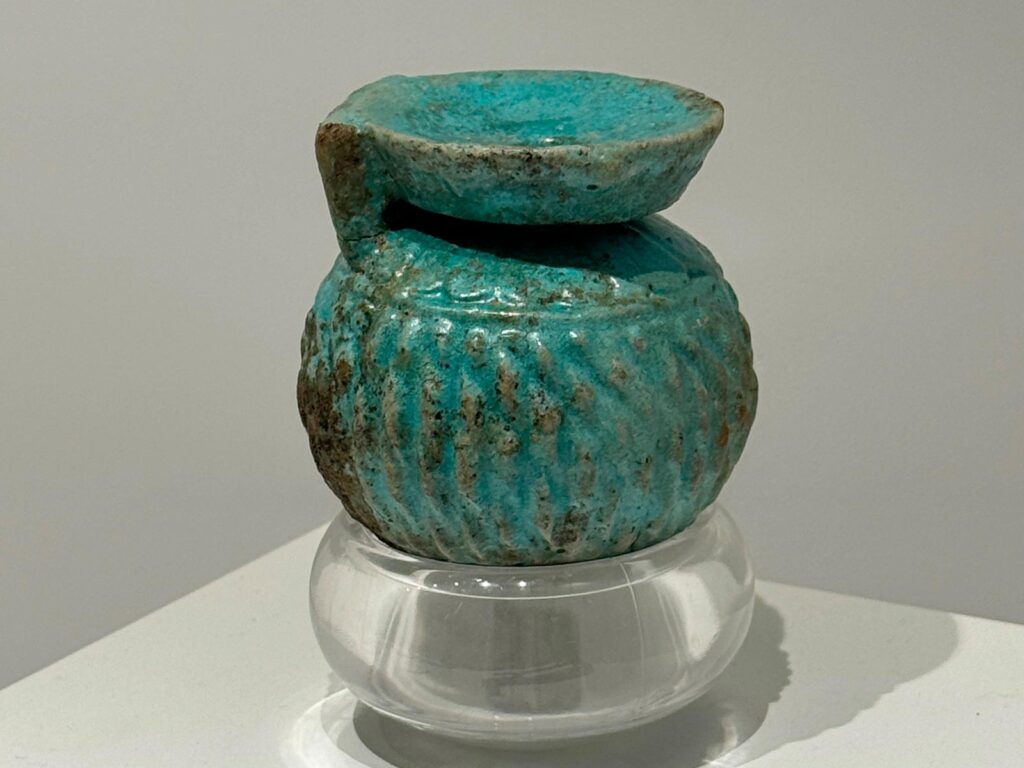
Vessels, jugs, cups, personal ornaments, fibulae, rings and tools accompanied the burial and represented the social role, age or prestige of the person.
Weapons could appear in male tombs, while objects connected to the personal and family sphere were frequent in female burials.
Many of the artefacts displayed in Museo Civita come from these grave goods.
The tomb as a house of memory
Over the centuries the tombs became increasingly articulated.
The simple pits gave way to complex structures, with funerary chambers intended to receive several generations of the same family.
For the Etruscans, the tomb was not only the place of burial, but a true house intended for the dead.
The architecture often reproduced elements of the world of the living, strengthening the bond between family memory and collective identity.
The role of the family
The necropolises of the Civita show how the family group was one of the central elements of Etruscan society.
Chamber tombs were used for long periods and received several depositions over generations.
Burial thus became a shared space, where the memory of the ancestors helped define the role and prestige of the family within the community.
What archaeologists can tell
Every tomb is a precious source of information.
The position of the body, the objects deposited, the features of the architecture and the traces left by rituals make it possible to reconstruct aspects of daily life, religious beliefs and social relationships.
The necropolises of the Civita are therefore an extraordinary historical archive that still provides new information about Etruscan civilisation.
From the necropolises to Museo Civita
The tombs tell of the place of memory.
Museo Civita instead allows visitors to observe closely the objects that accompanied the deceased.
Through the artefacts from Vigna la Piazza, Centocamere and Pianezze, it is possible to understand how the Etruscans interpreted the relationship between life, death and remembrance.
The museum visit thus completes the route begun in the necropolises.
A story that still speaks today
More than two thousand years later, Etruscan tombs continue to tell a deeply human story.
Behind every grave good, every burial and every funerary architecture, we recognise gestures of care, memory and belonging that still feel surprisingly close to contemporary sensibility.
The main phases of the ritual
The funeral procession
The route that accompanied the deceased towards the necropolis.
The deposition
The placement of the body inside the burial.
The grave goods
The objects intended to accompany the journey to the afterlife.
Family memory
The preservation of the bond between generations.
| Prevailing rite: | Inhumation |
| Documented period: | 8th–5th century BC |
| Main places: | Vigna la Piazza, Centocamere, Pianezze |
| Recurring elements: | Grave goods, family tombs, funerary paths |
| Artefacts preserved: | Museo Civita |