
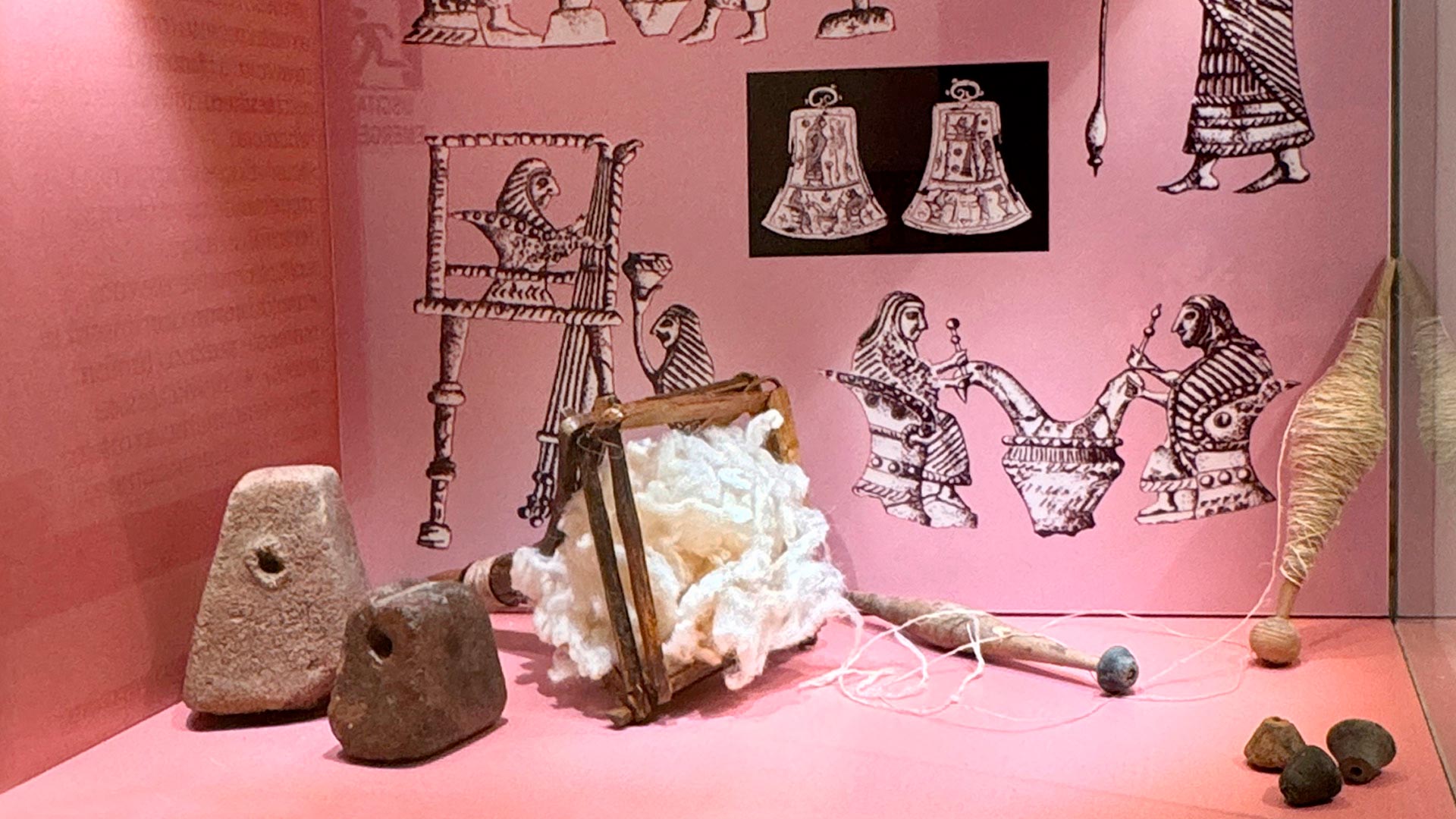
The necropolises of Grotte di Castro return much more than objects and funerary architecture. Through the grave goods, it is possible to glimpse aspects of the daily life of the men, women and families who inhabited the Civita between the 8th and 5th centuries BC, reconstructing fragments of a complex and dynamic society
Behind every artefact there is a person
The objects found in the tombs do not only tell of the moment of burial.
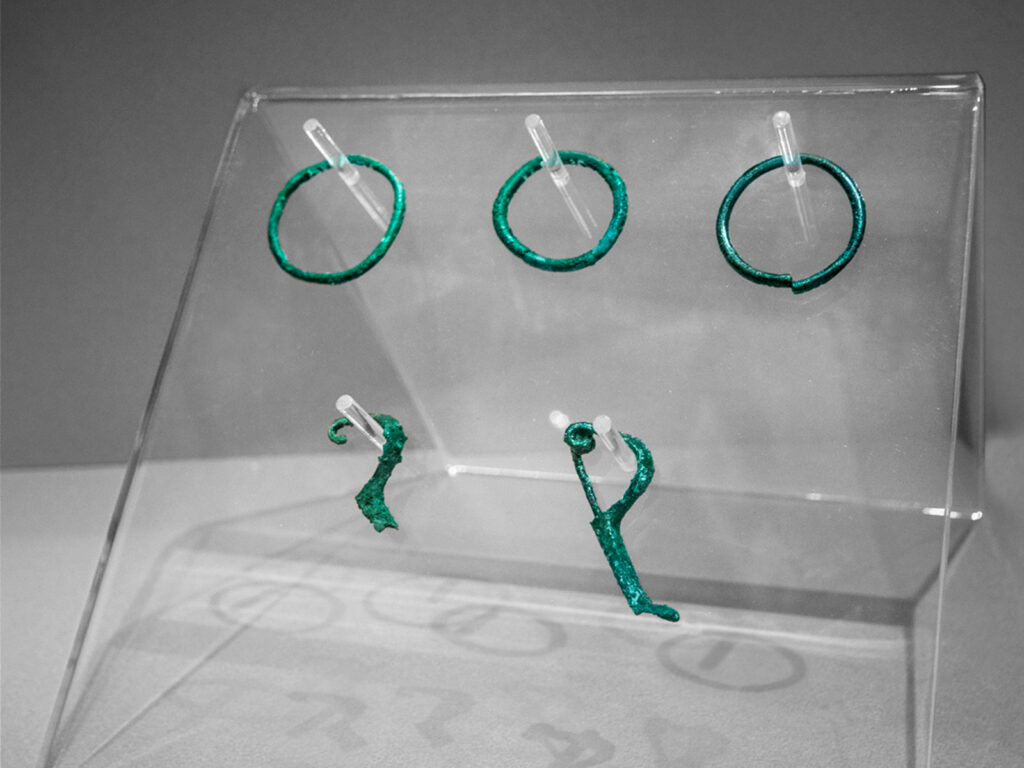
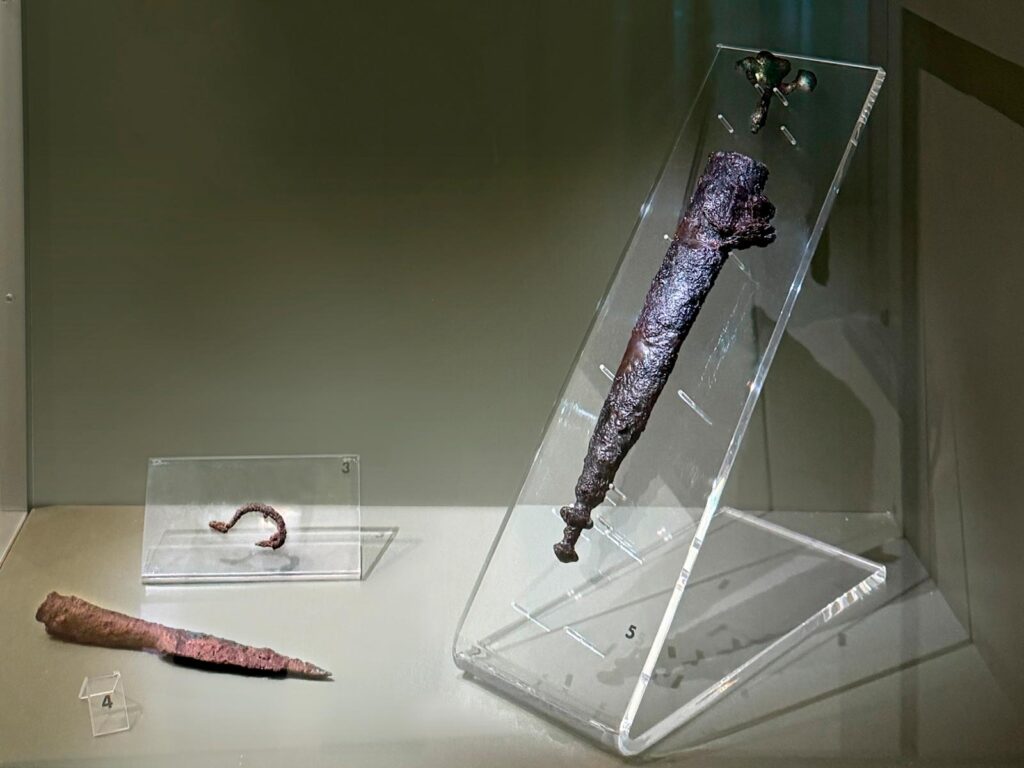
Fibulae, ornaments, weapons, vessels and tools preserve traces of daily life and allow archaeologists to reconstruct aspects of the identity of the deceased.
Each set of grave goods represents an individual story, but also a mirror of the community to which that person belonged.
Women in Etruscan society
Etruscan civilisation is often remembered for the relatively autonomous and visible role of women compared with other societies of the ancient Mediterranean.
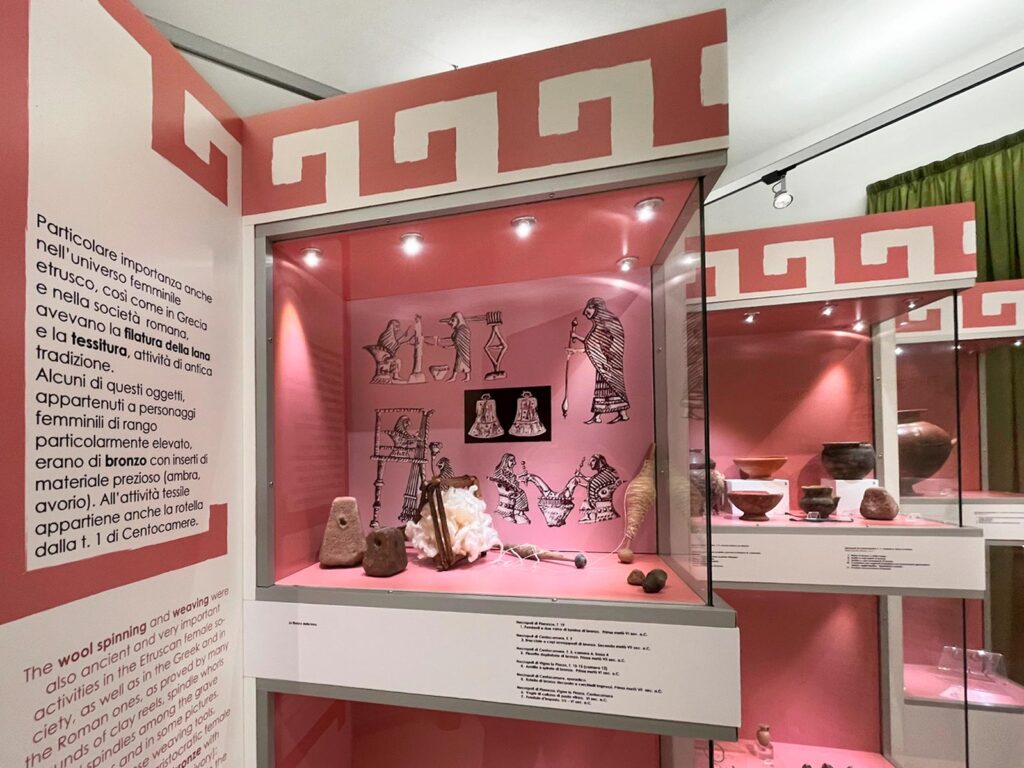
The female grave goods found in the necropolises of the Civita testify to the importance attributed to personal and family identity through ornaments, fibulae, containers for perfumes and objects connected to domestic life.
These artefacts tell of women who actively took part in the life of the community and held a recognised position within Etruscan society.
Men and social prestige
In male burials, weapons, tools and objects sometimes appear that evoke public role and personal prestige.
These elements do not represent only practical activities, but become symbols of the social identity of the deceased.
Through the grave goods, it is possible to observe how recognition of individual role continued even after death.
A community made of families
Chamber tombs document the importance of the family group in Etruscan society.
Several generations could share the same funerary space, creating a strong bond between memory, belonging and continuity.
The family represented the point of encounter between individual identity and collective life, a value clearly emerging from the necropolises of the Civita.
Children and the most fragile stories
Among the artefacts found in the necropolises there is also evidence connected to childhood.
Objects placed beside the youngest members allow us to recognise the attention given to children and the role they occupied within the family.
A significant example comes from the Necropoli di Centocamere, where the grave goods of a young girl were found still intact, offering precious information on the life and funerary practices of the community.
Beyond differences
The distinctions between male and female grave goods help us understand some aspects of Etruscan society, but they tell only part of the story.
Many objects are common to men and women and testify to shared activities, family relationships and daily practices that united the community of the Civita.
Etruscan society thus emerges as an articulated reality in which personal identities and collective belonging constantly coexist.
The story continues in the museum
The necropolises preserve the context of the burials.
Museo Civita instead allows visitors to observe closely the objects that accompanied men, women and children in their life journey and in the memory of the community.
Each artefact helps restore a human face to history, turning archaeology into a story of people before it is a story of objects.
A look at Etruscan society
Through grave goods, archaeologists can reconstruct aspects of daily life, family relationships and social organisation.
The necropolises of the Civita do not only tell how the Etruscans faced death, but also how they lived, worked and built their identity within the community.
What to observe
Personal ornaments
Fibulae, rings and objects that tell of identity and belonging.
Female grave goods
Evidence of daily life and the social role of women.
Male grave goods
Objects that evoke activities, prestige and relationships.
Evidence of childhood
Artefacts that offer a glimpse of the different ages of life.
| Documented period: | 8th–5th century BC |
| Main sources: | Necropolises and grave goods |
| Most frequent elements: | Fibulae, ornaments, ceramics, tools |
| Areas of origin: | Vigna la Piazza, Centocamere, Pianezze |
| Where to explore further: | Museo Civita |