
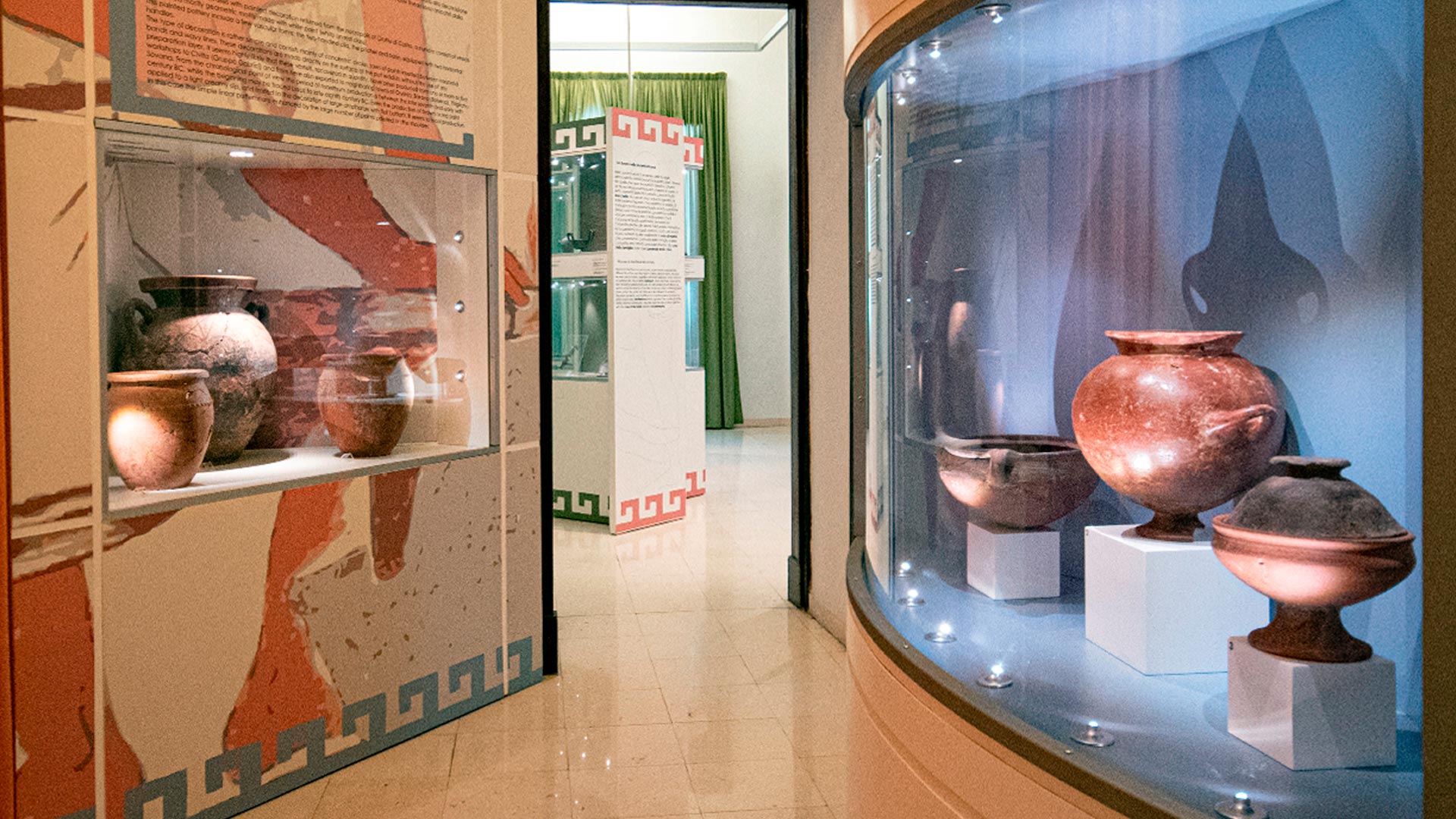
The necropolises tell how the Etruscans faced death. The artefacts preserved in Museo Civita instead allow us to observe the other side of their existence: work, food, family, social relationships and the activities that marked daily life on the shores of Lake Bolsena.
A community overlooking the lake
Between the 8th and 5th centuries BC, the Civita was a lively settlement, part of a network of exchanges that connected the territory with the main centres of Etruria.
Its dominant position over the landscape and its proximity to the lake favoured agriculture, animal husbandry, trade and relationships with nearby communities.
Daily life developed in close relationship with the resources offered by the surrounding environment.
Houses and living spaces
Although the dwellings of the Civita are today less visible than the necropolises, archaeological finds allow us to reconstruct some aspects of domestic life.
The spaces of the house were the centre of family life and daily activities. Here meals were prepared, food reserves were stored and many craft activities connected to family management took place.
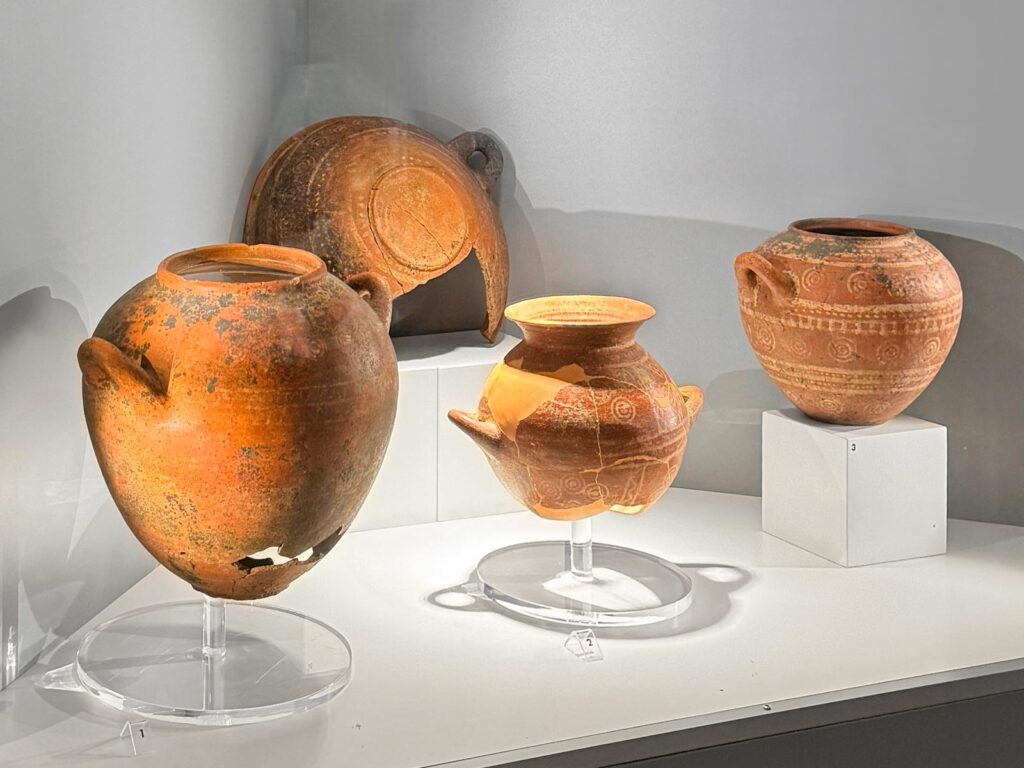
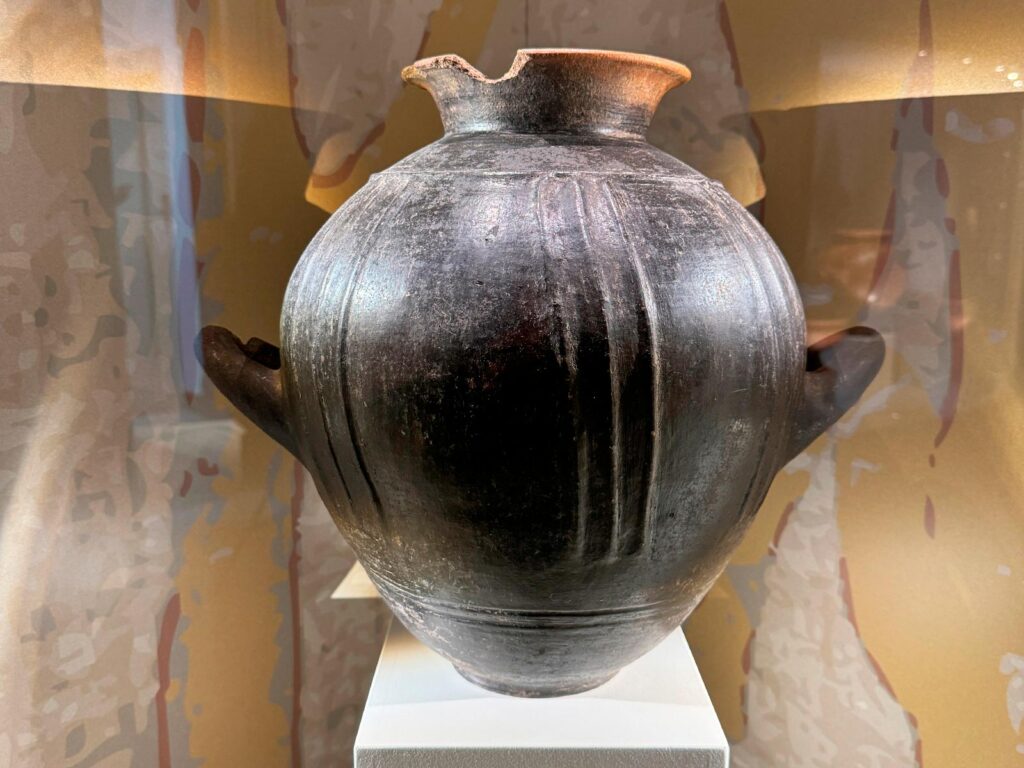
Many of the objects found in the tombs were in fact tools used every day in the home.
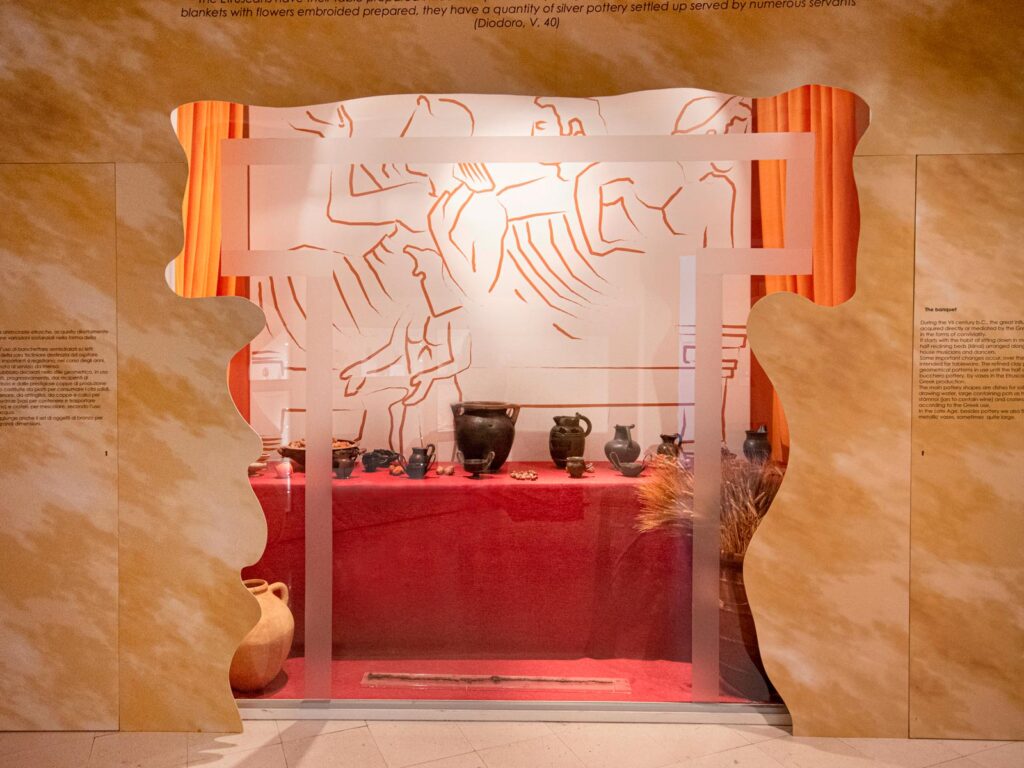
Food and the table
Food and the table
Craftspeople and knowledge
The Civita was home to people specialised in the working of different materials.
Potters, blacksmiths, carpenters and artisans produced objects intended both for daily use and for ritual activities.
Many artefacts show remarkable technical quality and testify to knowledge handed down over time, capable of transforming simple materials into functional tools and decorated objects.
The role of women, men and children
Grave goods allow us to observe some aspects of the social organisation of the community.
Fibulae, personal ornaments, utensils and everyday objects tell of different roles within the family and society.
Among the finds there is also evidence connected to childhood, giving a more complete image of the community and of the different ages of life.
The lake and the territory
The presence of Lake Bolsena profoundly influenced the daily life of the inhabitants of the Civita.
Water provided food resources, facilitated movement and helped create an environment favourable to agricultural activities.
The surrounding landscape, with its tuff hills and cultivable areas, also constituted a fundamental resource for the life of the community.
Objects that tell of people
Many artefacts displayed in Museo Civita are not extraordinary works or objects intended for prestige.
They are simple tools, used every day.
Precisely for this reason they are precious evidence: they allow us to approach the real life of the inhabitants of the Civita, their daily gestures, their needs and their habits.
From daily life to history
Every object preserved in the museum tells a small individual story.
Together, these artefacts make it possible to reconstruct the collective history of a community that inhabited the territory for centuries, leaving traces that still help us understand the origins of Grotte di Castro.
What the artefacts tell
The house
The spaces of family life.
Food
Production, storage and consumption.
Work
Craftsmanship, agriculture and daily activities.
People
Women, men and children of the Civita.
| Historical period: | 8th–5th century BC |
| Main activities: | Agriculture, animal husbandry, craftsmanship, trade |
| Fundamental resource: | Lake Bolsena |
| Main sources: | Necropolises and archaeological artefacts |
| Where to explore further: | Museo Civita |