
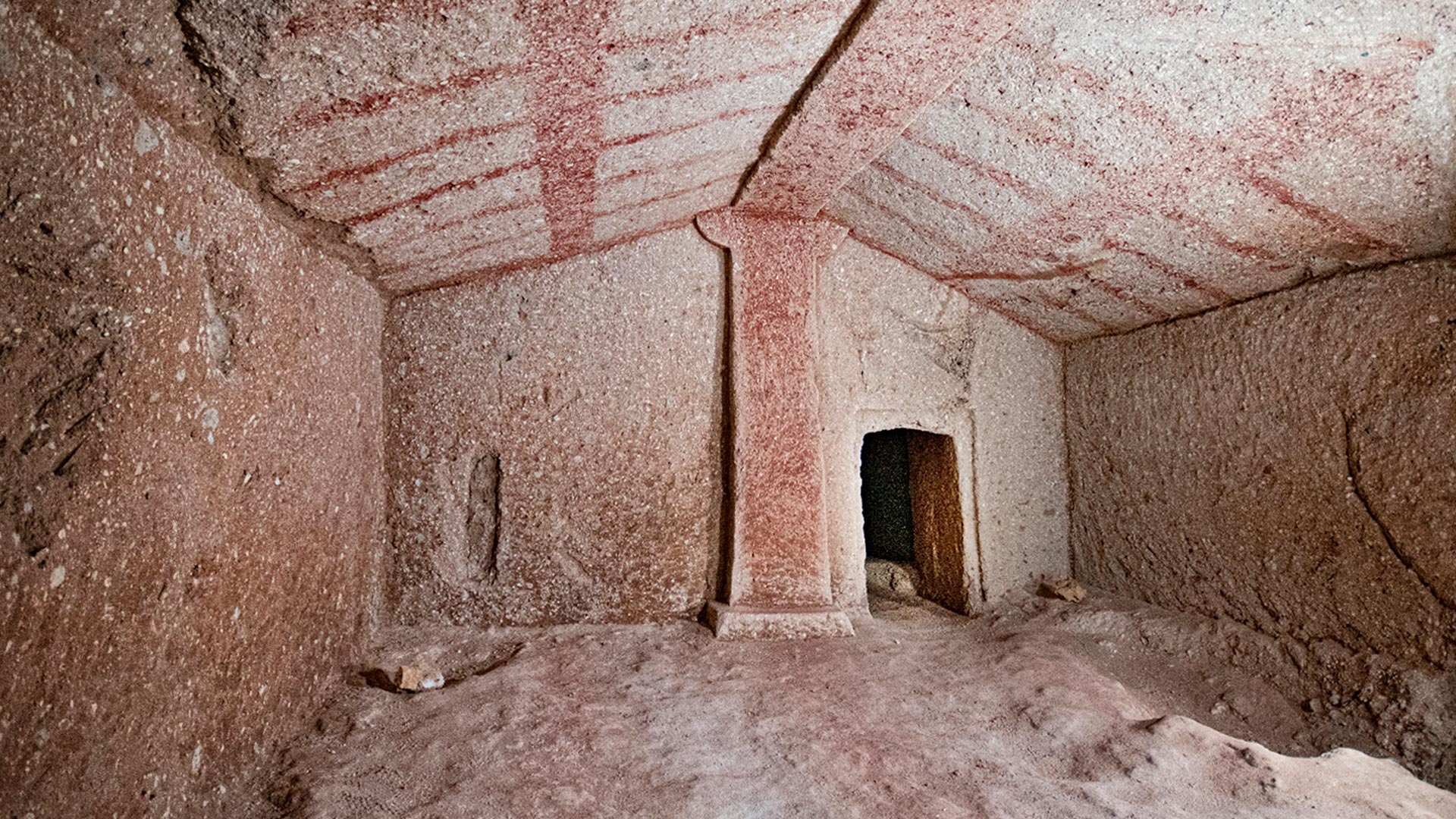
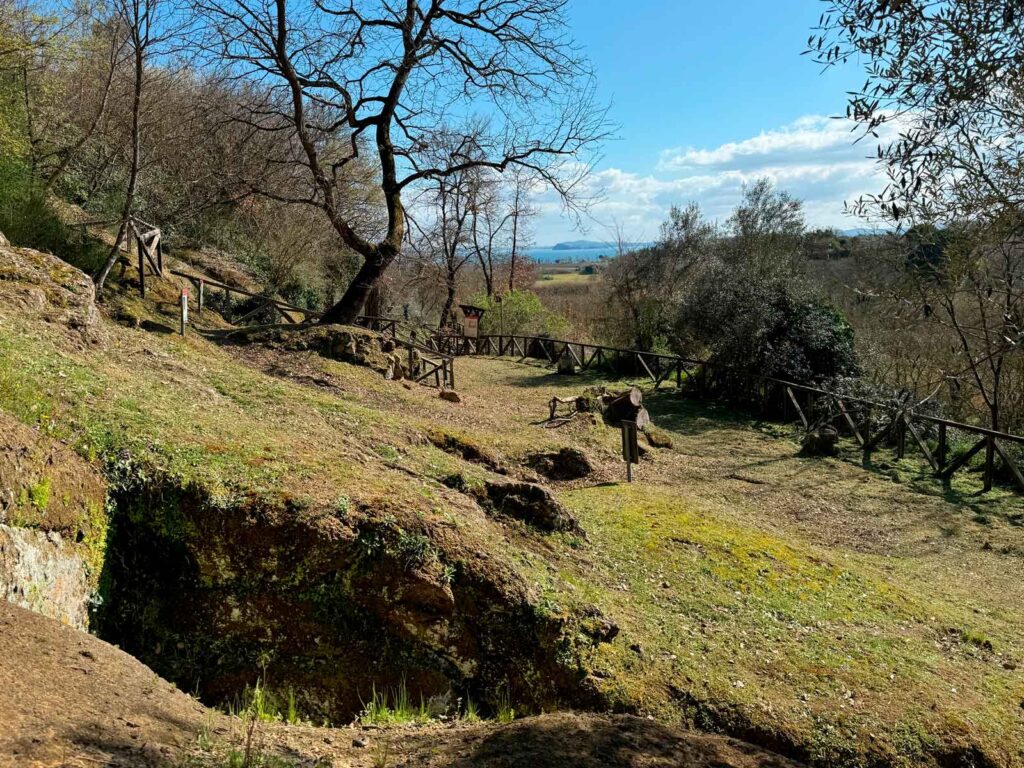
In the Necropoli di Pianezze, one of the most fascinating examples of Etruscan funerary architecture is preserved. The Tomba Rossa takes its name from the painted decorations that still highlight some elements of its internal structure. It is a monument that tells how the Etruscans imagined the dwelling of their dead and the bond between family memory and everyday life.
Why is it called Tomba Rossa?
The name comes from the red colour that characterises some of the architectural elements sculpted inside the funerary chamber.
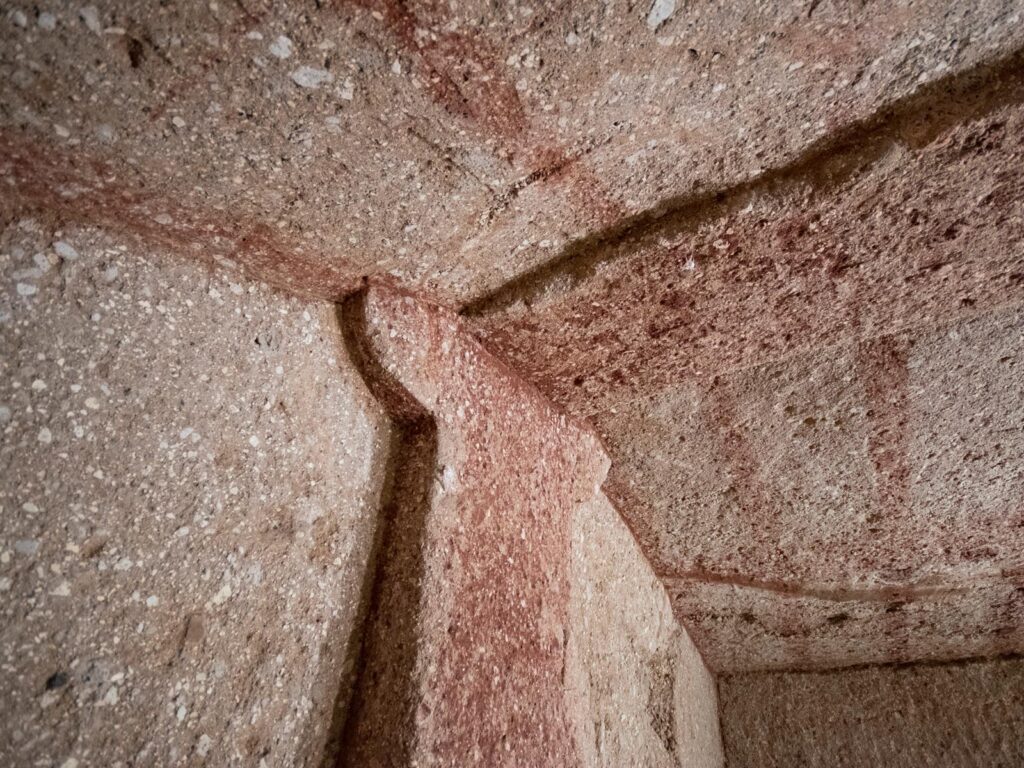
The most recognisable element is the central beam of the ceiling, modelled in tuff and painted red, together with other details that reproduce the wooden structure of a real dwelling. This is not simple decoration: the colour helped make the funerary space more realistic, symbolically transforming it into the house intended to receive the deceased in the afterlife.
A house carved into the rock
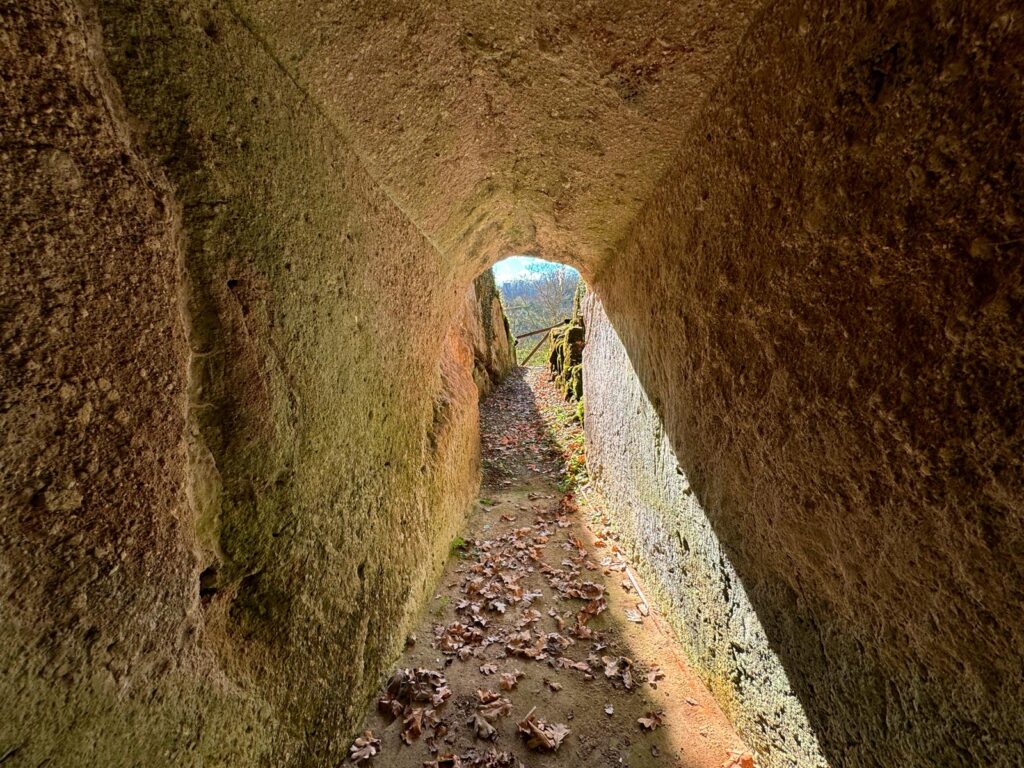
The tomb was created by carving directly into the tuff bedrock.
Access was through a long corridor leading to the main chamber, where the burials were placed. The ceiling is modelled with a double-pitched roof and faithfully reproduces the appearance of Etruscan houses built with wooden elements.
Beams, small rafters and roofing elements do not have a real structural function here, but are carved into the rock to evoke a domestic environment. The tomb thus becomes the ideal continuation of the house of the living.
A family and its memory
The architectural complexity of the monument and the materials found inside suggest that the Tomba Rossa belonged to a family of high social rank.
Among the recovered finds are fragments of Etruscan ceramics and imports from the Greek world, evidence of the cultural and commercial relationships that connected the territory of Grotte di Castro with the main centres of Etruria.
The tomb remained in use in the second half of the 6th century BC, a period in which local elites expressed their prestige also through monumental funerary architecture.
What does it tell us today?
The Tomba Rossa helps us understand one of the most characteristic aspects of Etruscan culture: the relationship between life and death.
The forms of the house are reproduced within the burial so that the deceased may symbolically continue to live in their family environment. The tomb is not only a place of deposition, but a space dedicated to memory, family identity and continuity between generations.
Observing it today, it is possible to read in the stone a worldview in which architecture, ritual and everyday life were deeply connected.
To observe
The red painted finishes
Elements that gave the monument its name.
The double-pitched ceiling
It reproduces the structure of Etruscan dwellings.
The traces of decoration
Rare evidence of the original polychromy of the tombs.
The structure of the funerary chamber
A well-preserved example of 6th-century BC Etruscan funerary architecture.
| Necropolis: | Pianezze |
| Type: | Chamber tomb |
| Period of use: | Second half of the 6th century BC |
| Distinctive feature: | Central beam painted red |
| Main theme: | The tomb as a house for the afterlife |