
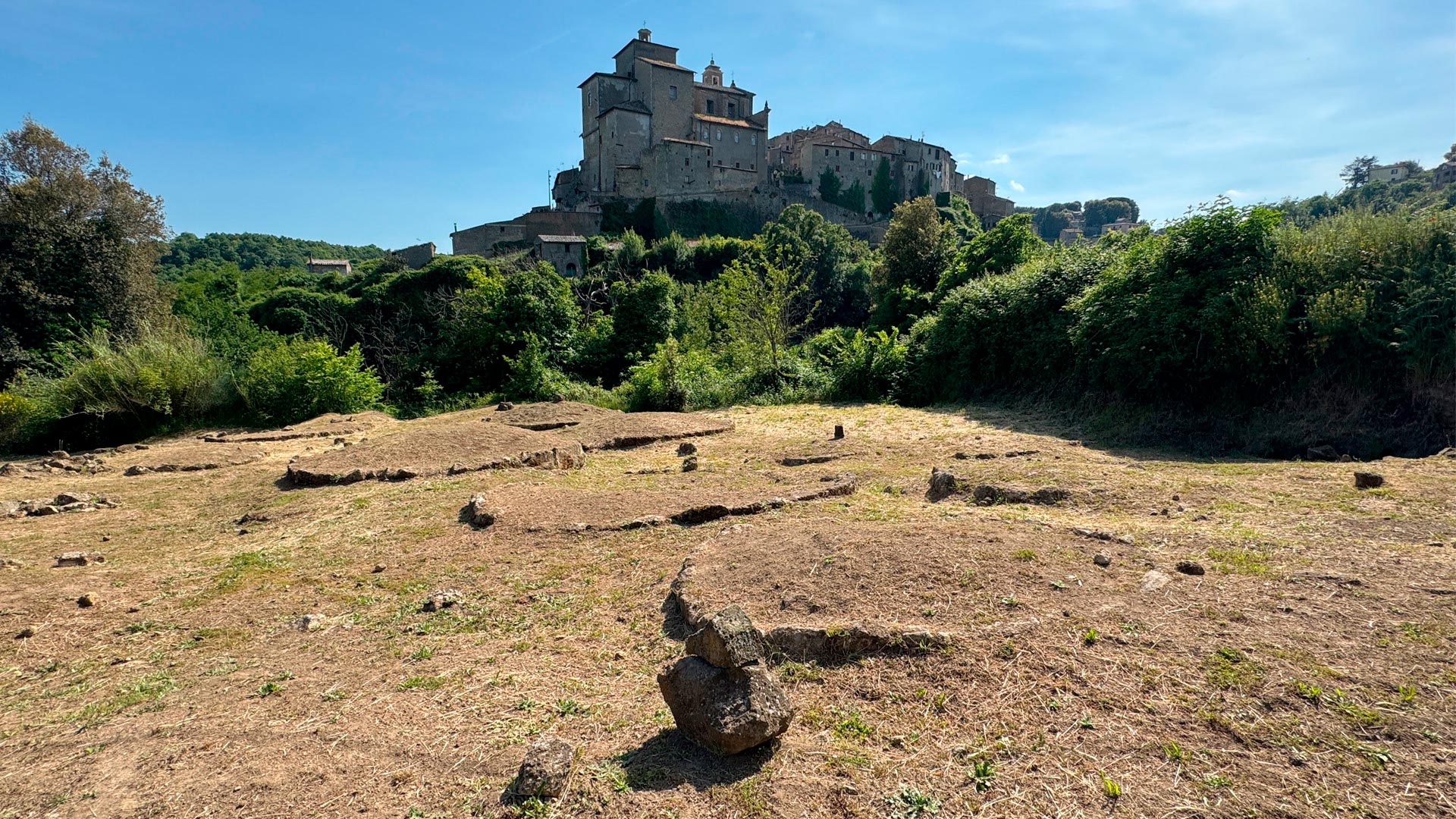
A short distance from the ancient Civita, the plateau on which the Etruscan city of Grotte di Castro once stood, lies the Necropoli di Vigna la Piazza. It is one of the most important places for understanding the birth, development and transformations of the community that inhabited these lands between the 8th and 5th centuries BC.
Here the landscape still preserves traces of more than three centuries of history: monumental tombs, family burials and architecture carved into the tuff tell of the relationship between the living and their ancestors.
A necropolis at the foot of the Civita
The necropolis occupies the northern side of the hill of the Civita, the place where the Etruscan settlement stood.
Its position is not accidental. The Etruscans often built the cities of the dead outside the settlements, along access routes and in areas visible from the surrounding territory. In this way the memory of families remained an integral part of the landscape.
Today Vigna la Piazza is one of the most significant archaeological sites in Upper Tuscia and in the Lake Bolsena area.
Two areas, two ways of telling death
The necropolis is now divided into two sectors by the Strada Provinciale 48, which follows an ancient route already used in the Etruscan period.
Sector A
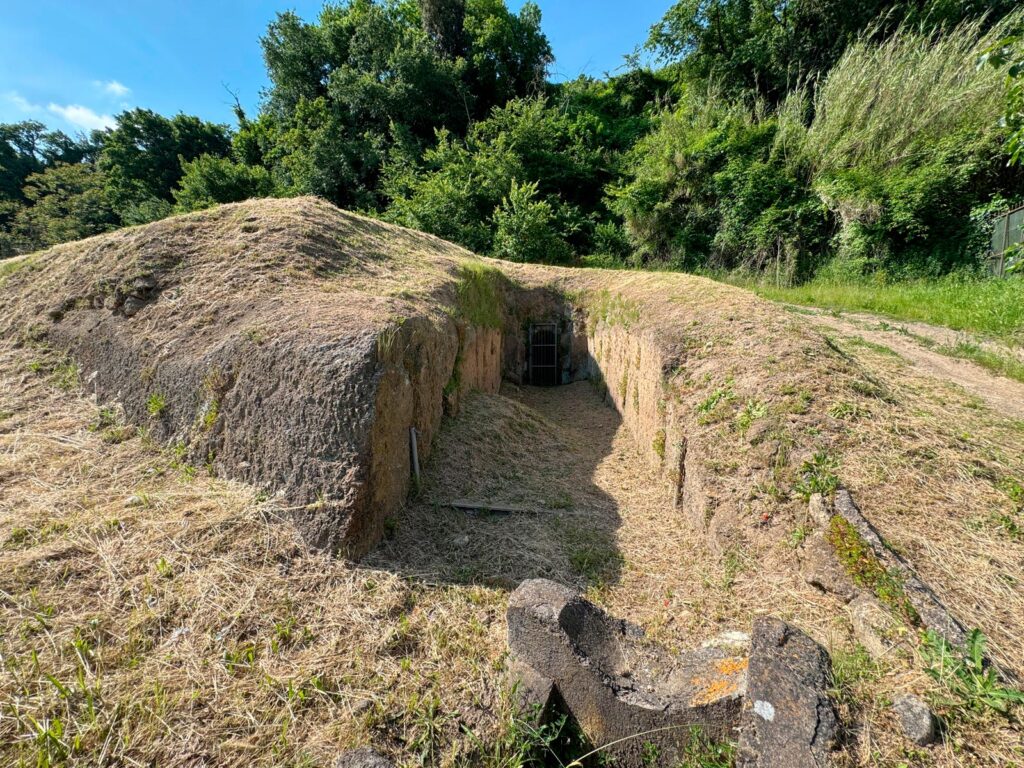
In the upper sector are the great chamber tombs carved into the tuff bedrock.
These structures were intended for the most important families of the community and were used for several generations. Through a long access corridor, called a dromos, the underground funerary spaces were reached.
Sector B
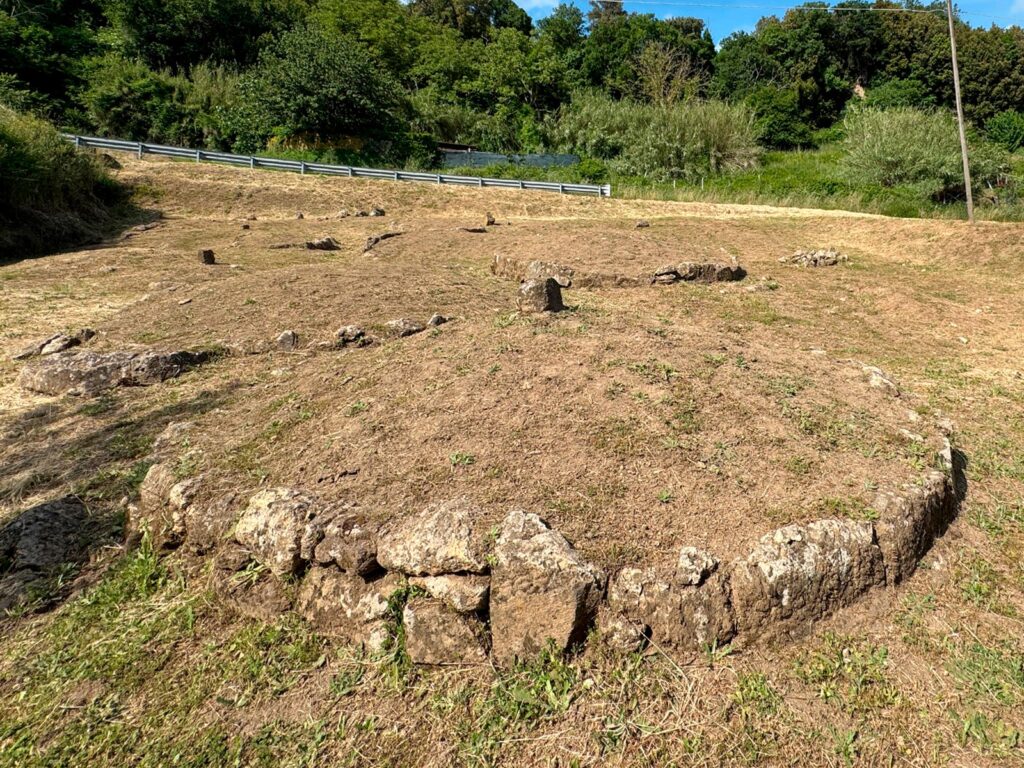
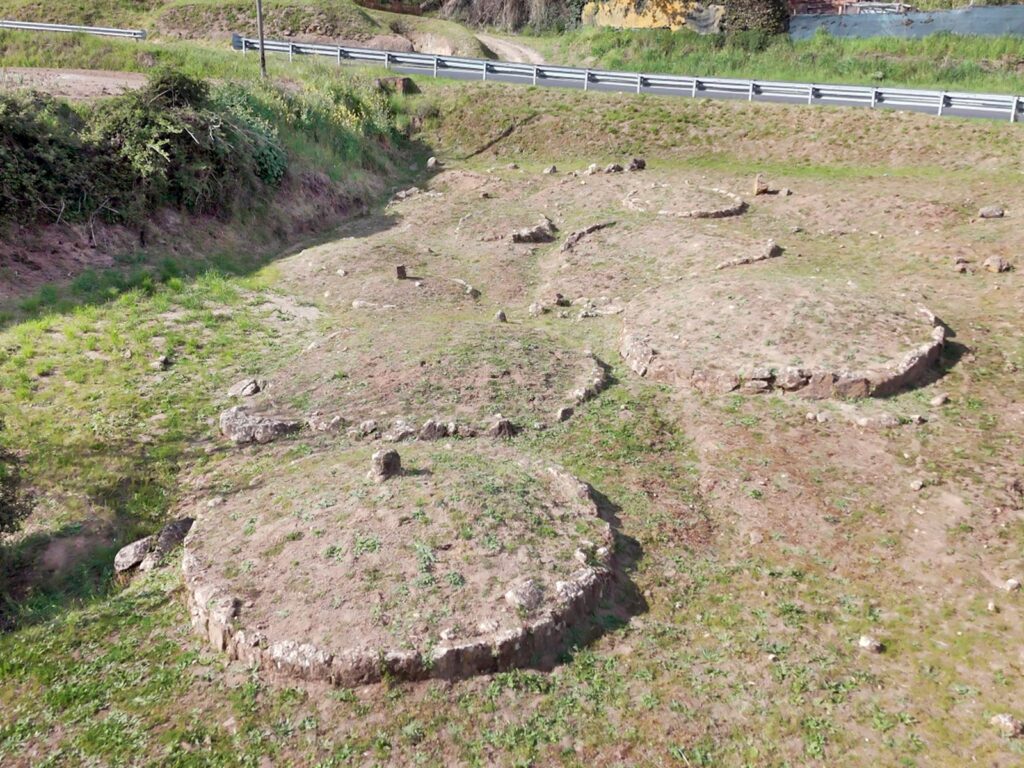
In the lower sector, by contrast, circle tombs predominate, an older and rarer type in southern Etruria.
These burials were delimited by rings of stone and often marked by cippi, monuments that made the presence of the family visible in the landscape.
The simultaneous presence of circle tombs and chamber tombs makes Vigna la Piazza an especially important place for understanding the evolution of Etruscan funerary practices.
The earliest evidence
Archaeological investigations have identified in Sector B some of the earliest burials in the territory, datable to the second half of the 8th century BC.
The grave goods found show cultural and commercial relationships with other important Etruscan centres in the Lake Bolsena area, such as Bisenzio and Orvieto.
The tombs offer a concrete image of the society of the time: men accompanied by weapons, women with personal ornaments, vessels intended for offerings and objects that tell of everyday life.
Each burial is a small individual story that contributes to reconstructing the collective history of the community.
From individual tombs to family tombs
Over time, Etruscan society changed.
From the 7th century BC onwards, chamber tombs became widespread: true underground architectures designed to house several members of the same family.
The internal spaces often reproduced the structure of dwellings: atria, side chambers, sculpted or painted ceilings.
The tomb thus became a dwelling intended to preserve the memory of the ancestors and strengthen the identity of the family group.
A key place for understanding the Etruscans
Visiting Vigna la Piazza means reading in the landscape the transformations of a community that lasted for centuries.
The tombs do not only tell of death, but also of life: social relationships, differences in status, daily activities, religious beliefs and the relationship with the territory.
For this reason the necropolis is a fundamental stage for understanding the Etruscan history of Grotte di Castro and the exhibition route of Museo Civita.
To observe during your visit
The position of the necropolis in relation to the Civita.
The differences between circle tombs and chamber tombs.
The dromoi carved into the tuff that lead to the funerary spaces.
The traces of social evolution between the 8th and 5th centuries BC.
The relationship between natural landscape and funerary architecture.
| Location: | Northern side of the Civita of Grotte di Castro |
| Chronology: | Second half of the 8th century BC – early 5th century BC |
| Funerary types present: | Circle tombs and chamber tombs |
| Distinctive feature: | The simultaneous presence of the earliest funerary forms and monumental family tombs |