
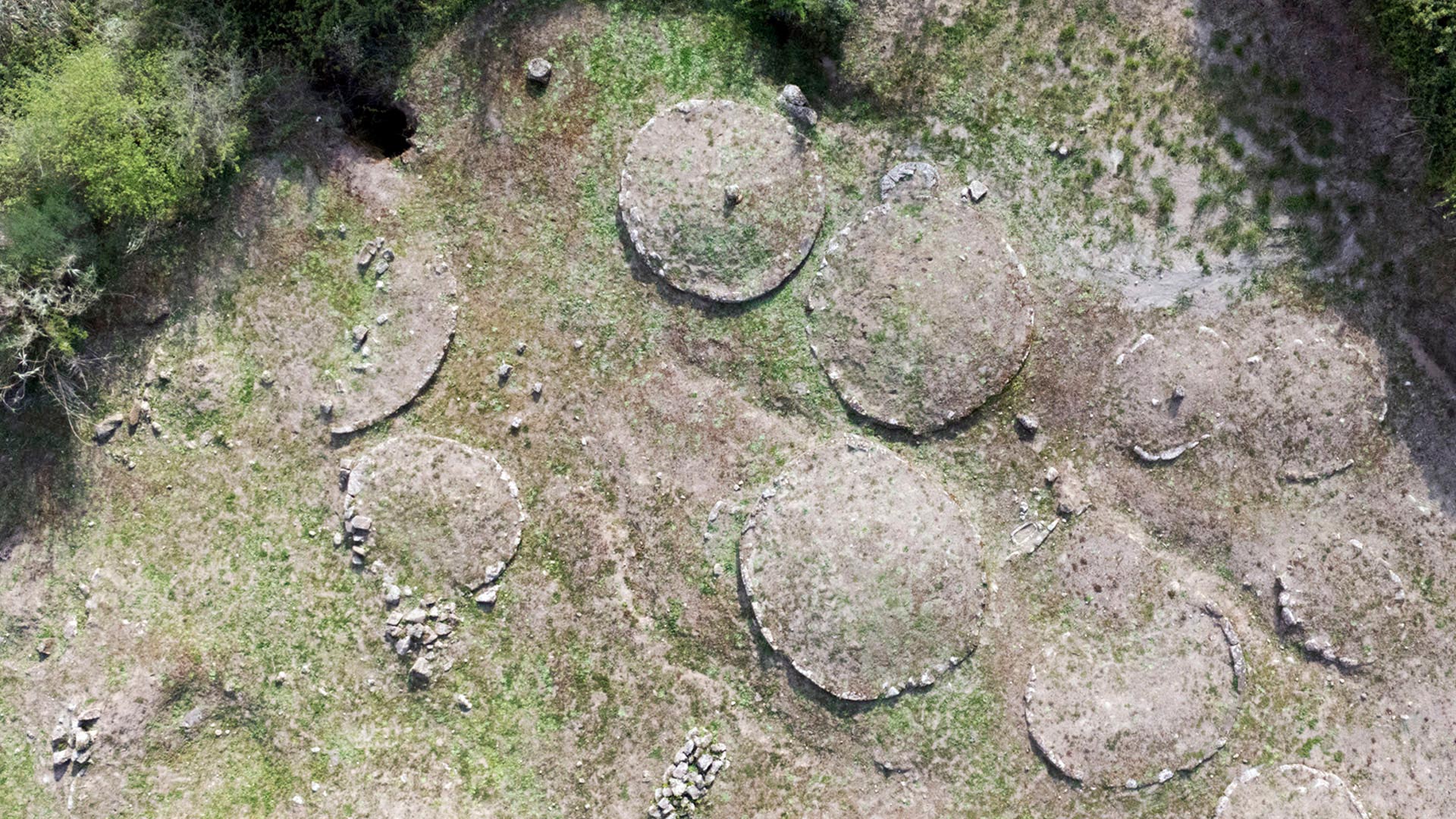
The necropolises of Grotte di Castro preserve different forms of burial that tell the evolution of the Etruscan community over the centuries. From the earliest pit tombs to the great chamber tombs carved into the tuff, each type reflects a different way of conceiving family, memory and the relationship with the afterlife. Observing these architectures means following the history of the Civita through one of its most fascinating and best-preserved aspects.
Every tomb tells of a society
For the Etruscans, burial was not only the place intended for the dead.
The tomb represented the family, social prestige and continuity between generations. For this reason funerary forms changed over time, following the evolution of society and its needs.
The necropolises of the Civita now make it possible to read this transformation through an archaeological heritage that spans the period between the 8th and 5th centuries BC.
Vigna la Piazza and the earliest burials
The earliest evidence comes from the Necropoli di Vigna la Piazza, where pit tombs, cassone tombs and the characteristic circle tombs have been identified.
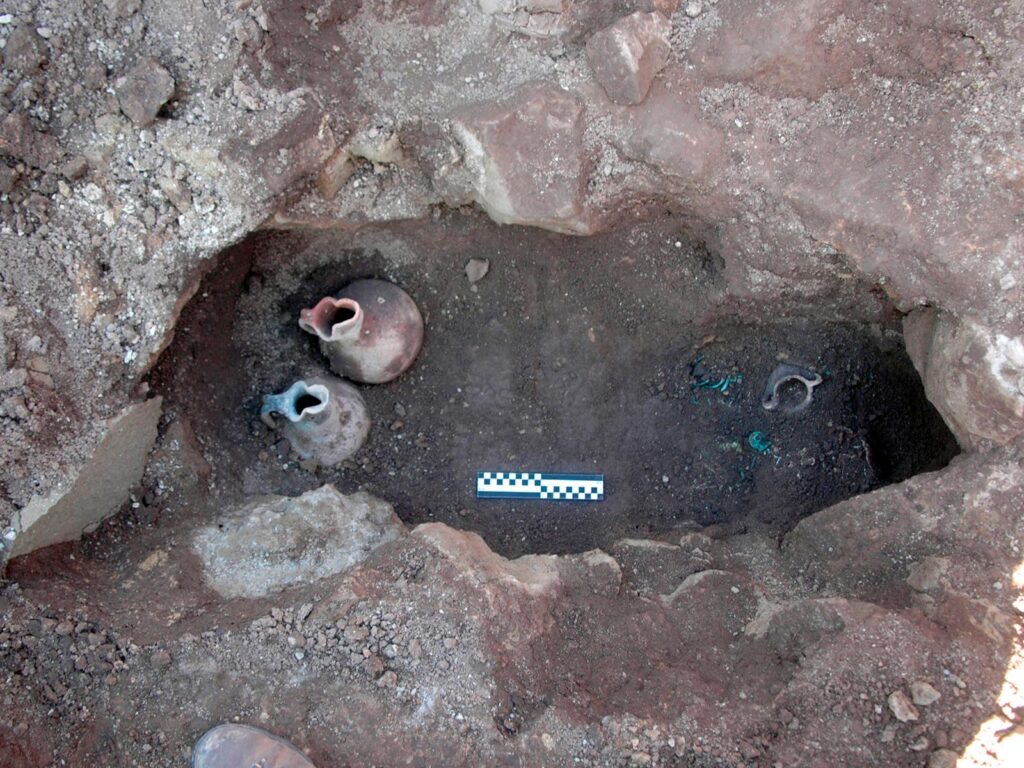
Pit tombs were simple burials dug into the ground or into the tuff bedrock. The deceased was laid together with the objects that accompanied the journey to the afterlife: vessels, personal ornaments and tools of everyday use.
Later, cassone tombs appeared, delimited by slabs of tuff that formed a more defined and protected structure.
Particularly significant are the circle tombs, bordered by rings of stone visible even on the surface. This type is one of the most characteristic features of Grotte di Castro and is a rare example of funerary traditions widespread in northern Etruria.
The close arrangement of the circles also suggests the existence of family groups that continued to use the same spaces over generations.
Chamber tombs: the house of the dead
From the second half of the 7th century BC, the most monumental tombs appeared.
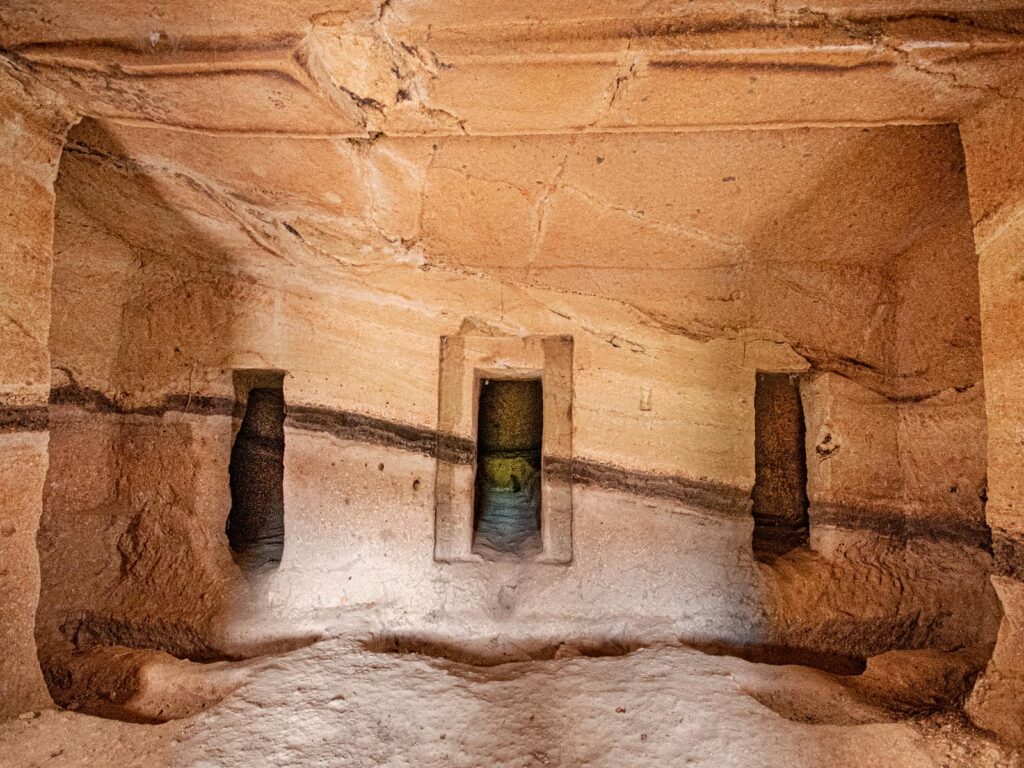
Carved directly into the tuff, they developed through long access corridors, atria and funerary chambers intended to receive several members of the same family.
The tomb was no longer only a burial place, but became a true architecture that reproduced the spaces of the house of the living.
In the Necropoli di Pianezze these structures reached increasingly articulated and monumental forms, testifying to the economic and social growth of the aristocratic families of the Civita.
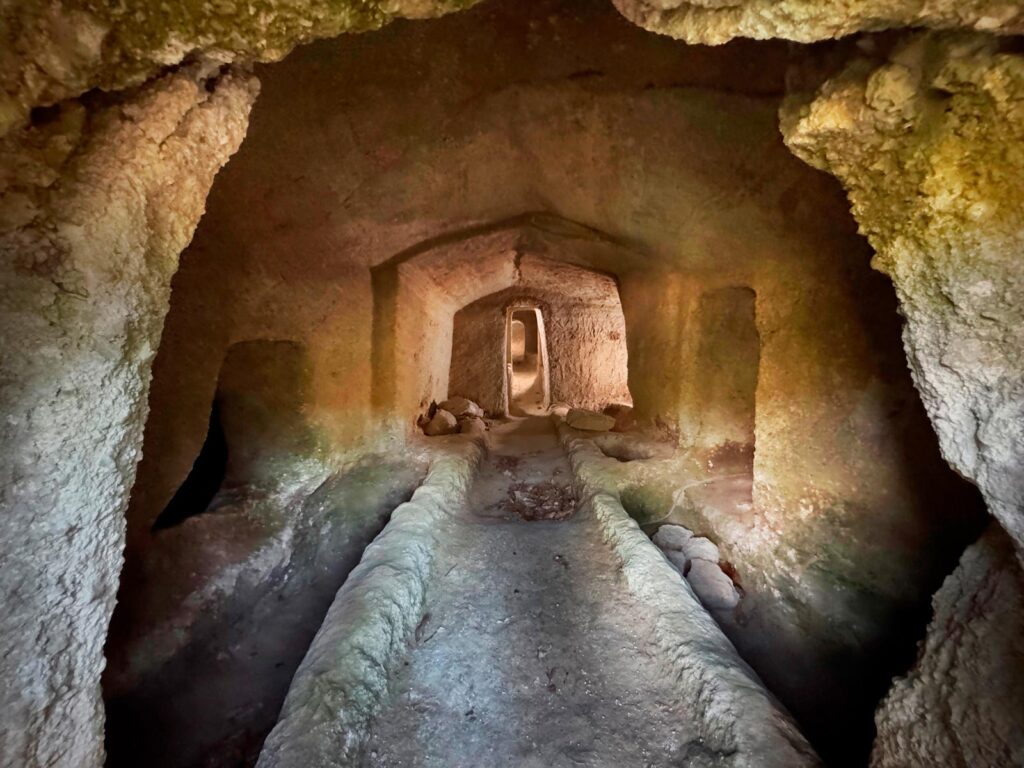
The co-axial chamber tombs of Centocamere
The Necropoli di Casali Centocamere preserves some of the most original structures in the entire territory.
Here the funerary spaces develop along a single axis, creating the so-called co-axial chamber tombs. The different chambers follow one another in depth, forming complex routes that were enlarged over time.
The famous tomb CC4 is one of the most monumental examples of this type and testifies to the importance reached by the families that controlled the territory of the Civita.
From the individual to family memory
The evolution of the tombs also tells of a change in Etruscan society.
The earliest burials were often intended for single individuals, while the great chamber tombs were conceived to receive several generations of the same family.
The memory of the ancestors thus became a fundamental element of family identity, and the tombs were transformed into shared places intended to preserve the history of the group over time.
A landscape carved into tuff
The volcanic cliff on which the Civita stands played a decisive role in the development of the necropolises.
Tuff, easy to work yet durable over time, allowed the Etruscans to shape the landscape directly and create increasingly complex structures.
The tombs thus became an integral part of the territory and still represent one of the most characteristic and recognisable elements of the archaeological heritage of Grotte di Castro.
The tombs and Museo Civita
Funerary architecture tells the form of the burials.
The artefacts preserved in Museo Civita instead allow us to know the people who were laid within them.
Grave goods, ornaments, everyday tools and objects connected to rituals complete the story begun in the necropolises, offering a broader view of the life and beliefs of the Etruscan community.
Visiting the museum and the necropolises therefore means observing two complementary parts of the same history.
| Documented period: | 8th–5th century BC |
| Main necropolises: | Vigna la Piazza, Centocamere, Pianezze |
| Predominant material: | Volcanic tuff |
| Prevailing funerary rite: | Inhumation |
| Types present: | Pit, cassone, circle, chamber |