
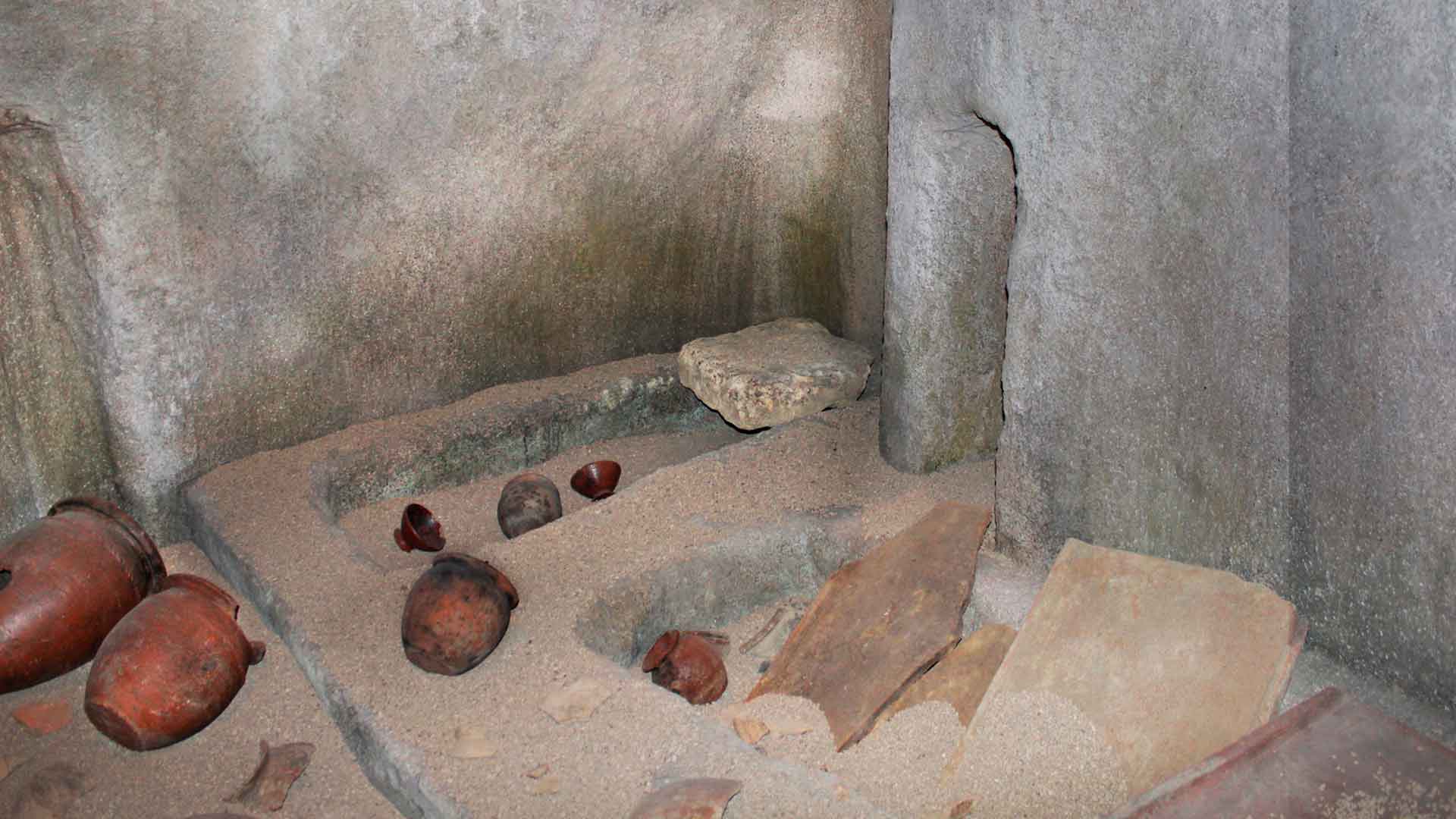
In the Necropoli di Vigna la Piazza, Tomb VLP7 is a fundamental piece of evidence for understanding the evolution of Etruscan funerary practices. Monumental in size and articulated in structure, it marks the transition from the earliest burials to the great family tombs that would characterise later generations.
A moment of change
Between the end of the 8th and the second half of the 7th century BC, the community of the Civita underwent a period of profound transformation.
The simple pit burials used in the earliest phases gradually began to give way to more complex and monumental funerary structures.
Tomb VLP7 belongs to this moment of change and represents evidence of a chamber tomb known today in the territory of Grotte di Castro.
A house for the dead
For the Etruscans, the tomb was not only the place of burial.
Funerary chambers were conceived as true dwellings intended to receive members of the same family group even after death.
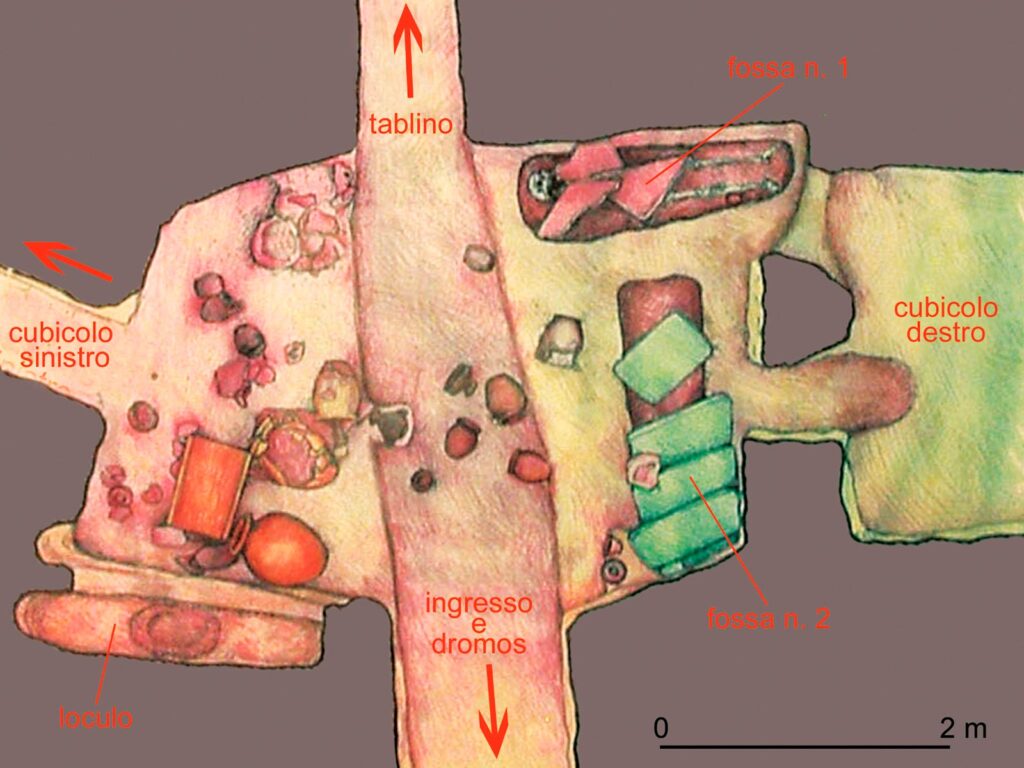
Through access corridors, internal spaces and areas for deposition, Tomb VLP7 reflects this conception of continuity between the world of the living and that of the dead.
The long access route
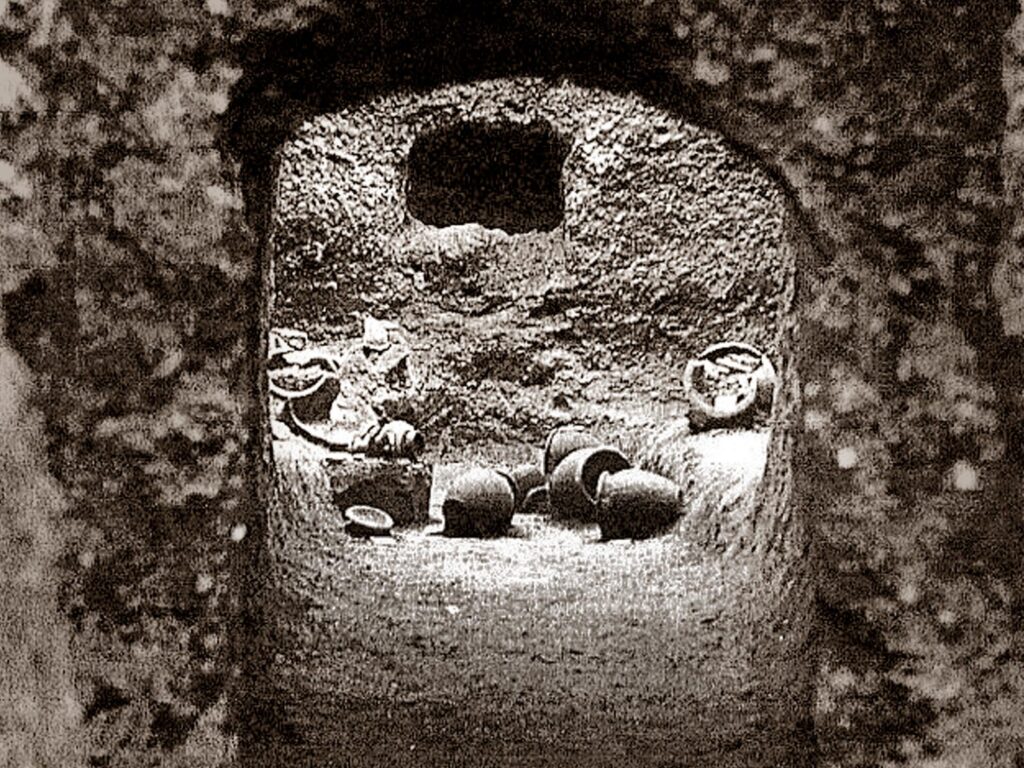
One of the most characteristic elements of the tomb is the dromos, the corridor carved into the tuff that leads to the funerary area.
This route did not have only a practical function.
During funeral ceremonies it represented the symbolic passage towards the space of memory and remembrance, accompanying the deceased into the burial place.
Even today the dromos conveys the sense of monumentality that these architectures must have had in the ancient landscape.
A fundamental piece in the history of the Civita
Tomb VLP7 is particularly important because it helps archaeologists reconstruct the earliest phases of the development of the necropolises of Grotte di Castro.
Its chronology places it in a period when the local community was consolidating its identity and intensifying relationships with other centres of inland Etruria.
The architectural solutions adopted testify to growing technical skill and a new attention to the representation of family prestige.
From the necropolis to the museum
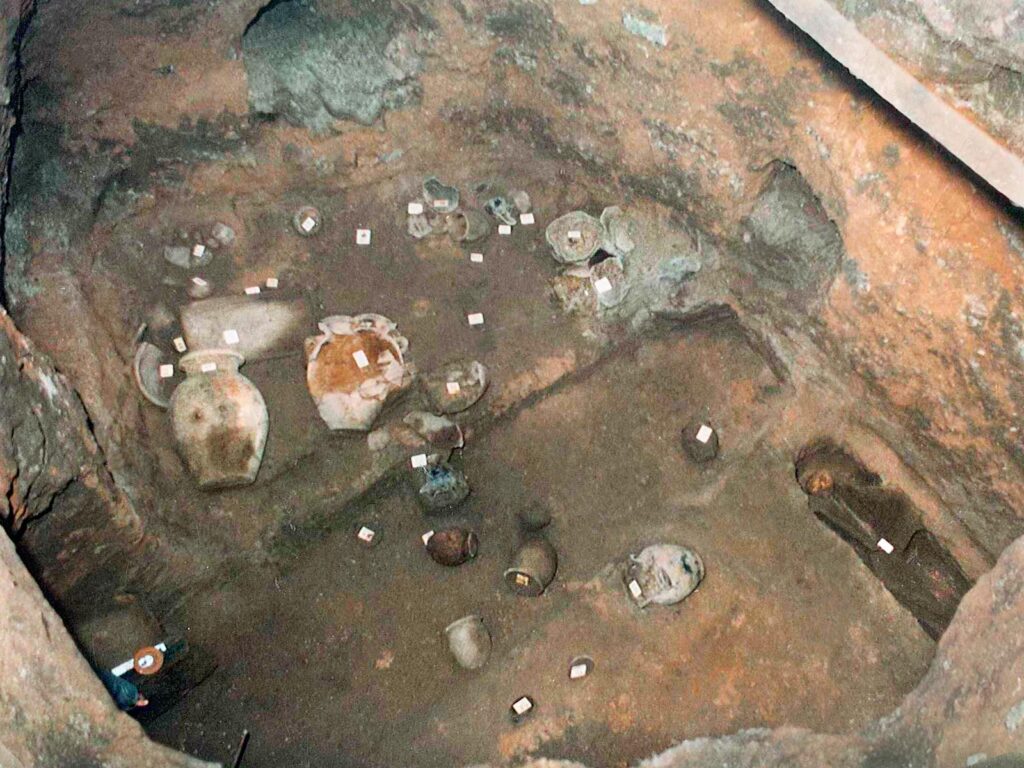
The materials from the excavations of the Necropoli di Vigna la Piazza now help tell the life of the Etruscan community of the Civita.
Through the artefacts preserved in Museo Civita, it is possible to explore the social, economic and cultural aspects that accompanied the construction and use of tombs such as VLP7.
A visit to the necropolis and a visit to the museum are two complementary moments of the same story.
Why Tomb VLP7 is important
Tomb VLP7 represents one of the fundamental stages in the funerary history of the Civita.
Through its architecture it is possible to observe how the Etruscans progressively transformed burials into increasingly complex places, intended not only to preserve family memory but also to represent the social role of the deceased.
It is precious evidence of the origins of a tradition that in the following centuries would lead to the creation of the great monumental tombs of Etruria.
To observe
The dromos
The long corridor that introduces the burial.
The architecture carved into the tuff
The Etruscans’ ability to shape the rock directly.
The organisation of the spaces
A structure designed to receive multiple depositions over time.
The context of the necropolis
The relationship between the tomb and the other burials of Vigna la Piazza.
| Necropolis: | Vigna la Piazza |
| Chronology: | Second half of the 7th century BC |
| Type: | Chamber tomb |
| Material: | Volcanic tuff |
| Function: | Multiple family burial |
| Context: | Early monumental phases of the Etruscan Civita |